


Inputs
Record quantity, unit basis, tooling, packing, tax, freight, payment terms, and exclusions.

Raw supplier quotations rarely list the same details in the same order. Price, MOQ, materials, lead time, and payment terms are pulled into one comparable format before the buyer is asked to choose.
Explore Quotation Comparison: scope, inputs, steps, deliverables, approvals, timing, risks and next steps with LifaSourcing.com.
Quotation comparison support helps buyers turn supplier quotes into a clear decision file. LifaSourcing.com organizes price, MOQ...
Each stage helps turn mixed supplier quotes into a more useful buyer decision.
This service is built around the practical details buyers need before approving suppliers, samples, production, inspection, or shipment.
This service is built around the practical details buyers need before approving suppliers, samples, production, inspection, or shipment.
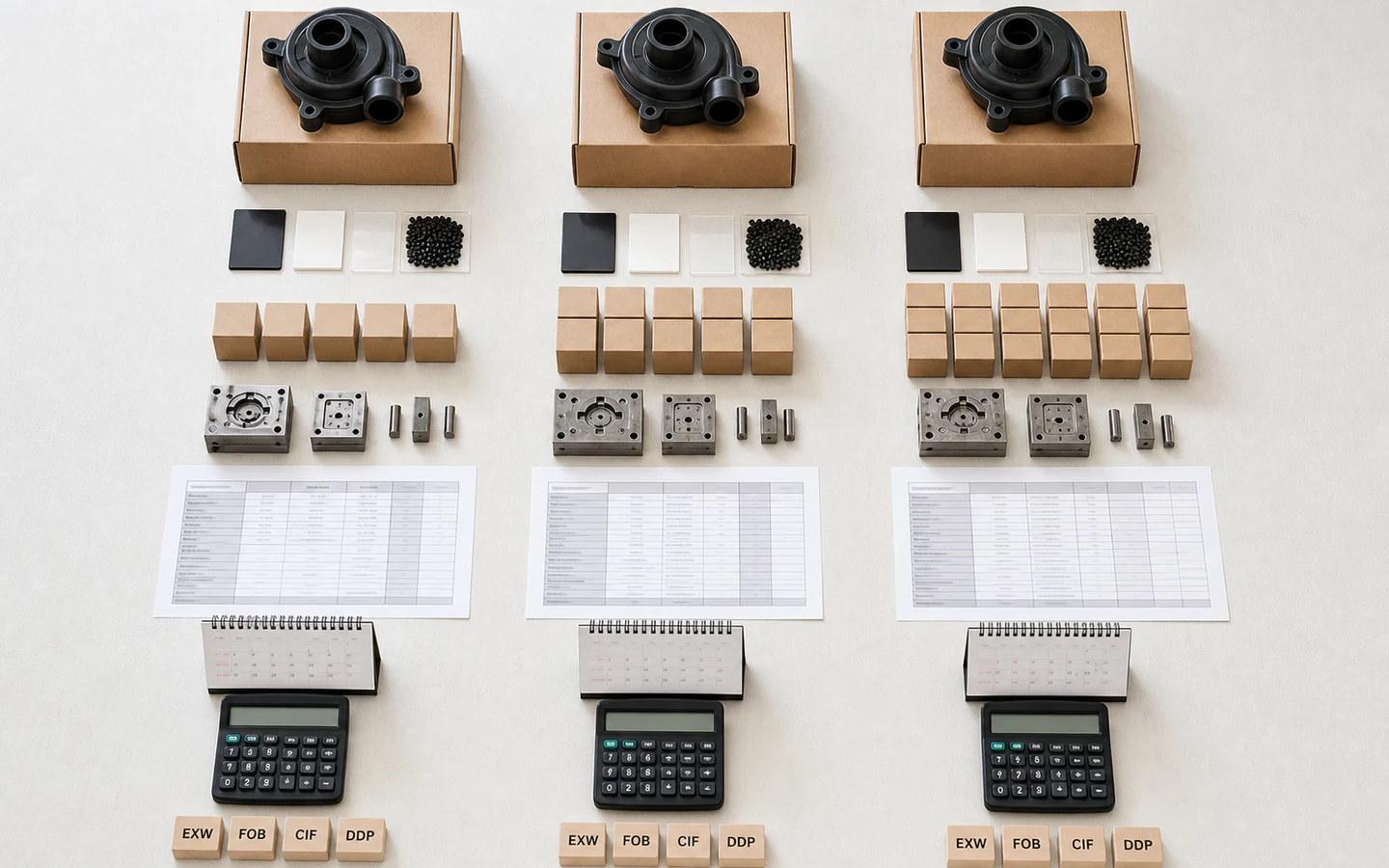
Raw supplier quotations rarely list the same details in the same order. Price, MOQ, materials, lead time, and payment terms are pulled into one comparable format before the buyer is asked to choose. Keep the owner, open questions, and buyer approval visible as work moves forward.
Price, MOQ, materials, lead time, and terms from every supplier are aligned side-by-side, not left as separate PDFs. Keep the owner, open questions, and buyer approval visible as work moves forward. Before approving line-by-line comparison, separate supplier statements from documents or observations that support them. Match the legal entity, factory role, product process, quantity range, lead-time basis, and sample status to this page's requirement, then record who resolves each remaining exception.
Tooling charges, sample fees, and packaging costs are flagged before the buyer commits to a supplier. Keep the owner, open questions, and buyer approval visible as work moves forward. Leave the next owner a clear handoff, including open questions and delays.
Quotation comparison support helps buyers turn supplier quotes into a clear decision file. LifaSourcing.com organizes price, MOQ, product specification, material notes, lead time, sample cost, tooling, packaging, Incoterms, payment terms, missing details, and follow-up questions.
The lowest unit price is not always the strongest option. A quote can look cheaper while carrying higher MOQ, vague materials, missing packaging, stricter payment terms, longer lead time, or unclear shipping responsibility.
Supplier quotations are often written in different formats, with different assumptions hidden inside each offer.
Different materials, thicknesses, accessories, packaging, certifications, or quality levels can make a price comparison misleading. Evaluate prices are not based on the same specification on one commercial basis: specification, quantity, currency, Incoterm, validity period, MOQ, tooling, packaging, payment terms, lead time, and exclusions. Keep confirmed amounts separate from estimates and require written buyer approval before accepting a price or payment commitment.
Discuss This06A low unit price can require a larger order, bigger deposit, stricter balance payment, or less flexible sample path. Before deciding on MOQ and payment terms change the real commitment, normalize every offer to the same product, quantity, delivery term, packaging, inspection basis, and destination boundary. Flag unpriced items and conditional terms, because a lower quotation can shift cost, quality, inventory, timing, or risk elsewhere in the order.
Read the Guide07Quotes without sample cost, lead time, packaging, tooling, Incoterms, or validity date are not ready. Before deciding on missing details create false confidence, normalize every offer to the same product, quantity, delivery term, packaging, inspection basis, and destination boundary. Flag unpriced items and conditional terms, because a lower quotation can shift cost, quality, inventory, timing, or risk elsewhere in the order.
Discuss This
Commercial decisions need comparable inputs and clearly stated assumptions before a lower price can be treated as better value.
Record quantity, unit basis, tooling, packing, tax, freight, payment terms, and exclusions.
Separate confirmed supplier facts from estimates, allowances, and buyer-side costs.
Document the accepted scenario and the conditions that would require a new comparison.
LifaSourcing.com organizes supplier communication so buyers can compare each offer on the details that affect cost, risk, and timing.
Supplier quotations, product details, payment terms, MOQ, sample cost, tooling, and lead time are organized. Compare the full scope before calling a quote a saving. The comparison for quote detail review shows more than unit price. Align quantity breaks, material or specification changes, sample and tooling costs, packaging, quality controls, freight responsibility, payment milestones, timing, and validity so the buyer can see which trade-off creates the apparent saving.
Discuss This09LifaSourcing.com helps prepare follow-up questions when quotes omit important commercial, packaging, or specification details. Leave the next owner a clear handoff, including open questions and delays. Use missing-question follow-up to reconcile the quoted scope with this page's requirement before negotiating. List included and excluded work, third-party charges, assumptions, currency, tax or duty basis, and payment trigger, then document the complete package the buyer approves rather than one price line.
Discuss This10Supplier options are arranged so the buyer can compare the full offer, not just the unit price. Compare the full scope before calling a quote a saving. Review side-by-side comparison against one product brief: legal seller, factory role, relevant capability, MOQ, sample status, quotation basis, and unresolved claims. Record the source and date for each material check, then return gaps for buyer approval before a deposit or supplier selection.
Discuss This11Comparison notes help buyers decide whether to verify a supplier, request samples, negotiate, or continue searching. Compare the full scope before calling a quote a saving. The controlled record for next-step notes distinguishes coordination work from approval authority. Record the source information, action taken, exception, deadline, and buyer disposition, then preserve earlier versions so the decision trail shows what changed rather than only the latest status.
Discuss ThisTwo quotes with the same unit price can hide different materials, packaging, and payment terms. Working from China, LifaSourcing.com queries each supplier until quotes describe the same product the same way — then puts them side by side for the buyer.
Each stage helps turn mixed supplier quotes into a more useful buyer decision.
LifaSourcing.com reviews supplier quotes, product specifications, target quantity, destination country, and buyer priorities.
Gaps are identified in MOQ, sample cost, tooling, packaging, materials, lead time, Incoterms, and payment terms.
Questions are prepared so suppliers clarify unclear details before the buyer compares final options.
Quotes are organized by commercial terms, product details, timing, risk notes, and open questions.
The buyer can move into supplier verification, samples, negotiation, quality planning, or shipping preparation.
A useful comparison shows where supplier offers differ and where assumptions still need clarification.
| Quote factor | Why it matters |
|---|---|
| Product specification | Confirms suppliers are quoting the same material, size, function, finish, and quality level. |
| Unit price and MOQ | Shows the real purchase commitment, not just the price per piece. |
| Sample and tooling cost | Clarifies what the buyer must pay before production starts. |
| Lead time | Affects launch dates, restocking plans, and shipping schedule. |
| Payment and Incoterms | Changes cash flow, risk exposure, freight responsibility, and landed-cost planning. |
| Packaging and labeling | Can add cost and affect compliance, retail readiness, and shipping protection. |
The comparison is stronger when each supplier is quoting the same product and commercial assumptions.
Send all quotation files, chat screenshots, supplier links, product photos, sample notes, and payment terms received.
Materials, size, color, function, packaging, labeling, test requirements, quality expectations, and destination market.
Target quantity, budget range, preferred MOQ, sample budget, timeline, payment comfort level, and shipping term preference.
Tell LifaSourcing.com whether you are mainly worried about price, quality, supplier reliability, lead time, payment risk, or missing quote details.

Commercial decisions need comparable inputs and clearly stated assumptions before a lower price can be treated as better value.
Record quantity, unit basis, tooling, packing, tax, freight, payment terms, and exclusions.
Separate confirmed supplier facts from estimates, allowances, and buyer-side costs.
Document the accepted scenario and the conditions that would require a new comparison.
Quotation comparison connects supplier communication, quote clarification, commercial review, and next-step planning.

Price differences are reviewed beside product details, materials, and quality assumptions. Compare the full scope before calling a quote a saving. The brief for specification review separates mandatory requirements from preferences and links every critical feature to evidence or a measurable check. On this page, keep drawings, samples, BOM details, packaging files, and change requests under revision control so production does not drift silently.
Quotation comparison often works together with supplier checks, samples, quality planning, and shipping preparation.
Review supplier details and risk signals before choosing the supplier behind a promising quote.
Learn more13Request samples after narrowing quote options and clarifying specification details.
Learn more14Plan quality checkpoints after commercial terms and product expectations are clearer.
Learn more15Review shipping preparation after Incoterms, packing details, and order quantities are confirmed.
Learn moreQuote comparison is useful whenever buyers need to separate a cheap-looking offer from a complete commercial package.
Compare supplier quotes before deposits, repeat orders, or destination-market planning.
Explore route17Review MOQ, price tiers, packaging, replenishment timing, and supplier tradeoffs.
Explore route18Compare product cost, packaging, samples, lead time, and launch timing before committing.
Explore routeQuotations rarely arrive on the same terms. These put them on one basis before you judge price.
Normalise price, MOQ, tooling, packaging, and terms so the cheapest quote is the real one.
Read the guide 20Why minimums move, and how order size changes the price you are quoted.
Read the guide 21Score shortlisted quotations side by side on the figures that decide the order.
Open the tool 22Carry each quotation through freight, duty, and handling to a delivered unit cost.
Open the toolCLIENT REVIEWS
Feedback shared by clients.
I had a folder full of attractive product photos and no sensible way to choose a supplier. LIFA narrowed the search to businesses that could handle our finish and order size, then explained why the others had been left out. The shortlist was shorter than I expected. That turned out to be the useful part; I could spend time on relevant conversations instead of starting from scratch with everyone.
The first call felt rather detailed for a simple tote bag enquiry. Once we discussed carrying weight, handle length and how the bags would be packed, I understood the questions. I did have to repeat our delivery address in a later email, which was mildly frustrating, but the final brief captured the things my original message had missed.
A supplier described itself as the manufacturer, although the paperwork suggested otherwise. Our contact at LIFA separated the trading company from the production site in the supplier notes. There was no dramatic claim that the business was dishonest. We just needed to understand who would make the goods and who would be taking our payment.
Most responses to our furniture enquiry focused on appearance. LIFA noticed the assembly restriction for our delivery team and asked suppliers about it before requesting prices. We would have rejected several lovely-looking options once the cartons arrived. Catching that early was more valuable to me than another page of designs.
Clear answers help buyers compare supplier offers without treating price as the only decision point.
LifaSourcing.com helps buyers organize supplier quotations by price, MOQ, lead time, payment terms, sample cost, tooling, packaging, Incoterms, missing information, and follow-up questions before choosing a supplier.
A lower unit price can come with higher MOQ, longer lead time, weaker materials, missing packaging details, higher sample cost, stricter payment terms, or higher risk. Buyers should compare the full offer, not only the unit price.
Useful quotations should include product specification, unit price, MOQ, sample cost, tooling if any, lead time, payment terms, packaging details, Incoterms, validity period, and what is not included.
Yes. LifaSourcing.com can help organize follow-up questions so suppliers clarify missing details before the buyer compares options or negotiates terms.
Quotation comparison focuses on commercial and product terms. Supplier verification is a separate deeper step for reviewing company details, documents, and risk signals before payment or production.
Send supplier quotations, product specifications, target quantity, destination country, packaging requirements, and your main concerns to simon@lifasourcing.com or WhatsApp +86 173 7653 5037.
Share supplier quotes, product specifications, target quantity, destination country, sample notes, packaging requirements, and the commercial questions you want clarified.
Settle these practical questions before applying Quotation Comparison to a live supplier, order, quality, compliance, or shipment decision.
Before Quotation Comparison begins, the buyer should provide the approved specification or inspection checklist, supplier and factory details, purchase order, quantity and batch status, sample or reference standard, defect definitions and tolerances, destination requirements, production schedule, contact authority, and the written rules for pass, hold, corrective action, recheck, and release.
Turn the Quotation Comparison question into a written decision record. Define the exact product, market and stage; collect comparable facts and supporting documents; mark assumptions and conflicts; identify who owns the decision; and approve the next step only when the evidence matches the requirement. Use a qualified specialist wherever customs, testing, legal, tax or regulatory judgment is required.
Before negotiating Quotation Comparison, establish the exact specification, realistic quantity, comparable quotations, supplier cost drivers, tooling and packaging needs, quality and compliance requirements, lead-time constraint, payment risk, freight basis, and a credible alternative supplier or scope. Record concessions together so a price reduction is not exchanged for an unapproved change elsewhere.