Develop custom products with manufacturers in ChinaCompare tooling and material choices
We turn your concept into a supplier brief covering materials, functions, tooling and branding. Compare factory proposals and samples before approving production.
Bring your drawings, reference sample or product idea. LIFA coordinates supplier matching, quotations, sample development and the handoff to production with manufacturers in China.
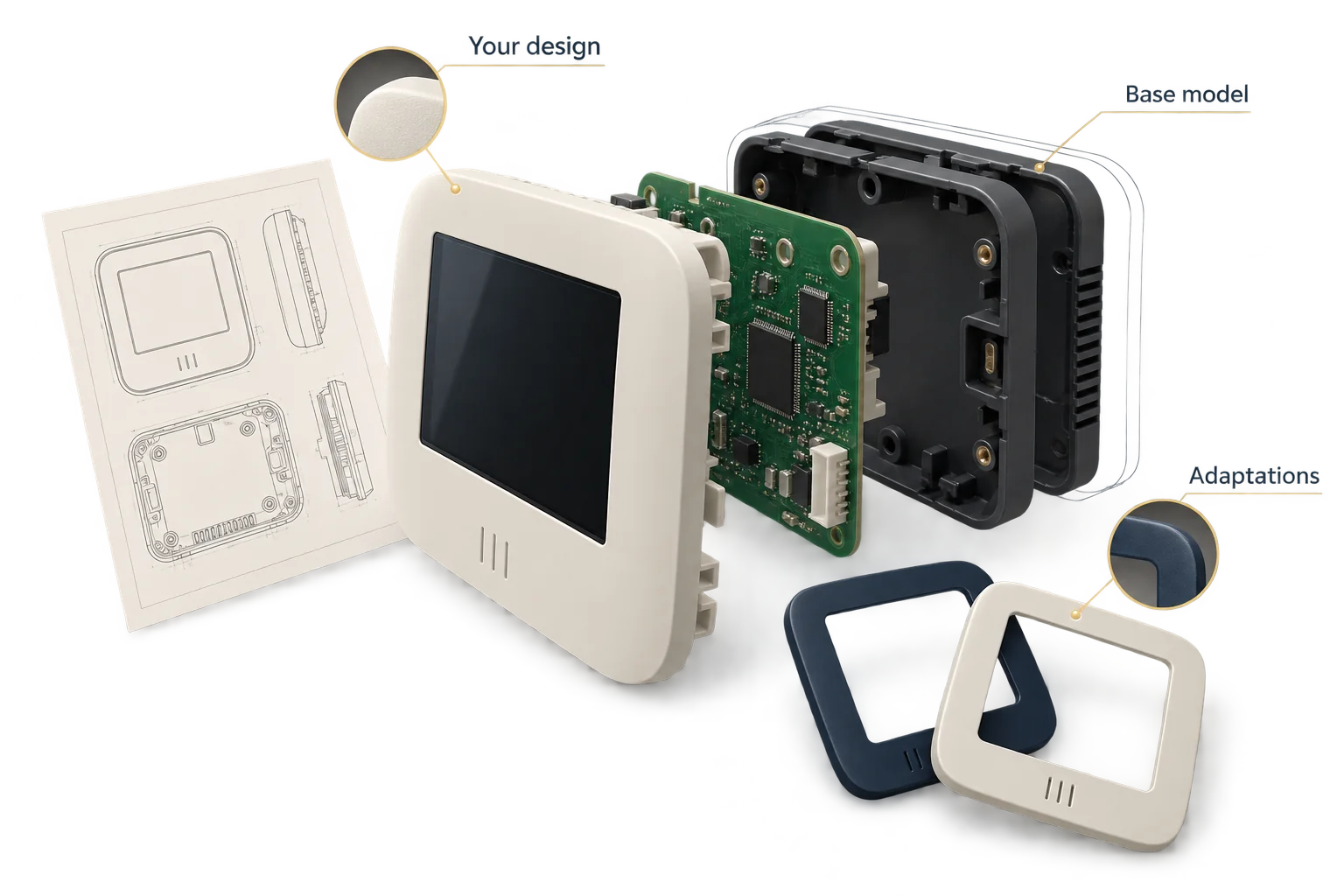
OEM usually starts with your design. ODM usually starts with a supplier’s base model. We help you compare what each factory can make, what must change and what needs your approval.
You choose the supplier and approve the design, commercial terms and payments. Product compliance, import requirements and legal decisions remain with you and your appointed specialists.
Compare the enclosure, internal components and changes needed for your product.
Choose your starting point
Which route fits your product?
Describe what you already have and what needs to change. The label alone does not settle design rights, tooling ownership or exclusivity.
RouteYour starting pointConfirm before spending
OEM
Your starting pointYour own design, drawings or a defined specification.
Confirm before spendingManufacturing capability, materials, tolerances, prototype method, new tooling and who may use the design files.
ODM
Your starting pointAn existing factory design with agreed changes.
Confirm before spendingWhich features can change, who owns the base design, access to drawings and whether a change requires new tooling or testing.
Private label
Your starting pointAn existing product with your branding or packaging.
Confirm before spendingThe exact model, finish, artwork, labels, packing format and any changes to the product itself.
A reference photo does not define a production specification. Record the variant, material, measurements, function, finish, packaging and acceptable tolerances. Ask the supplier to disclose deviations before you accept a quote or schedule.
Our role
China-side coordination, with decisions in your hands
We organize the information between you and the factory, from the first brief to production follow-up.
Product brief review
A supplier-ready brief bringing together specifications, sketches, drawings, reference samples, functions, materials, branding, packaging and destination-market requirements.
Supplier matching
A comparison of category experience, customization capability, MOQ, sampling process, tooling experience, communication and capacity against your product requirements.
Sample development
A dated sample and correction record connecting sample rounds, photos, measurements, correction notes and packaging changes. Unresolved differences remain visible for your decision.
Production and QC handoff
A production reference connecting the approved sample, specifications, packaging, QC checkpoints, inspection expectations and shipping preparation. Record the action owner, deadline, exception and buyer decision; retain earlier versions.
See how the work connects in real projects
From supplier selection to production checks, these records show the decisions behind two different manufacturing projects.
Egypt · OEM electronics
Checking the components behind an earbud launch
After earlier orders raised chip-authenticity and quality concerns, LIFA checked 11 OEM factories, coordinated component verification and defined three stages of QC.
Project records
OEM comparison, chip-authenticity reports and an agreed sampling plan.
Recorded result
Two qualified OEMs engaged; the launch order was delivered in nine weeks.
A bottling line needed discontinued nozzles. LIFA coordinated reverse-engineering drawings, qualified two precision manufacturers and checked fill accuracy and durability.
Project records
Drawings, qualification test reports and the buyer’s approved manufacturing requirements.
Recorded result
120 nozzles produced and fitted within five weeks, with fill accuracy within specification.
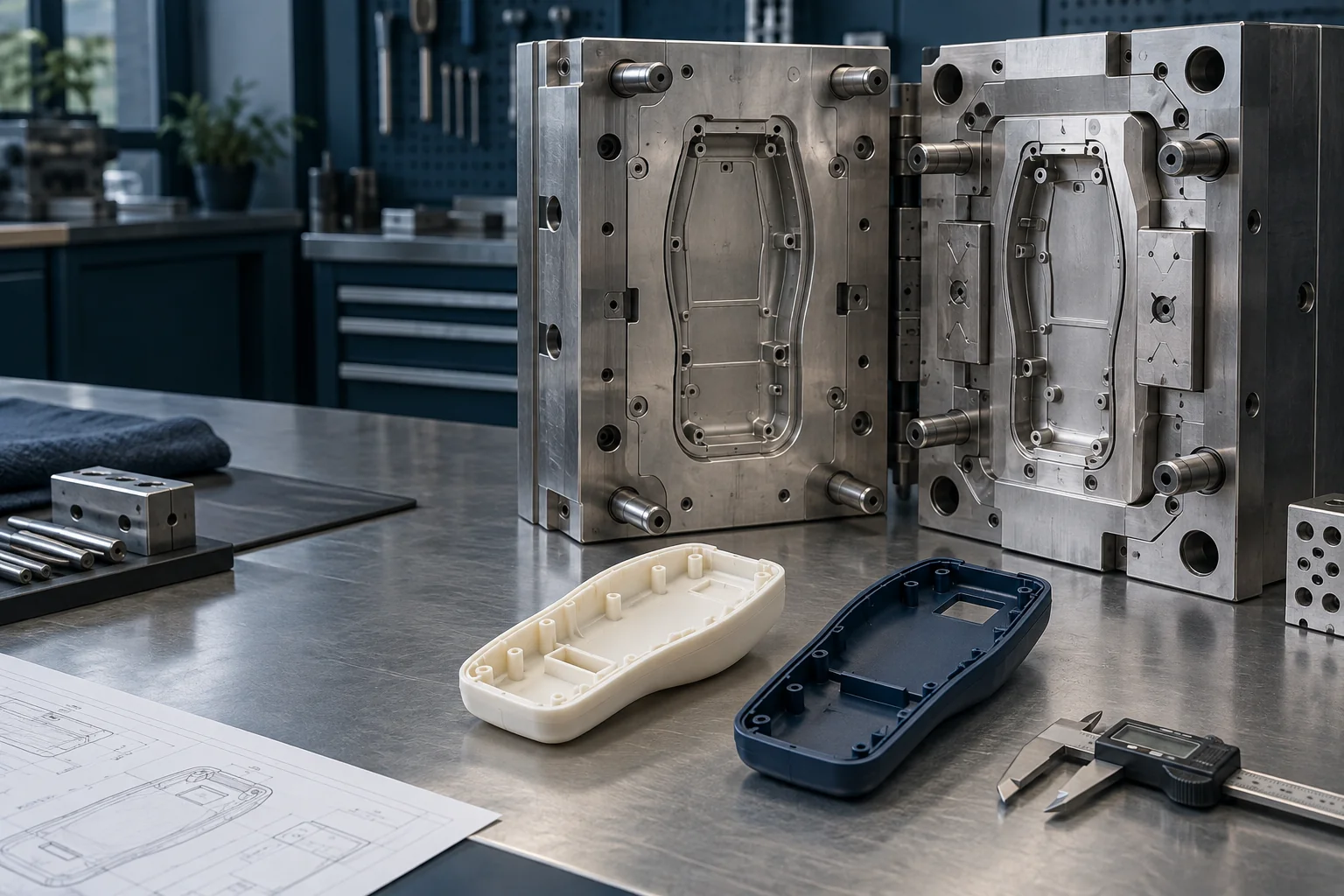
A useful quotation starts with the design and manufacturing process, not a photo alone.
Review the construction and process behind the quoted product.
Can this factory build the required version?
Compare tooling requirements, materials, functions, finish and branding against the factory’s proposed method. Ask what is already proven and what still needs a prototype, mold trial or specialist test.
Clarify drawings, material specifications and tooling assumptions before accepting a quotation.
Ask for sample and trial plans that address the actual design, including difficult features and tolerances.
Compare unit price alongside sample cost, tooling, MOQ, packaging and lead time.
Give factories enough detail to quote the same product
Start with what is known. Mark open questions clearly so they can be resolved before sampling or a financial commitment.
Design and performance
Drawings or sketches, reference samples, dimensions, materials, colors, finish, functions, tolerances and the revision that applies. Identify the measurement or test method and who approves the result.
Customization
State whether you need an adapted model, private label, new packaging, new tooling or a fully custom design. List fixed requirements, acceptable alternatives and substitutions that need approval.
Commercial targets
Quantity, budget range, currency, target market, sales channel, MOQ flexibility, sample deadline and launch timing. Compare Incoterm, quote validity, payment terms, exclusions and confirmed costs separately from estimates.
Testing and packaging
Required tests and documents, user manuals, warnings, artwork, barcode needs, retail pack, carton marks and destination requirements. Confirm the review scope with the appropriate laboratory or specialist.
From brief to production
A clear process, with your approval at each step
Each stage ends with a decision before more time or money is committed.
01
Review the brief
Confirm the concept, drawings, sample references, quantity, budget, market and development goals. List missing information and the commercial assumptions behind the request.
Your decision: confirm the requirements and unresolved questions.
02
Choose the development route
Compare full OEM, adapted ODM, private label, tooling-based development or an existing-product route. Identify the changes that drive cost, testing and timing.
Your decision: approve the route and customization scope.
03
Compare factory proposals
Review capability, sample plan, tooling, MOQ, quote structure, lead time and production readiness on the same specification and commercial basis.
Your decision: choose the supplier and approve the agreed terms.
04
Review samples and corrections
Check measurements, function, finish, materials and packaging against the current reference. Set the test or sampling method, defect categories, evidence format and pass, hold or rework authority before reviewing results.
Your decision: accept the sample, request corrections or stop development.
05
Release the production reference
Send the approved sample notes, specifications, packing details, QC checkpoints, inspection timing and shipping preparation to the responsible teams. Resolve or escalate conflicting information before production, payment or shipment approval.
Your decision: authorize the agreed production version and next commitment.
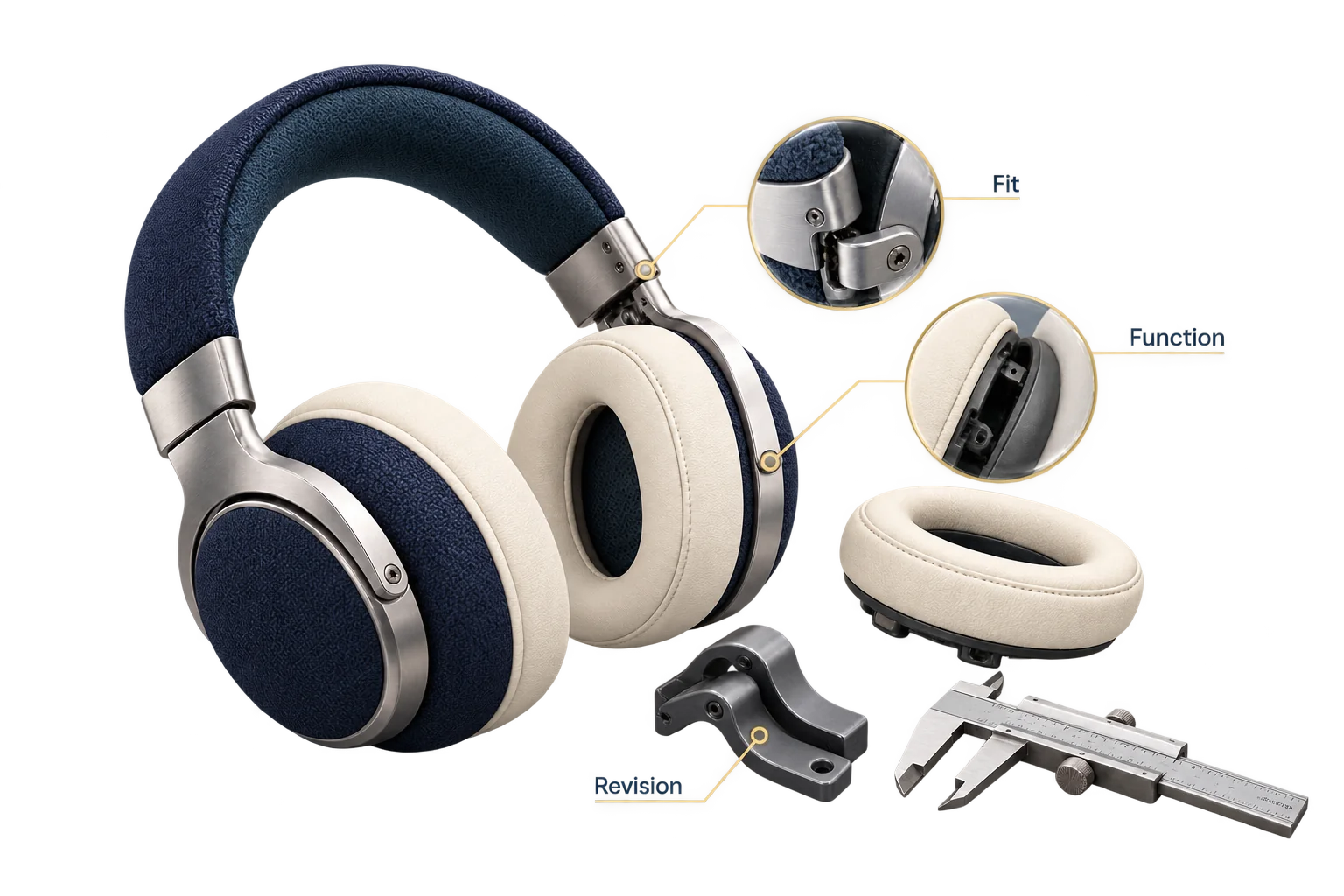
Prototype reviewCheck the fit, moving parts and corrected components against the agreed design.
Sample review
Does the prototype match your design?
Compare the sample with the agreed drawings, materials and performance requirements. Record each difference so the factory knows what to correct and you can approve the next revision.
01
Check the details
Review fit, dimensions, finish and function using the agreed measurements and test method. Keep photos and findings linked to the sample version.
02
Decide what changes
Accept, correct or escalate each finding. Record the original issue and your decision before authorizing the next sample or production step.
03
Carry approvals forward
Give production and inspection teams the approved sample, correction history, packing requirements and release instructions.
A small design change can affect tooling, MOQ, materials, packaging, testing and the production schedule.
Ask for a complete cost breakdown
Separate product price, prototype and sample rounds, tooling or molds, packaging, testing, inspection and freight.
Confirm what each charge includes, when it is due, quote validity and the cost of further revisions.
Check whether MOQ applies to the finished product, a component, a color or printed packaging.
Build the schedule around samples, mold trials, material availability, tests and buyer approvals.
Put tooling and design terms in writing
Clarify ownership and permitted use of drawings, molds, firmware and other development files.
Set out tooling storage, maintenance, access, replacement and transfer arrangements.
Record whether exclusivity is offered and exactly which design, territory or period it covers.
Use qualified legal advisers for IP, patents, trademarks and enforceable contract terms.
LIFA can coordinate questions and records; an OEM or ODM label does not establish legal ownership or exclusivity. Agree the service scope and project costs before work begins.
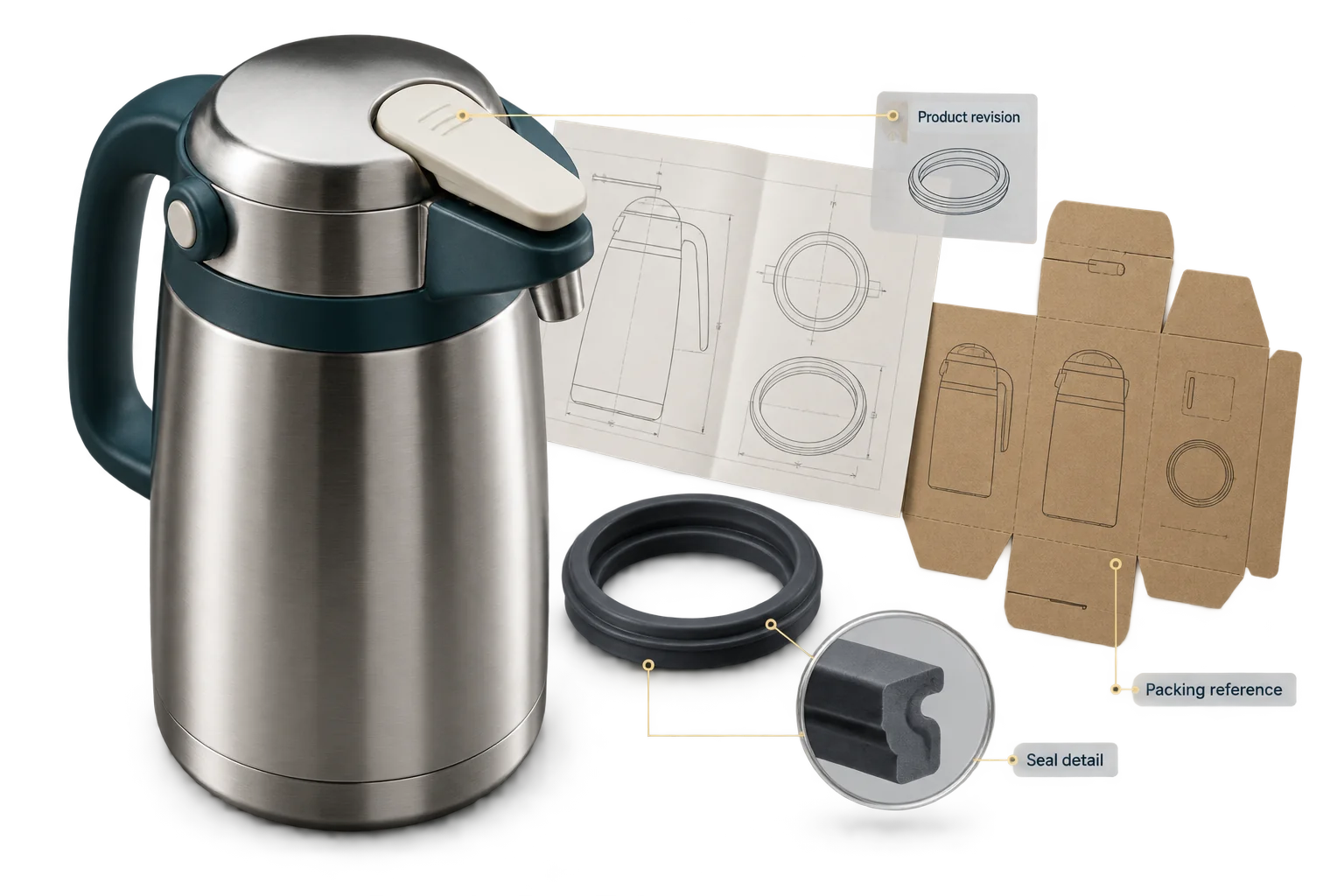
Production referenceKeep the product, critical components and packing requirements tied to the same approved revision.
Revision control
Keep every revision tied to the same product
A change to a seal, material or dimension can affect fit, performance and packaging. Keep the specification, sample feedback and factory instructions on the same approved version.
01
Identify the change
Record the drawing or part reference, revision date, measurement and reason for the change. Keep supporting photos, test results and any unresolved exceptions.
02
Approve the impact
Confirm effects on tooling, price, lead time and inspection requirements. The buyer approves the change before the factory acts on it.
03
Issue the production reference
Send the accepted version to the factory and inspection team, with matching packing details and clear instructions for any superseded samples or drawings.
The sample, drawing revision, materials, and measurable requirements should identify one production version.
Production handoff
Tooling status, product details, packaging, and change history should travel in the same release file.
Development handoff
What has to stay connected from sample approval to production?
An OEM or ODM handoff needs more than an approved photo. The production file should connect the product brief, drawings, bill of materials, tolerances, approved sample, tooling status, packaging dielines, test requirements, order quantity, and revision history. The supplier and buyer should be able to identify the exact version that authorizes production.
01Approved reference
Identify the production versionKeep the signed sample reference, drawing revision, material and finish specification, dimensions, functions, accessories, and acceptance notes in one controlled file.
02Tooling and materials
Record what is ready and what is provisionalSeparate completed tooling, approved components, supplier-proposed substitutions, color standards, and long-lead materials before the production schedule is accepted.
03Change control
Price and approve every revisionDocument who requested a change, the affected specification, cost and timing impact, new sample need, and the buyer approval required before work continues.
04Packing handoff
Carry the reference through shipment checksConnect artwork, labels, retail packaging, carton marks, packing quantities, inspection points, and shipment release to the same approved product version.
Working from China
Keep factory questions connected to the right revision
LIFA coordinates specifications, drawings, sample feedback and tooling questions with suppliers in China.
Ask the factory a precise question
Identify the part, drawing revision, required measurement or test, and the answer needed. Keep technical questions connected to the product rather than scattered across chat threads.
Record the response and next action
Attach photos, measurements or supplier records. Name who will act, by when, and which issue remains unresolved. Keep the original finding when a correction or recheck follows.
Bring decisions back to you
You approve supplier choice, sample acceptance, commercial changes and payments. Tooling, mold and IP-related terms are organized for your review and, where needed, specialist advice.
Before production approval
Confirm the version that the factory will manufacture
An early prototype demonstrates progress. Production approval needs a defined reference and a clear decision record.
What needs approval?
Functional prototype, drawings, tooling specification and cosmetic standard.
Materials and bill of materials (BOM), including firmware where relevant.
Packaging and a dated approved reference sample, often called the golden sample.
Rights to use the tooling and files, and the rule for approving future changes.
What belongs in the decision record?
The accepted requirement, product model, revision and supplier quotation.
Sample or batch references, test or inspection records and unresolved exceptions.
Corrections, cost or timing changes, responsible person and due date.
Your dated approval linked to the next payment, production or shipment step.
Keep earlier versions and the original findings. If evidence conflicts, hold the affected product or batch for clarification, correction or recheck before approving its release.
Connected services
Support for the next stage of your product
Choose the additional work your project needs and confirm its scope before it starts.
Clear answers for buyers developing custom, adapted, or branded products in China.
OEM usually means the buyer provides the product design, drawings, specifications, or brand requirements and the supplier manufactures to that brief. ODM usually means the supplier already has a design or base product that can be adapted with changes, branding, packaging, or feature adjustments.
LifaSourcing.com helps organize custom product requirements, supplier matching, supplier communication, quotation comparison, sample development, tooling and mold questions, MOQ review, packaging and branding details, QC planning, inspection coordination, and production follow-up.
No. LifaSourcing.com can help organize supplier communication and encourage written clarity around tooling, molds, drawings, and brand requirements, but buyers should use qualified legal advisers for IP protection, patents, trademarks, exclusivity, and enforceable contracts.
Buyers should prepare product sketches, drawings, reference samples, materials, dimensions, target function, packaging and branding requirements, target quantity, target market, budget range, testing needs, and any tooling or mold ownership expectations.
Development timing depends on product complexity, supplier readiness, sampling rounds, tooling needs, testing, packaging, and buyer approvals. ODM adaptation can be faster than full OEM development, but both need realistic time for samples and corrections.
Send your product brief, drawings or reference samples if available, target quantity, target market, packaging needs, budget range, and development goals through the request form, email simon@lifasourcing.com, or contact WhatsApp +86 173 7653 5037.
Ask the supplier to separate unit price, sample rounds, tooling or molds, packaging, testing and other project charges. Confirm MOQ, currency, Incoterm, payment milestones, quote validity, lead time and exclusions. Compare the total scope before approving a deposit.
Do not rely on payment alone. Agree ownership, permitted use, storage, maintenance, access and transfer terms in writing, and have the appropriate legal adviser review them. LIFA can organize supplier questions and records but does not determine your legal rights.
Yes. You can send a concept, sketch or reference sample so the required development work can be assessed. The next step may be to clarify dimensions, materials, functions or engineering files before a factory can quote accurately. Any design or specialist work needs an agreed scope.
Require the supplier to disclose the proposed change and its effects on fit, function, testing, price, timing and packaging. Record your decision and update the approved reference before the factory uses the revised material. An accepted sample does not authorize unapproved substitutions.
Ready to develop a custom product in China?
Send LifaSourcing.com your drawings, sample references, or product idea.
Share what you want to make, the quantity, target market, budget and timeline. Add drawings or sample references if available, and list the questions you need the factory to answer.