services ecommerce sourcing for Understanding MOQ and How to Negotiate It
MOQ · Why It Exists, How to Move It

Understanding MOQ and How to Negotiate It

Minimum order quantity is the smallest order a supplier is prepared to accept under stated conditions. It may apply to a product, color, size, print, component or packaging design. Ask which constraint creates the minimum before assuming that a lower quantity can be negotiated without changing price or specification.

Four key decisions on this page

Understanding MOQ and How to Negotiate It

Minimum order quantity is the smallest order a supplier is prepared to accept under stated conditions.

What information, documents or prerequisites are...

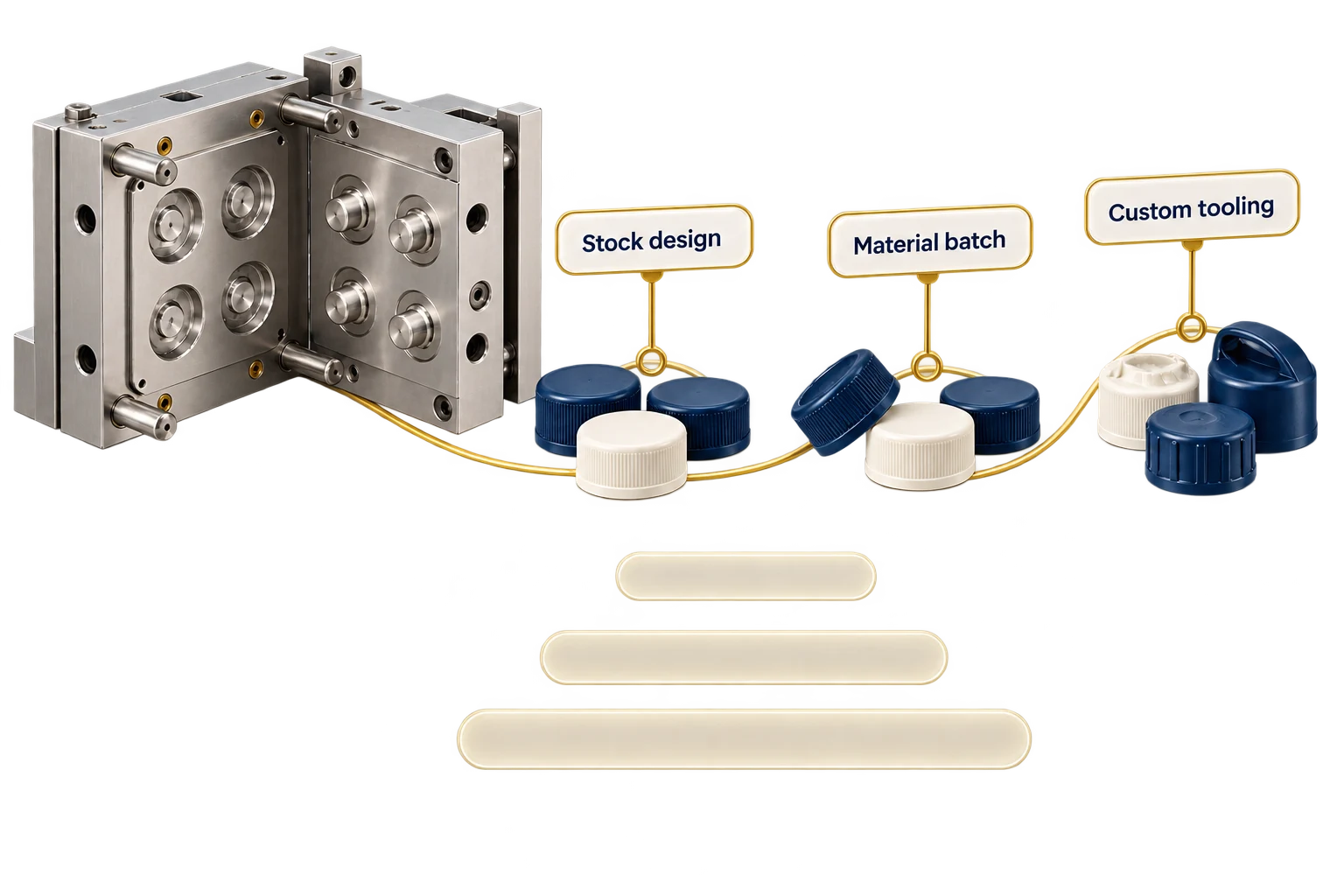
Material batch sizes, machine setup costs, and how badly the factory wants your order all shape whether a stated MOQ can actually...

What is the complete step-by-step method?

Use these points as a starting framework, and adjust them to your own situation.

Practical checklist

Concrete points to check before you move forward, based on what buyers commonly overlook.

19 min read Reviewed Library China sourcing guide
101 to expert tutorialReviewed 2026-09-02

Learn Understanding MOQ and How to Negotiate It as a controlled buyer decision

Minimum order quantity is the smallest order a supplier is prepared to accept under stated conditions. It may apply to a product, color, size, print, component or packaging design. Ask which constraint creates the minimum before assuming that a lower quantity can be negotiated without changing price or specification.

What you will be able to do

  • Explain Understanding MOQ and How to Negotiate It in plain language and identify the buyer decision it controls.
  • Prepare a versioned sourcing brief and a comparable quotation sheet before the next irreversible commitment.
  • Apply the lesson to the page section "What information, documents or prerequisites are needed before starting?" using evidence rather than assumptions.
  • Recognize when "What is the complete step-by-step method?" requires specialist, laboratory, broker, legal, or regulatory review.

Inputs to have ready

  • A versioned sourcing brief
  • A comparable quotation sheet
  • An approved sample or reference
  • A milestone and decision log
Learning path

Build the skill in three passes

Use Understanding MOQ and How to Negotiate It as the topic: each level depends on the record discipline established before it. Complete the beginner controls before relying on the advanced ones.

01

Beginner: understand the decision

Learn the sequence and keep one brief. A beginner should know what must be decided before supplier search, sample approval, deposit, production, inspection, and shipment. Use Understanding MOQ and How to Negotiate It as the decision record for this level.

02

Practitioner: control the evidence

Control versions and exceptions. A practitioner can normalize quotations, trace each approval to evidence, and stop the process when an assumption replaces a requirement. Reconcile that evidence inside the Understanding MOQ and How to Negotiate It workflow.

03

Expert: govern the system

Design a repeatable control system. An expert sets decision rights, change control, supplier performance measures, escalation thresholds, and retained records across several orders. Apply those governance rules to the Understanding MOQ and How to Negotiate It decision.

Guide in practice

What information, documents or prerequisites are needed before starting?

Buyer and factory manager comparing material rolls, production quantities, and packed units during an MOQ discussion
MOQ leverage

The quoted MOQ is a starting position, not a fixed rule.

Material batch sizes, machine setup costs, and how badly the factory wants your order all shape whether a stated MOQ can actually move. Keep the owner, open questions, and buyer approval visible as work moves forward. Evaluate this decision on one commercial basis: specification, quantity, currency, Incoterm, validity period, MOQ, tooling, packaging, payment terms, lead time, and exclusions. Keep confirmed amounts separate from estimates and require written buyer approval before accepting a price or payment commitment.

Practical sourcing guide

Quick Answer

The quick answer: MOQ is the smallest quantity a supplier states it will produce or sell under a particular commercial offer. It may combine raw-material, setup, tooling, variant, packaging, upstream-vendor, capacity, working-capital, and sales-policy constraints. Separate those drivers before negotiating because a lower quantity can change unit price, scope, lead time, inventory ownership, or quality controls.

On the "Understanding MOQ and How to Negotiate It" page, LifaSourcing.com can organize China-side communication and supporting steps. The buyer still owns supplier selection, payment decisions, product compliance and destination import requirements.

  • The quantity you actually need versus what you'd prefer to start with.
  • Whether you can accept a mixed order across colors, sizes, or variants to help meet MOQ.
  • Your flexibility on price if a lower MOQ is approved.
Sourcing process overview and buyer workflow

What is the complete step-by-step method?

Use these points as a starting framework, and adjust them to your own situation.

05

Understand what drives a supplier's MOQ

Material minimums, machine setup time, and production efficiency usually drive the number more than arbitrary preference. Use understand what drives a supplier's MOQ to compare suppliers on the same requirement rather than on marketplace rank or price alone. Check identity, manufacturing role, relevant process, quality controls, MOQ, timing, evidence, and quotation exclusions, with the buyer retaining the final selection and payment decision.

Read the Guide
06

Ask if MOQ can be met across variants

Some suppliers count MOQ across a total order rather than per single color or size, which can make the number easier to reach. Before deciding on ask if MOQ can be met across variants, normalize every offer to the same product, quantity, delivery term, packaging, inspection basis, and destination boundary. Flag unpriced items and conditional terms, because a lower quotation can shift cost, quality, inventory, timing, or risk elsewhere in the order.

Read the Guide
07

Consider a higher unit price in exchange for a lower MOQ

Suppliers may accept a smaller order at a higher per-unit price to offset their reduced production efficiency. The comparison for this decision shows more than unit price. Align quantity breaks, material or specification changes, sample and tooling costs, packaging, quality controls, freight responsibility, payment milestones, timing, and validity so the buyer can see which trade-off creates the apparent saving.

Read the Guide
08

Compare MOQ across multiple suppliers before assuming it's fixed

MOQ varies significantly between suppliers. Compare the full scope before calling a quote a saving. The record for compare MOQ across multiple suppliers before assuming it's fixed names the contracted entity, production location, product fit, capacity evidence, quotation scope, sample reference, and open questions. Compare those points consistently within this page's sourcing brief and pause approval when identity, bank, capability, or specification details conflict.

Read the Guide
09

Treat MOQ as one factor among several, not the only one

Lead time, quality consistency, and communication matter alongside MOQ when comparing supplier options. The comparison for this decision shows more than unit price. Align quantity breaks, material or specification changes, sample and tooling costs, packaging, quality controls, freight responsibility, payment milestones, timing, and validity so the buyer can see which trade-off creates the apparent saving.

Read the Guide

How the work is organized

On the "Understanding MOQ and How to Negotiate It" page, LifaSourcing.com keeps the sourcing tasks in a reviewable sequence so the buyer can approve each stage before moving forward.

01

Inquiry Review

We review your product details, quantity, target market, and sourcing needs.

02

Supplier Search

We help identify supplier options and compare basic information.

03

Supplier Verification

We support checking supplier details before the buyer moves forward.

04

Quotation Comparison

We help compare price, MOQ, lead time, payment terms, and product details.

05

Sample / Order Preparation

We help organize samples, order details, inspection needs, and shipping preparation.

Which authoritative sources support the page, and when was it reviewed?

Here is what matters most before moving forward.

10

A very low MOQ does not establish supplier type or capability.

A low minimum may reflect stock, standard materials, flexible production, a distributor, a pilot policy, a higher price, or another commercial model. Verify identity, role, capability, stock, quality controls, and repeatability separately. Before approving this decision, separate supplier statements from documents or observations that support them. Match the legal entity, factory role, product process, quantity range, lead-time basis, and sample status to this page's requirement, then record who resolves each remaining exception.

Read the Guide
11

Negotiating MOQ down can affect unit price and quality consistency.

A smaller trial order is useful. Compare the full scope before calling a quote a saving. Evaluate negotiating MOQ down can affect unit price and quality consistency on one commercial basis: specification, quantity, currency, Incoterm, validity period, MOQ, tooling, packaging, payment terms, lead time, and exclusions. Keep confirmed amounts separate from estimates and require written buyer approval before accepting a price or payment commitment.

Read the Guide
12

MOQ terms should be confirmed in writing before production starts.

Verbal flexibility on MOQ can change once an order is underway; get the agreed quantity and price in writing. Evaluate MOQ terms should be confirmed in writing before production starts on one commercial basis: specification, quantity, currency, Incoterm, validity period, MOQ, tooling, packaging, payment terms, lead time, and exclusions. Keep confirmed amounts separate from estimates and require written buyer approval before accepting a price or payment commitment.

Read the Guide

Practical checklist

Concrete points to check before you move forward, based on what buyers commonly overlook.

Ask what specifically drives the quoted MOQ

Material minimums and production setup time are different constraints that may respond differently to negotiation.

Check if MOQ applies per variant or across the whole order

Some suppliers count MOQ across colors or sizes combined, which can make it easier to reach.

Compare MOQ across at least two or three suppliers

MOQ varies significantly between suppliers for similar products; one quote isn't the market standard.

Get any agreed MOQ exception in writing

Verbal flexibility can change once an order is underway.

Find the MOQ That Actually Pays Off

Use the Break-Even Analysis tool to see the minimum order quantity where a given MOQ becomes profitable.

Open Break-Even Analysis
MOQ cost-driver worksheet

What is the supplier's MOQ actually measuring?

Treat MOQ as a commercial condition that may combine several different minimums: raw material, production setup, tooling, color or SKU changeovers, packaging, supplier policy, and upstream vendor pack quantities. Ask the supplier to separate those drivers. A lower quantity is useful only when the revised unit economics, quality controls, lead time, inventory exposure, and future-order obligations still work for the buyer.

Possible MOQ driverEvidence questionOption to testCost or control consequence
Raw material or component minimumWhich input, upstream vendor, purchase quantity, yield, shelf life, and unused balance create the constraint?Use an approved stock input, reserve material for a dated call-off, share a common component across SKUs, or separately buy the remainderStorage, ownership, expiry, traceability, color lot, damage, cancellation, and future-use terms must be written
Machine, line, cleaning, or setup batchWhat setup work and normal run quantity sit behind the quoted minimum?Price setup separately, combine production with a compatible run where controlled, simplify the process, or accept a defined small-batch surchargeDo not allow an undisclosed process, subcontractor, material, or quality-control reduction to fund the lower quantity
Tooling or engineeringIs the constraint a one-time tool, fixture, artwork, programming, test setup, or engineering charge rather than a unit minimum?Separate non-recurring cost, use approved existing tooling, stage development, or amortize only against a documented committed volumeRecord ownership, acceptance, maintenance, location, permitted use, copies, remaining balance, and exit rights
Color, size, model, or SKU splitDoes the minimum apply to the order, product family, production run, component, color, size, model, or individual SKU?Reduce variants, share components, use standard colors, concentrate the first launch, or agree a controlled mixed assortmentA lower total can still create weak demand per SKU, changeover defects, labeling errors, or unbalanced inventory
Printing and packagingWhich printer, material, plate, cylinder, carton, insert, label, or pack quantity drives the minimum?Use a stock pack plus label, make packaging neutral, purchase excess packaging separately, or defer custom print until validated demandCheck regulatory labels, artwork revision, storage, obsolete stock, color consistency, pack-out labor, and disposal responsibility
Supplier policy, capacity, or account economicsIs the number a documented production constraint, a sales threshold, a capacity preference, a working-capital issue, or a channel rule?Request a separately priced pilot, aggregate orders, change timing, provide a credible forecast without treating it as a commitment, or compare another qualified supplierA different supplier or low minimum is not automatically better; normalize specification, service, risk, and landed-cost scope

Compare the launch decision, not just the quoted unit price

Build three written scenarios: the supplier's standard MOQ, a lower-quantity option with every changed term, and an alternative supplier or product configuration. For each, calculate cash committed, landed cost, expected sellable units after realistic losses, contribution per unit, storage and aging exposure, replenishment lead time, and the evidence required before a repeat order.

  • Cash committed: include goods, tooling and engineering, custom packaging, testing and inspection, freight, duty and tax assumptions, insurance, payment charges, and other transaction-specific costs.
  • Variant exposure: model demand by SKU rather than assuming the full order sells evenly; the slowest color or size can hold the inventory risk.
  • Promise control: a forecast, future-volume discussion, or preferred-supplier intention is not a purchase commitment unless the authorized documents say it is.
  • Written exception: record the exact quantity, price, scope, material, process, lead time, packaging, quality plan, validity, remaining inputs, and repeat-order basis for any negotiated exception.

There is no universal "good MOQ" and no supplier-type conclusion can be drawn from MOQ alone. Existing stock, a distributor, flexible production, standard materials, a pilot policy, a higher price, or a different commercial model can all support a low minimum. Verify the counterparty and capability separately.

Primary frameworks

Keep quantity changes inside quality and risk controls

ISO 9001:2015 remains the current published quality-management edition while a replacement is expected in September 2026. ISO 31000:2018 remains current non-certifiable risk guidance. They provide context for controlled requirements, external-provider processes, evidence, change, and risk decisions; neither standard defines a commercial MOQ or a negotiation outcome.

Buyer FAQ

Questions Buyers Ask

Clear expectations help keep China sourcing work practical and responsible.

Working tutorial

Use a seven-step method for Understanding MOQ and How to Negotiate It

This sequence turns Understanding MOQ and How to Negotiate It into a reviewable sourcing record. Adapt the depth to the product, order, market, and risk while keeping the decision trail intact.

  1. 01

    Define the decision

    Write the product, buyer objective, non-negotiable requirements, target quantity, destination, budget basis, and stop conditions. Apply this step to Understanding MOQ and How to Negotiate It: retain the input and approval that make it reviewable.

  2. 02

    Prepare one source of truth

    Give every candidate the same versioned brief, drawings, test expectations, packaging rules, and response format. Apply this step to Understanding MOQ and How to Negotiate It: retain the input and approval that make it reviewable.

  3. 03

    Find and screen options

    Create a longlist, verify identities, then shortlist on relevant capability before negotiating price. Apply this step to Understanding MOQ and How to Negotiate It: retain the input and approval that make it reviewable.

  4. 04

    Compare like with like

    Normalize unit basis, materials, tooling, packaging, Incoterm, lead time, payment, testing, and exclusions. Apply this step to Understanding MOQ and How to Negotiate It: retain the input and approval that make it reviewable.

  5. 05

    Validate before scale

    Use samples, technical review, verification, or a pilot order with written acceptance criteria. Apply this step to Understanding MOQ and How to Negotiate It: retain the input and approval that make it reviewable.

  6. 06

    Control production and release

    Tie payment and shipment milestones to approved evidence, inspection results, and named buyer authority. Apply this step to Understanding MOQ and How to Negotiate It: retain the input and approval that make it reviewable.

  7. 07

    Close the learning loop

    Record variance, defects, delays, corrective actions, and supplier performance for the next order. Apply this step to Understanding MOQ and How to Negotiate It: retain the input and approval that make it reviewable.

Decision table

Choose the control level before acting

Use this Understanding MOQ and How to Negotiate It table as a working rule. It does not replace current legal, customs, testing, financial, or technical advice for the exact transaction.

RouteUse it whenMinimum evidenceStop condition
ProceedMandatory inputs are complete and evidence meets the written acceptance rule.Approved brief, reconciled quote, sample or verification evidence, named approver.Any critical requirement is still assumed or verbal.
Proceed with conditionsA non-critical gap has an owner, deadline, and recheck before the next irreversible step.Conditional approval record and corrective-action evidence.The condition affects safety, legality, identity, or the critical product function.
Stop and clarifyOffers cannot be compared or a party will not commit the requirement to writing.Issue log, revised request, and response deadline.Payment, tooling, or production is requested before the gap is closed.
Worked decision

Translate the lesson into an approval record

Use Understanding MOQ and How to Negotiate It to frame the matched case decision without adding claims or outcomes beyond its source classification.

Starting problem
Factories required MOQs of 5,000-6,000 units per design; the startup's capital could not support it; production costs quoted 3× the target price.
Tutorial lens
Apply Understanding MOQ and How to Negotiate It: define the exact decision, required evidence, approval owner, and stop condition before selecting the next action.
Evidence to request
a versioned sourcing brief, a comparable quotation sheet, and an approved sample or reference.
Decision rule
Proceed only when the mandatory evidence is traceable to the correct party, product, revision, batch, route, or market. Keep unresolved critical gaps as a stop, not a promise to fix later.
Proven company case study

Finland MOQ Startup

Factories required MOQs of 5,000-6,000 units per design; the startup's capital could not support it; production costs quoted 3× the target price.

LifaSourcing.com's work

  • Negotiated shared production runs with 2 factories (batch consolidation).
  • Reduced MOQs to 1,200-1,500 per design with standardized trims.
  • Sourced dead-stock organic fabric to cut material cost.
  • Arranged phased production aligned to presale orders.
Knowledge check

Test the decision before you approve it

  • Can another reviewer identify the exact option, product, supplier, document, revision, or shipment being approved?
  • Which fact came from an independent source, which came from the supplier, and which is still an estimate?
  • What mandatory requirement would force a stop even if price or timing pressure increases?
  • Who has authority to approve an exception, and what evidence and expiry date must the exception record contain?
  • What change would require this decision to be reopened rather than carried forward automatically?
Expert controls

Know when the basic method is no longer enough

Escalate Understanding MOQ and How to Negotiate It: act when the decision affects safety, legal market access, protected IP, high-value tooling, restricted goods, unusual payment instructions, disputed identity, or a dependency that could stop the business.

Set measurable triggers

Set the Understanding MOQ and How to Negotiate It threshold before the event: defect severity, cost variance, delay, capacity load, document conflict, compliance gap, payment change, or repeated corrective-action failure.

Use qualified review

Escalate Understanding MOQ and How to Negotiate It: bring in the relevant laboratory, engineer, customs broker, lawyer, accountant, insurer, or market authority when credentials or current jurisdiction-specific interpretation are required.

Retain the evidence

Keep the Understanding MOQ and How to Negotiate It evidence: source documents, versions, correspondence, approvals, exceptions, corrective actions, and review dates for the period required by the buyer's market, contract, and internal policy.

Source and review note

Verify changing rules against current official sources

This Understanding MOQ and How to Negotiate It tutorial was reviewed on 2026-09-02. Standards, tariffs, customs procedures, platform rules, product requirements, and enforcement practice can change. Confirm the current rule for the exact product, configuration, origin, destination, importer, sales channel, and claim before relying on it.

Primary reference: OECD due diligence guidance for responsible business conduct

Apply the guide

What should a buyer decide after reviewing MOQ and How to Negotiate It?

Test unit economics, fixed costs, and the sales volume needed before commitment.

Break-Even CalculatorQuotation Comparison
Buyer decision notes

Put this sourcing guidance into practice

Settle these practical questions before applying Understanding MOQ to a live supplier, order, quality, compliance, or shipment decision.

Decision record

What evidence, records or deliverables should exist at the end?

On the "Understanding MOQ and How to Negotiate It" page, record the approved requirement, comparable supplier or route inputs, supporting documents, exceptions, corrective actions and the buyer's dated approval. Keep model, batch, quotation, sample, inspection, payment and shipment references together so the next reviewer can see what changed and why.

Worked example

What does this decision look like in a realistic worked example?

For a hypothetical sourcing decision on this page, begin with one written requirement and a defined destination. Compare like with like, request evidence for every material claim, record exceptions, and approve the next supplier, payment, quality, or shipment step only after the evidence matches the brief. This example is specific to the "Understanding MOQ" page and does not promise an outcome.

Practical answer

How should price, MOQ, quality, tooling, lead time and payment concessions be recorded together?

Record every Understanding MOQ concession in one comparison: unit price and currency, quantity break, specification or material change, quality rule, tooling ownership and cost, sample status, lead time basis, packaging, payment terms, Incoterm, validity, exclusions, and corrective action. The buyer should approve the whole package, not a price line separated from its trade-offs.

Ask LIFA AI