china sourcing guide how to read an inspection report for Pre-Shipment Inspection Guide
The Last Checkpoint Before the Container Leaves

Pre-Shipment Inspection Guide

A pre-shipment inspection checks the available finished goods against agreed requirements before shipment release. Prepare the specification, sample reference, defect definitions, packing requirements and inspection scope in advance. The report should support a buyer decision, including any corrective work or reinspection needed.

Four key decisions on this page

Pre-Shipment Inspection Guide

A pre-shipment inspection checks the available finished goods against agreed requirements before shipment release.

What information, documents or prerequisites are...

Appearance, function, packaging, and quantity are checked against the approved sample and buyer specification, giving a factual...

What is the complete step-by-step method?

Use these steps as a starting point, and adjust them to fit your product and risk tolerance.

Practical checklist

Concrete points to check before you move forward, based on what buyers commonly overlook.

19 min read Reviewed Library China sourcing guide
101 to expert tutorialReviewed 2026-09-02

Learn Pre-Shipment Inspection Guide as a controlled buyer decision

What you will be able to do

  • Explain Pre-Shipment Inspection Guide in plain language and identify the buyer decision it controls.
  • Prepare an approved product specification and a defect and test classification before the next irreversible commitment.
  • Apply the lesson to the page section "What information, documents or prerequisites are needed before starting?" using evidence rather than assumptions.
  • Recognize when "What is the complete step-by-step method?" requires specialist, laboratory, broker, legal, or regulatory review.

Inputs to have ready

  • An approved product specification
  • A defect and test classification
  • An inspection or compliance plan
  • A disposition and corrective-action record
Learning path

Build the skill in three passes

Use Pre-Shipment Inspection Guide as the topic: each level depends on the record discipline established before it. Complete the beginner controls before relying on the advanced ones.

01

Beginner: understand the decision

Start with a written definition of acceptable product. A beginner should distinguish a specification, a sample, an inspection, a test report, and a factory audit instead of treating them as interchangeable proof. Use Pre-Shipment Inspection Guide as the decision record for this level.

02

Practitioner: control the evidence

Match the control to the risk and production stage. A practitioner defines defect classes, sampling, test methods, evidence, and disposition before the inspector or laboratory begins. Reconcile that evidence inside the Pre-Shipment Inspection Guide workflow.

03

Expert: govern the system

Build prevention and trend control. An expert links field failures, inspection data, process capability, supplier corrective action, and requalification triggers without hiding uncertainty behind one pass result. Apply those governance rules to the Pre-Shipment Inspection Guide decision.

Guide in practice

What information, documents or prerequisites are needed before starting?

China sourcing workflow
Inspection first

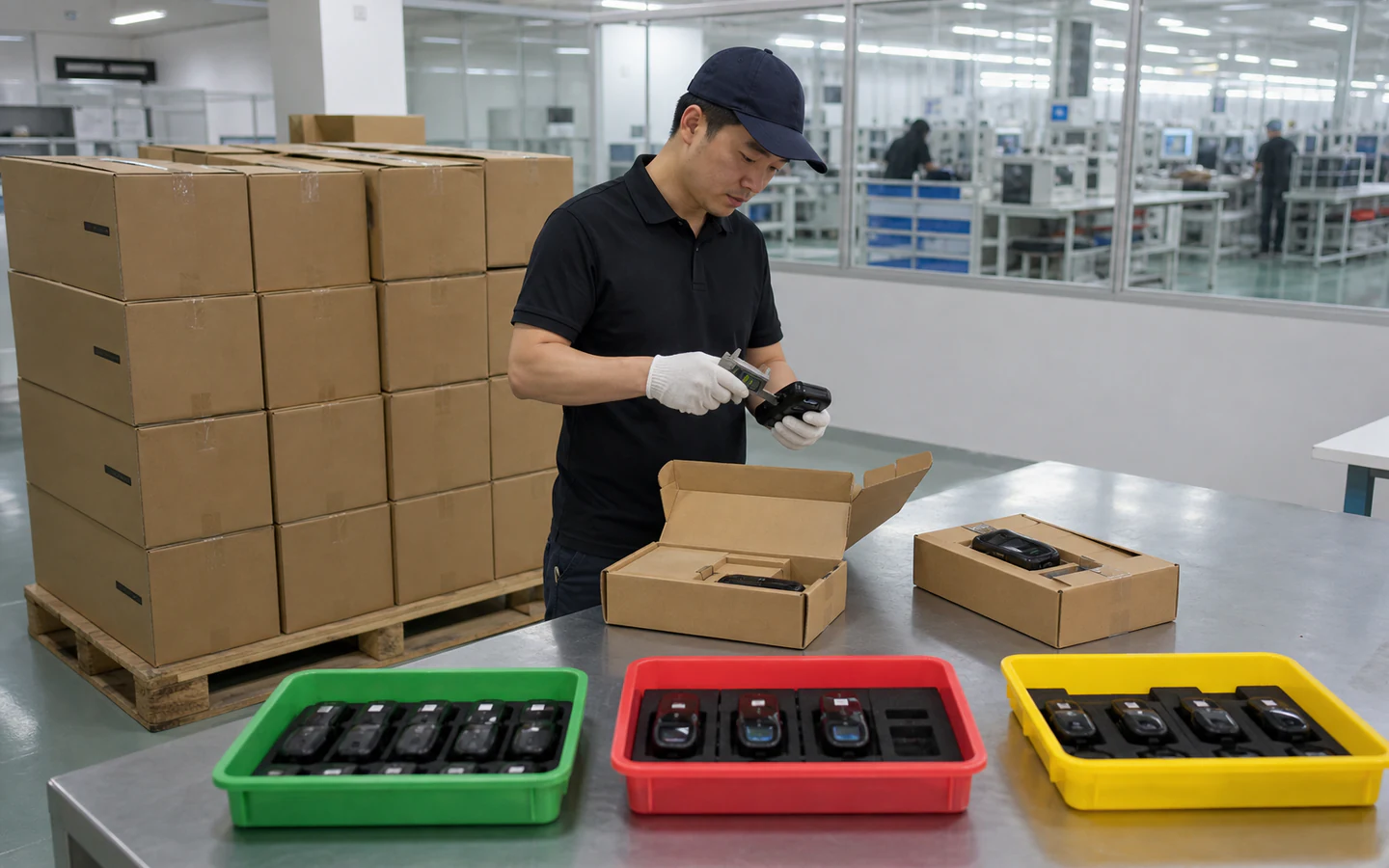
Pre-shipment inspection catches problems while they're still fixable, before the container is sealed.

Appearance, function, packaging, and quantity are checked against the approved sample and buyer specification, giving a factual basis. Keep the owner, open questions, and buyer approval visible as work moves forward. Connect this decision to the exact model, specification revision, approved sample, lot or batch, test method, defect class, result, corrective action, and release owner. Keep exceptions open until the buyer reviews evidence from a recheck or accepts the stated limitation in writing.

Practical sourcing guide

Quick Answer

The quick answer: a pre-shipment inspection reviews a defined production lot before release using buyer-approved requirements, checks, tests, and a stated sampling plan. Timing must allow representative access to the intended lot and enough time for evidence review and any corrective action. Where AQL-based acceptance sampling is used, lot size, inspection level, plan, AQL inputs, and defect classes work together; an AQL value alone does not set sample size or prove every unit conforms.

On the "Pre-Shipment Inspection Guide" page, LifaSourcing.com can organize China-side communication and supporting steps. The buyer still owns supplier selection, payment decisions, product compliance and destination import requirements.

  • Book the inspection once production is largely complete and goods are packed.
  • Agree the AQL levels and the approved reference before the inspector attends.
  • Resolve findings before releasing the balance payment, not after the cargo ships.
Sourcing process overview and buyer workflow

What is the complete step-by-step method?

Use these steps as a starting point, and adjust them to fit your product and risk tolerance.

05

Decide if pre-shipment inspection is worth arranging

Order size, product risk, and supplier history all factor into this decision. Compare the full scope before calling a quote a saving. Connect decide if pre-shipment inspection is worth arranging to the exact model, specification revision, approved sample, lot or batch, test method, defect class, result, corrective action, and release owner. Keep exceptions open until the buyer reviews evidence from a recheck or accepts the stated limitation in writing.

View Service
06

Schedule inspection once goods are near complete

Inspecting too early misses issues; too late leaves no time to fix them. Define schedule inspection once goods are near complete before the check takes place: measurable requirement, sampling or test method, tolerance, critical and non-critical defects, evidence format, and pass, hold, or fail authority. The decision record should preserve the original finding instead of replacing it with a later correction.

View Service
07

Provide the inspector with your specification

A checklist matched to your actual product gives more useful results than a generic one. Define provide the inspector with your specification at a level a supplier can quote and an inspector can verify. Connect function, construction, components, ratings, artwork, packaging, test needs, and destination requirements to one dated revision, with unapproved alternatives listed separately rather than blended into the offer.

Discuss This
08

Review the report before approving shipment

Findings should be reviewed and understood before goods are approved to ship. The controlled record for review the report before approving shipment distinguishes coordination work from approval authority. Record the source information, action taken, exception, deadline, and buyer disposition, then preserve earlier versions so the decision trail shows what changed rather than only the latest status.

Discuss This
09

Decide on rework, acceptance, or further discussion

The report informs the decision; the decision itself remains the buyer’s. Decide on rework, acceptance, or further discussion states what is being checked, which revision applies, how the result is measured, and who can release the next step. When evidence conflicts, isolate the affected product or batch and require a traceable correction or recheck before shipment approval.

Discuss This

How the work is organized

On the "Pre-Shipment Inspection Guide" page, LifaSourcing.com keeps the sourcing tasks in a reviewable sequence so the buyer can approve each stage before moving forward.

01

Inquiry Review

We review your product details, quantity, target market, and sourcing needs.

02

Supplier Search

We help identify supplier options and compare basic information.

03

Supplier Verification

We support checking supplier details before the buyer moves forward.

04

Quotation Comparison

We help compare price, MOQ, lead time, payment terms, and product details.

05

Sample / Order Preparation

We help organize samples, order details, inspection needs, and shipping preparation.

Which authoritative sources support the page, and when was it reviewed?

Use these steps as a starting point, and adjust them to fit your product and risk tolerance.

Practical checklist

Concrete points to check before you move forward, based on what buyers commonly overlook.

Schedule the inspection once production nears completion

Inspecting too early can miss defects that appear later in the production run.

Define your AQL standard before the inspection

Agreeing on acceptable defect limits in advance avoids disputes over the results afterward.

Decide which product attributes matter most to check

Function, appearance, packaging, and labeling may need different levels of attention depending on the product.

Keep the inspection report on file

It serves as a reference point if quality disputes arise after shipment.

Calculate Your Sample Size

Use the AQL Sampling Calculator to get a planning-stage sample size and accept/reject numbers for your inspection.

Open AQL Calculator
Inspection release record

How do you turn a pre-shipment inspection into a defensible release decision?

Freeze the product and lot being inspected, give the inspector controlled requirements and test methods, review every finding by severity and evidence, then record who accepted, reworked, reinspected, conditionally released, or rejected the goods. An inspection report informs shipment release; it does not make that commercial decision for the buyer.

Release recordWhat to define before attendanceEvidence to reviewDecision risk if missing
Product and revisionSKU, approved drawing or specification revision, approved sample status, materials, dimensions, labeling, packaging, and market-specific requirementsDated controlled documents supplied to the inspector and acknowledged by the factoryThe report can be complete but measure the wrong version or an undefined expectation
Lot and readinessFactory, production location, purchase order, lot identity and quantity, completion and packing status, excluded units, and whether goods can be sampled across the lotQuantity reconciliation, carton or pallet distribution, production status, and any access limitation recorded at the visitA convenient subset can be mistaken for the commercial lot the buyer plans to release
Sampling inputsInspection type, lot size, inspection level, sampling-plan basis, AQL inputs where used, defect severity definitions, and any item that requires full checkingActual sample selection, sample size, findings by class, accept or reject numbers, deviations, and untested scopeA pass label can be read as proof that every unit is conforming
Checks and testsVisual zones, measurements, function, assembly, safety-related checks, barcode or label verification, pack-out, quantity, test equipment, method, duration, and pass criteriaPhotos, measurements, raw results, equipment identification where relevant, failed-unit traceability, and signed reportGeneric photographs replace product-specific evidence or a test is performed with an unsuitable method
NonconformanceCritical, major, and minor definitions adapted to the product; escalation triggers; who can approve a deviationFinding description, count, location, photo, requirement reference, repeat pattern, supplier response, and containmentSeverity becomes subjective and unrelated defects are hidden inside a total count
Disposition and releaseBuyer approval owner, response deadline, rework and sorting evidence, reinspection rule, concession limits, payment and shipment controls, and escalation routeClosed-action list, reinspection or other verification evidence, accepted deviation if any, release conditions, approver, and timestampA supplier ships after saying an issue is fixed without evidence or authorized buyer release

Read an AQL result within its actual boundaries

ISO 2859-1:2026 describes acceptance sampling procedures indexed by acceptance quality limit for continuing lots. In practice, sample size and accept or reject numbers depend on the chosen plan inputs, including lot size and inspection level, not on an AQL number alone. The buyer must also define defect classes and any checks that cannot sensibly rely on sampled visual inspection.

  • A sampled pass is not a zero-defect certificate: inspected units provide evidence about the defined lot under the selected plan; uninspected units and untested characteristics remain outside direct observation.
  • Inspection is not product compliance approval: laboratory work, technical-file review, certification, regulatory labeling, or other market-access evidence may be separately required for the product and destination.
  • A failed report does not prescribe one remedy: rework, sorting, replacement, concession, price discussion, rejection, and shipment or payment holds depend on evidence, safety and compliance boundaries, contract terms, authority, and buyer risk tolerance.
Primary frameworks

Official context for sampling and quality controls

ISO 2859-1:2026 is the current published edition for acceptance sampling procedures indexed by AQL. ISO 9001:2015 remains the current published quality-management edition while a replacement is expected in September 2026. These standards provide plan and management context; this page does not reproduce licensed tables or certify any inspection result.

CLIENT REVIEWS

In our clients’ words.

Write a review

Feedback shared by clients.

4.7 / 5Average client rating
Buyer FAQ

Questions Buyers Ask

Clear expectations help keep China sourcing work practical and responsible.

Working tutorial

Use a seven-step method for Pre-Shipment Inspection Guide

This sequence turns Pre-Shipment Inspection Guide into a reviewable sourcing record. Adapt the depth to the product, order, market, and risk while keeping the decision trail intact.

  1. 01

    Freeze the acceptance basis

    Identify the approved product revision, critical characteristics, samples, tolerances, labels, packaging, and destination requirements. Apply this step to Pre-Shipment Inspection Guide: retain the input and approval that make it reviewable.

  2. 02

    Classify the risk

    Separate safety and regulatory issues from critical function, major usability, and minor appearance issues. Apply this step to Pre-Shipment Inspection Guide: retain the input and approval that make it reviewable.

  3. 03

    Choose the control point

    Decide what must be checked before production, during production, before shipment, at loading, or by an accredited laboratory. Apply this step to Pre-Shipment Inspection Guide: retain the input and approval that make it reviewable.

  4. 04

    Write the method

    Specify sample selection, inspection level, tests, equipment, pass criteria, photo evidence, and how deviations are recorded. Apply this step to Pre-Shipment Inspection Guide: retain the input and approval that make it reviewable.

  5. 05

    Collect independent evidence

    Use randomly selected units and trace results to the batch, specification revision, location, date, and responsible inspector or laboratory. Apply this step to Pre-Shipment Inspection Guide: retain the input and approval that make it reviewable.

  6. 06

    Make a disposition

    Record accept, hold, rework, sort, retest, reject, or approved deviation, including the authority and commercial consequence. Apply this step to Pre-Shipment Inspection Guide: retain the input and approval that make it reviewable.

  7. 07

    Prevent recurrence

    Require root-cause analysis, corrective action, effectiveness evidence, and a tighter control point when the risk justifies it. Apply this step to Pre-Shipment Inspection Guide: retain the input and approval that make it reviewable.

Decision table

Choose the control level before acting

Use this Pre-Shipment Inspection Guide table as a working rule. It does not replace current legal, customs, testing, financial, or technical advice for the exact transaction.

RouteUse it whenMinimum evidenceStop condition
Product inspectionYou need evidence about a defined batch at a defined production stage.Random sample, checklist, measured results, defects, photos, and batch trace.The result is used to claim the whole quality system is effective.
Factory or system auditYou need evidence about process capability and management controls over time.Audit scope, records, process evidence, findings, and corrective actions.The audit is treated as proof that a specific shipment conforms.
Laboratory testingSafety, chemical, electrical, performance, or market rules require controlled testing.Correct model and materials, current method, accredited scope where required, complete report.The tested sample cannot be matched to the production configuration.
Worked decision

Translate the lesson into an approval record

Use Pre-Shipment Inspection Guide to frame the matched case decision without adding claims or outcomes beyond its source classification.

Starting problem
Retailers rejected units with misaligned collars and loose threads; sorting found 12% of the shipment was second-quality despite a first-quality contract.
Tutorial lens
Apply Pre-Shipment Inspection Guide: define the exact decision, required evidence, approval owner, and stop condition before selecting the next action.
Evidence to request
an approved product specification, a defect and test classification, and an inspection or compliance plan.
Decision rule
Proceed only when the mandatory evidence is traceable to the correct party, product, revision, batch, route, or market. Keep unresolved critical gaps as a stop, not a promise to fix later.
Proven company case study

Guatemala Hidden Seconds

Retailers rejected units with misaligned collars and loose threads; sorting found 12% of the shipment was second-quality despite a first-quality contract.

LifaSourcing.com's work

  • Conducted a full-container inspection with defect classification.
  • Quantified the seconds ratio and negotiated a claim.
  • Implemented AQL 2.5 pre-shipment inspection for all future lots.
  • Audited the factory's internal QC to find the breakdown.
Knowledge check

Test the decision before you approve it

  • Can another reviewer identify the exact option, product, supplier, document, revision, or shipment being approved?
  • Which fact came from an independent source, which came from the supplier, and which is still an estimate?
  • What mandatory requirement would force a stop even if price or timing pressure increases?
  • Who has authority to approve an exception, and what evidence and expiry date must the exception record contain?
  • What change would require this decision to be reopened rather than carried forward automatically?
Expert controls

Know when the basic method is no longer enough

Escalate Pre-Shipment Inspection Guide: act when the decision affects safety, legal market access, protected IP, high-value tooling, restricted goods, unusual payment instructions, disputed identity, or a dependency that could stop the business.

Set measurable triggers

Set the Pre-Shipment Inspection Guide threshold before the event: defect severity, cost variance, delay, capacity load, document conflict, compliance gap, payment change, or repeated corrective-action failure.

Use qualified review

Escalate Pre-Shipment Inspection Guide: bring in the relevant laboratory, engineer, customs broker, lawyer, accountant, insurer, or market authority when credentials or current jurisdiction-specific interpretation are required.

Retain the evidence

Keep the Pre-Shipment Inspection Guide evidence: source documents, versions, correspondence, approvals, exceptions, corrective actions, and review dates for the period required by the buyer's market, contract, and internal policy.

Source and review note

Verify changing rules against current official sources

This Pre-Shipment Inspection Guide tutorial was reviewed on 2026-09-02. Standards, tariffs, customs procedures, platform rules, product requirements, and enforcement practice can change. Confirm the current rule for the exact product, configuration, origin, destination, importer, sales channel, and claim before relying on it.

Primary reference: ISO 9000 family of quality management standards

Apply the guide

What should a buyer decide after reviewing Pre-Shipment Inspection Guide?

For Pre-Shipment Inspection Guide, document the lot size, inspection level, sample plan, defect classes, acceptance numbers and disposition owner before inspection begins.

AQL Sampling CalculatorInspection Coordination
Primary references

Official sources and review date

Use these primary references to verify the rules, standards, and official records behind this guide.

Requirements vary by product and destination. Confirm current rules with the responsible authority before ordering or shipping.
Buyer decision notes

Put this sourcing guidance into practice

Settle these practical questions before applying Pre Shipment Inspection Guide to a live supplier, order, quality, compliance, or shipment decision.

Practical answer

Where can the public Trustpilot profile be checked?

Turn the Pre Shipment Inspection Guide question into a written decision record. Define the exact product, market and stage; collect comparable facts and supporting documents; mark assumptions and conflicts; identify who owns the decision; and approve the next step only when the evidence matches the requirement. Use a qualified specialist wherever customs, testing, legal, tax or regulatory judgment is required.

Decision record

What evidence, records or deliverables should exist at the end?

On the "Pre-Shipment Inspection Guide" page, record the approved requirement, comparable supplier or route inputs, supporting documents, exceptions, corrective actions and the buyer's dated approval. Keep model, batch, quotation, sample, inspection, payment and shipment references together so the next reviewer can see what changed and why.

Worked example

What does this decision look like in a realistic worked example?

For a hypothetical Pre Shipment Inspection Guide decision, turn the approved specification into measurable checks, define the sample or inspection rule before production, and record every exception against the exact model or batch. The buyer then accepts, requests correction, or stops the next payment or shipment step in writing.

Scope boundary

What does this information not prove, include or replace?

Pre Shipment Inspection Guide is practical sourcing guidance, not verification of a specific supplier or product. It does not set the applicable HS code, destination rules, contract terms, price, lead time, or inspection result. Confirm current requirements for the exact model and market with the responsible customs, testing, legal, tax, or compliance specialist before acting.

Ask LIFA AI