

Beginner: understand the decision
Use the tool to expose missing information. A beginner should understand every field, unit, assumption, and output before using the result. Use Supplier Verification Checklist as the decision record for this level.

The license confirms the company is registered — it says nothing about whether they actually manufacture the product or subcontract it to someone else.
A business license confirms registration, not manufacturing capability. Verify the legal entity, site, product evidence, capacity...
The license confirms the company is registered — it says nothing about whether they actually manufacture the product or subcontract...
Use these steps as a starting point, and adjust them to fit your product and risk tolerance.
Concrete points to check before you move forward, based on what buyers commonly overlook.
Use Supplier Verification Checklist as the topic: each level depends on the record discipline established before it. Complete the beginner controls before relying on the advanced ones.
Use the tool to expose missing information. A beginner should understand every field, unit, assumption, and output before using the result. Use Supplier Verification Checklist as the decision record for this level.
Build a reproducible decision record. A practitioner can normalize inputs, test sensitivity, attach evidence, and explain why one option passed. Reconcile that evidence inside the Supplier Verification Checklist workflow.
Govern the model and its exceptions. An expert controls formula versions, data quality, override authority, threshold calibration, retention, and review when operating conditions change. Apply those governance rules to the Supplier Verification Checklist decision.

The license confirms the company is registered — it says nothing about whether they actually manufacture the product or subcontract it to someone else. Keep the owner, open questions, and buyer approval visible as work moves forward. Review A business license photo isn't proof of a factory against one product brief: legal seller, factory role, relevant capability, MOQ, sample status, quotation basis, and unresolved claims. Record the source and date for each material check, then return gaps for buyer approval before a deposit or supplier selection.
A factory visit or third-party audit shows whether the equipment, staff, and capacity actually match what the sales rep is claiming. Keep the owner, open questions, and buyer approval visible as work moves forward. Use confirm production capability on-site to compare suppliers on the same requirement rather than on marketplace rank or price alone. Check identity, manufacturing role, relevant process, quality controls, MOQ, timing, evidence, and quotation exclusions, with the buyer retaining the final selection and payment decision.
Export records and buyer references reveal whether a supplier has actually shipped this product internationally before, not just claimed to. Keep the owner, open questions, and buyer approval visible as work moves forward. The record for cross-check export history and references connects the named pickup and delivery points with cargo facts, booking basis, export and import documents, insurance position, cut-off dates, and final-delivery responsibility. Keep estimates separate from confirmed carrier or forwarder information until the buyer approves the route.
The quick answer: a verification checklist exists to separate what a supplier claims from what can be evidenced. Confirm legal identity from business registration, production capability from a visit or audit rather than photographs, and quality claims from test reports issued to that factory for that product. Verify payment details independently before any transfer, and keep the evidence in the order file so a later disagreement is settled with documents rather than recollection.
LifaSourcing.com can help organize China-side communication and supporting steps. Final supplier selection, payment decisions, product compliance, and import rules remain the buyer's responsibility.

Use these steps as a starting point, and adjust them to fit your product and risk tolerance.
Check that the registered company matches what the supplier presents in communication. Compare the full scope before calling a quote a saving. Use confirm business registration and legal name to distinguish evidence that exists from evidence that applies. Check the named manufacturer, factory where relevant, product and model, tested configuration, standard edition, laboratory, issue date, destination, and any later change that could invalidate the document.
Discuss This 06Compare claimed capacity and specialization against your order. Compare the full scope before calling a quote a saving. The record for review product range and stated capability names the contracted entity, production location, product fit, capacity evidence, quotation scope, sample reference, and open questions. Compare those points consistently within this page's sourcing brief and pause approval when identity, bank, capability, or specification details conflict.
Discuss This 07How a supplier handles detailed questions is itself useful information. Compare the full scope before calling a quote a saving. The record for check communication responsiveness and clarity names the contracted entity, production location, product fit, capacity evidence, quotation scope, sample reference, and open questions. Compare those points consistently within this page's sourcing brief and pause approval when identity, bank, capability, or specification details conflict.
Discuss This 08Confirm certificates apply to the specific product and factory, not just the company in general. Review ask for any relevant certificates for the exact product, model, materials, intended use, destination, sales channel, labels, and claims. Match certificates or reports to the produced configuration and confirm current obligations with the responsible authority or a qualified specialist before market release.
View Service 09A small first order may need less depth than a large repeat order. Use decide the appropriate verification depth for your order to test the produced goods against controlled requirements, not a supplier's general standard. Link measurements, photographs, functional checks, sample references, affected quantities, corrections, and buyer disposition so the inspection record can support a release or stop decision.
View ServiceLifaSourcing.com keeps sourcing tasks in a clear sequence so the buyer can review each stage before moving forward.
We review your product details, quantity, target market, and sourcing needs.
We help identify supplier options and compare basic information.
We support checking supplier details before the buyer moves forward.
We help compare price, MOQ, lead time, payment terms, and product details.
We help organize samples, order details, inspection needs, and shipping preparation.
Use these steps as a starting point, and adjust them to fit your product and risk tolerance.
Even a verified company can underperform on quality or timeline. Compare the full scope before calling a quote a saving. Connect verification reduces risk, it doesn’t eliminate it to the exact model, specification revision, approved sample, lot or batch, test method, defect class, result, corrective action, and release owner. Keep exceptions open until the buyer reviews evidence from a recheck or accepts the stated limitation in writing.
View Service 11Confirm relevance, not just existence. Compare the full scope before calling a quote a saving. Evaluate documents can be outdated or for a different product line on one commercial basis: specification, quantity, currency, Incoterm, validity period, MOQ, tooling, packaging, payment terms, lead time, and exclusions. Keep confirmed amounts separate from estimates and require written buyer approval before accepting a price or payment commitment.
Discuss This 12A basic check takes far less time than resolving a bad order. The comparison for skipping checks to save time is a common, costly mistake shows more than unit price. Align quantity breaks, material or specification changes, sample and tooling costs, packaging, quality controls, freight responsibility, payment milestones, timing, and validity so the buyer can see which trade-off creates the apparent saving.
Discuss ThisConcrete points to check before you move forward, based on what buyers commonly overlook.
This is the starting point for any independent verification.
Existing customer references, where offered, can provide useful context.
Specific numbers are easier to sanity-check than vague assurances.
Higher-value or first-time orders often justify the added cost of an independent audit.
These snapshots reflect how LifaSourcing.com keeps a sourcing project organized: clear supplier communication, careful verification and quality checks, and shipping prepared before handover.

Organized requirements make supplier answers easier to compare. Compare the full scope before calling a quote a saving. The record for supplier communication names the contracted entity, production location, product fit, capacity evidence, quotation scope, sample reference, and open questions. Compare those points consistently within this page's sourcing brief and pause approval when identity, bank, capability, or specification details conflict.
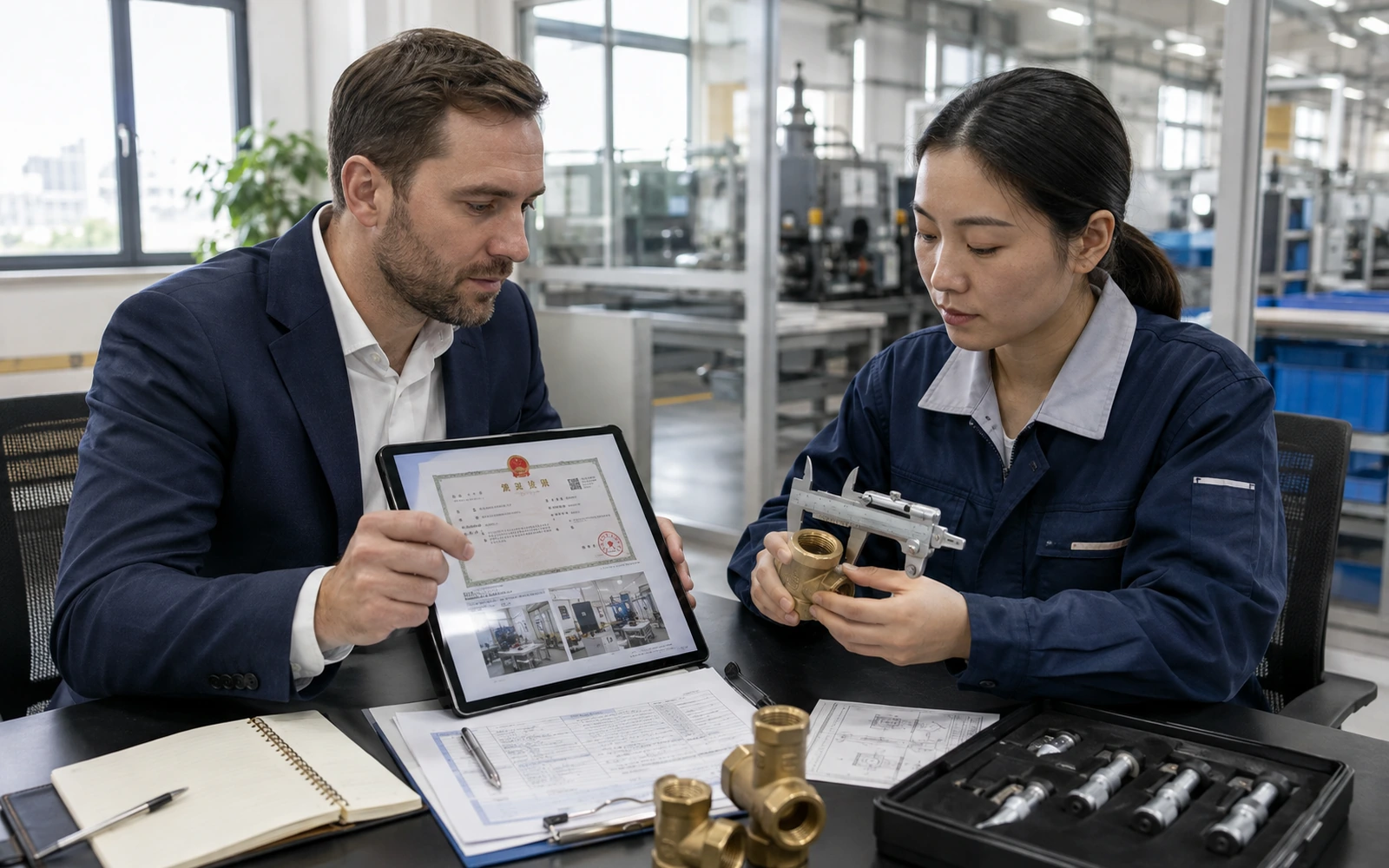
Documents, inspection points, and sample notes are reviewed in context. Compare the full scope before calling a quote a saving. Connect verification and quality checks to the exact model, specification revision, approved sample, lot or batch, test method, defect class, result, corrective action, and release owner. Keep exceptions open until the buyer reviews evidence from a recheck or accepts the stated limitation in writing.

Packaging, handover, and freight details are prepared before shipment. Leave the next owner a clear handoff, including open questions and delays. Review shipping preparation with verified carton count, packed dimensions, weight, cargo value, ready date, route, Incoterm, document status, and handoff owner. Compare alternatives on the same origin-to-destination boundary and mark excluded charges or timing assumptions before booking.
Continue from Supplier Verification Checklist into the guides, services, and tools that support the next documented buyer decision.
Find product options and supplier sources that match your target market and quantity.
Explore This Service 14Review supplier information before committing to payment, samples, or production.
Explore This Service 15Compare price, MOQ, lead time, and terms across supplier quotations.
Explore This Service 16Read practical sourcing guides written for first-time and experienced buyers.
Browse Guides 17Send your product details and get a practical next step from LifaSourcing.com.
Start This RequestThe checklist separates documents supplied by the seller from independent checks and buyer decisions. A blank status is not a pass, and an unresolved conflict should remain visible until the buyer accepts, mitigates, or rejects the risk.
Official links are starting points, not a complete product-specific compliance opinion. Rules and public records can change. Confirm the current requirements for the product, transaction, and destination market before ordering.
A Chinese supplier can be considered reasonably verified when four checks line up: the business registration matches the claimed company, the operation type (factory, trading company, or agent) is confirmed, the factory or warehouse can be reached independently, and a sample matches the agreed specification. This page is a practical checklist for those four checks, designed to be completed before money moves.
| Verification check | What to request or inspect | Where to confirm it |
|---|---|---|
| Legal identity | Business license showing company name, unified social credit code, legal representative, and business scope | Official business registration records (NECIPS in China); the license itself is a document, not proof of operations |
| Factory vs trading company | Business scope wording (manufacturing vs trade only), production line photos, production capacity and equipment list | Registration record + on-site or live-video verification; a trading company can still be legitimate if disclosed |
| Independent reachability | A direct contact at the factory, not only the agent's phone; factory address that can be checked | Direct call, WeChat video walkthrough, or third-party audit coordination |
| Sample consistency | Pre-production sample matching material, dimensions, finish, and packaging agreed in writing | Sample inspection against the approved spec, with photos and measurement notes |
Verification is not the same as approval: it confirms the supplier exists and can do the work; it does not prove product quality, on-time delivery, or that every future order will match. Document each check with a dated record so the decision stays reviewable. For higher-value orders, combine these desk checks with a coordinated on-site audit.
CLIENT REVIEWS
Feedback shared by clients.
I had a folder full of attractive product photos and no sensible way to choose a supplier. LIFA narrowed the search to businesses that could handle our finish and order size, then explained why the others had been left out. The shortlist was shorter than I expected. That turned out to be the useful part; I could spend time on relevant conversations instead of starting from scratch with everyone.
The first call felt rather detailed for a simple tote bag enquiry. Once we discussed carrying weight, handle length and how the bags would be packed, I understood the questions. I did have to repeat our delivery address in a later email, which was mildly frustrating, but the final brief captured the things my original message had missed.
A supplier described itself as the manufacturer, although the paperwork suggested otherwise. Our contact at LIFA separated the trading company from the production site in the supplier notes. There was no dramatic claim that the business was dishonest. We just needed to understand who would make the goods and who would be taking our payment.
Most responses to our furniture enquiry focused on appearance. LIFA noticed the assembly restriction for our delivery team and asked suppliers about it before requesting prices. We would have rejected several lovely-looking options once the cartons arrived. Catching that early was more valuable to me than another page of designs.
Clear expectations help keep China sourcing work practical and responsible.
Even for small orders, checking business registration and requesting basic production details is a reasonable minimum.
Yes, document checks, video calls, and third-party audit services can all be arranged remotely.
Confirm the business registration (unified social credit code and business scope), check whether the scope includes manufacturing or only trading, reach a direct contact at the factory independently, and compare a pre-production sample against the approved specification.
Periodic re-checks are reasonable for long-term relationships, especially before significantly increasing order size.
The checklist is the short form. These explain why each item is on it.
The reasoning behind each check in this checklist.
Read the guide 19What to challenge once verification is passed and terms are drafted.
Read the guide 20The on-site version, for when documents alone are not enough.
Read the guideThis sequence turns Supplier Verification Checklist into a reviewable sourcing record. Adapt the depth to the product, order, market, and risk while keeping the decision trail intact.
State the choice, responsible owner, deadline, alternatives, and what result would change the action. Apply this step to Supplier Verification Checklist: retain the input and approval that make it reviewable.
Record each value, unit, currency, date, version, source, confidence, and whether it is estimated or confirmed. Apply this step to Supplier Verification Checklist: retain the input and approval that make it reviewable.
Convert units and commercial bases so options describe the same quantity, scope, quality, timing, and responsibility. Apply this step to Supplier Verification Checklist: retain the input and approval that make it reviewable.
Follow the field definitions and keep missing inputs visible instead of replacing them with silent defaults. Apply this step to Supplier Verification Checklist: retain the input and approval that make it reviewable.
Change the uncertain inputs that could reverse the result and identify the break point rather than trusting one output. Apply this step to Supplier Verification Checklist: retain the input and approval that make it reviewable.
Save the selected option, rejected alternatives, assumptions, evidence, approver, date, and next review trigger. Apply this step to Supplier Verification Checklist: retain the input and approval that make it reviewable.
Update the record when quotes, quantities, defects, duties, lead times, or responsibilities change. Apply this step to Supplier Verification Checklist: retain the input and approval that make it reviewable.
Use this Supplier Verification Checklist table as a working rule. It does not replace current legal, customs, testing, financial, or technical advice for the exact transaction.
| Route | Use it when | Minimum evidence | Stop condition |
|---|---|---|---|
| Checklist | The main risk is an omitted input, document, or approval step. | Owner, status, evidence link, due date, exception rule. | Checked boxes are accepted without reviewing the evidence. |
| Calculator | Several numeric inputs must be normalized or tested together. | Units, currency, date, formula basis, assumptions, sensitivity. | An estimate is treated as an invoice, tariff ruling, or guaranteed outcome. |
| Decision tree or scorecard | Options must be screened against repeatable conditions or weighted criteria. | Criteria definitions, weights, thresholds, evidence, override authority. | Scores hide a failed mandatory requirement. |
Use Supplier Verification Checklist to frame the matched case decision without adding claims or outcomes beyond its source classification.
The prior supplier failed nickel testing on 6 of 10 samples; return rate reached 7.9% on tarnishing complaints; there was no verified resale-rights or OEM documentation, exposing the brand to IP disputes.
Escalate Supplier Verification Checklist: act when the decision affects safety, legal market access, protected IP, high-value tooling, restricted goods, unusual payment instructions, disputed identity, or a dependency that could stop the business.
Set the Supplier Verification Checklist threshold before the event: defect severity, cost variance, delay, capacity load, document conflict, compliance gap, payment change, or repeated corrective-action failure.
Escalate Supplier Verification Checklist: bring in the relevant laboratory, engineer, customs broker, lawyer, accountant, insurer, or market authority when credentials or current jurisdiction-specific interpretation are required.
Keep the Supplier Verification Checklist evidence: source documents, versions, correspondence, approvals, exceptions, corrective actions, and review dates for the period required by the buyer's market, contract, and internal policy.
This Supplier Verification Checklist tutorial was reviewed on 2026-09-02. Standards, tariffs, customs procedures, platform rules, product requirements, and enforcement practice can change. Confirm the current rule for the exact product, configuration, origin, destination, importer, sales channel, and claim before relying on it.
Primary reference: WTO Trade Facilitation Agreement Facility
For Supplier Verification Checklist, compare suppliers on one controlled brief covering specification, price basis, quality evidence, capacity, lead time, payment, exclusions and unresolved risks. Record the chosen option and buyer approval.
Settle these practical questions before applying Supplier Verification Checklist to a live supplier, order, quality, compliance, or shipment decision.
Turn the Supplier Verification Checklist question into a written decision record. Define the exact product, market and stage; collect comparable facts and supporting documents; mark assumptions and conflicts; identify who owns the decision; and approve the next step only when the evidence matches the requirement. Use a qualified specialist wherever customs, testing, legal, tax or regulatory judgment is required.
For a hypothetical sourcing decision on this page, begin with one written requirement and a defined destination. Compare like with like, request evidence for every material claim, record exceptions, and approve the next supplier, payment, quality, or shipment step only after the evidence matches the brief. This example is specific to the "Supplier Verification Checklist" page and does not promise an outcome.