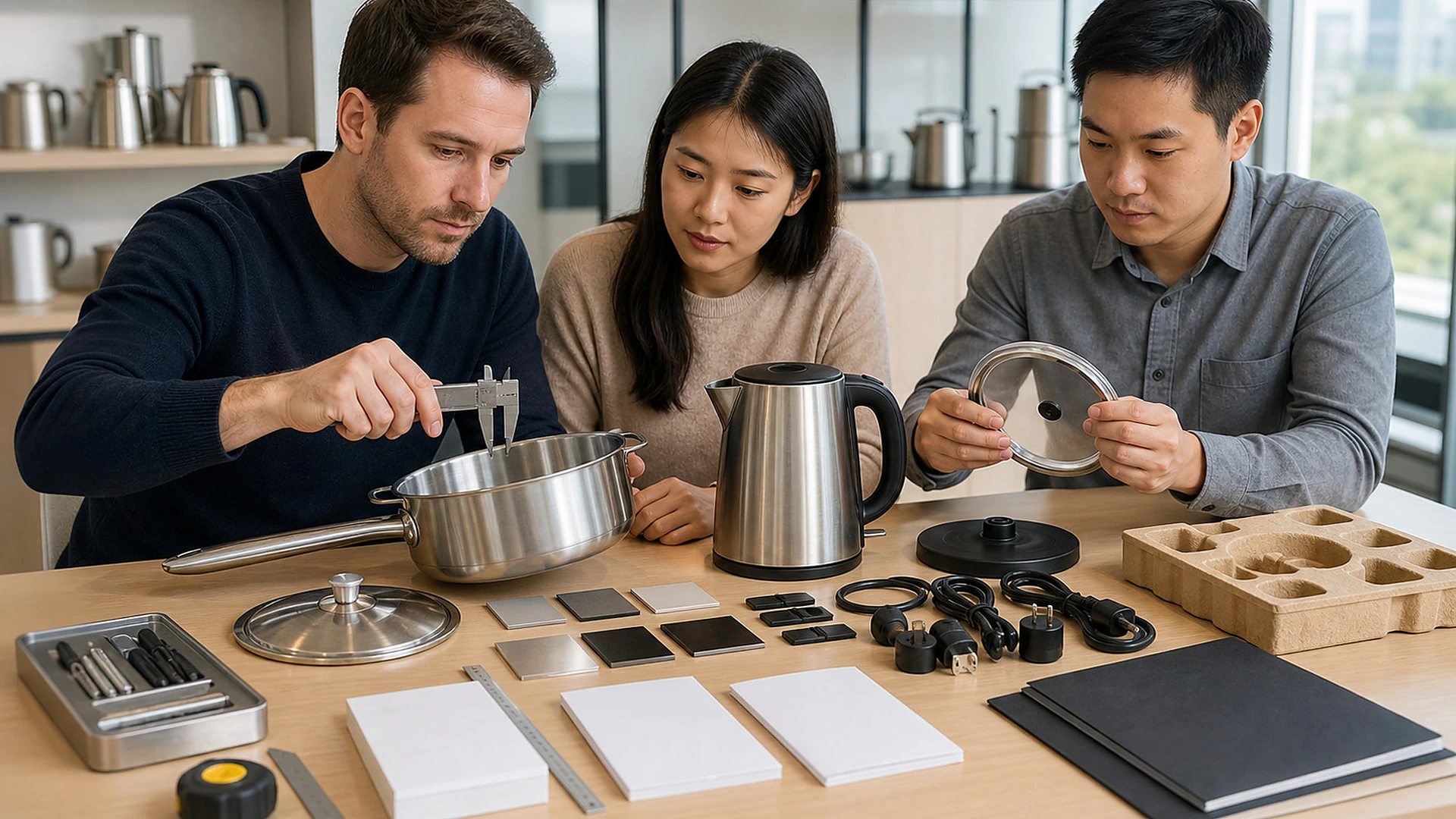
Cookware and bakeware
Pans, pots, trays, molds, and baking tools need material, coating, thickness, handles, food-contact documents, packaging, and sample review.
LIFA Global Trade helps buyers coordinate China-side sourcing for cookware, utensils, silicone tools, storage containers, bakeware, kettles, blenders, air fryers, packaging review, supplier document requests, inspection planning, and shipping preparation.
Supplier calls, factory questions, and follow-up handled during China business hours.
Price, MOQ, materials, lead time, and terms aligned side-by-side before you decide.
Supplier and factory checks coordinated before your money moves — not after.
LIFA runs the daily sourcing work; you approve supplier choice, quotation, and payment.
Cookware, utensils, food containers, and small appliances can look similar while using different materials, coatings, plastics, heating components, labels, manuals, and test-report support. A useful comparison starts with exact product use and destination-market expectations.
LIFA helps organize supplier communication from Hangzhou. LIFA does not certify food-contact or electrical products; buyers remain responsible for compliance, supplier choice, payment, import rules, and final decisions.

A stainless pan, silicone utensil, glass container, and electric kettle each requires different supplier questions.
Pans, pots, trays, molds, and baking tools need material, coating, thickness, handles, food-contact documents, packaging, and sample review.
Silicone tools, knives, peelers, graters, cutting boards, strainers, and gadgets need material clarity, sharp-edge control, finish, labels, and packaging.
Glass, plastic, stainless, bamboo, and ceramic items need food-contact use, lids, seals, color, breakage protection, and carton planning.
Kettles, blenders, air fryers, choppers, grinders, and heaters need voltage, plug, wattage, function, labels, manuals, and safety-document review.

Kitchenware sourcing becomes risky when suppliers quote from photos alone. LIFA helps organize material, function, sample, packaging, document, and inspection questions before larger order decisions.
Product type, material, food-contact use, appliance specs, quantity, packaging, destination, sample needs, and supplier links are organized.
Suppliers are asked about materials, coatings, MOQ, samples, lead time, available reports, labels, packaging, inspection cooperation, and export preparation.
Buyer-facing notes compare sample quality, material claims, function, document availability, packaging details, and open questions.
LIFA can help coordinate inspection scope, carton marks, packaging review, freight communication, and shipment readiness checks.
Food-contact and electrical products require practical care before buyer approval.
Stainless grade, silicone type, coating, plastic, glass, bamboo, and ceramic claims should be clarified with documents where needed.
Voltage, plug type, wattage, heating parts, motors, manuals, labels, and safety documents should be reviewed before ordering appliances.
Glass, ceramic, cookware finishes, and appliance housings need protective packaging, accessory control, and carton marks.
FDA, LFGB, CE, RoHS, UL, ETL, or other requirements vary by market and product. Buyers should verify exact requirements with qualified advisors or labs.
Explain whether the product touches food, uses electricity, needs retail packaging, or must meet a destination-market rule. That clarity helps suppliers quote the same scope.


Small defects, missing accessories, wrong plugs, weak packaging, or unclear labels can create returns and compliance concerns. LIFA can help coordinate buyer-defined inspection scopes and shipping preparation.
Coordinate checks for quantity, appearance, dimensions, function, labels, manuals, accessories, packaging, carton marks, and buyer-defined points.
Confirm carton strength, protective packing, SKU separation, accessory bags, shipping documents, freight communication, and destination planning.
Organize supplier identity, factory claims, documents, and risk signals before larger commitments.
2Coordinate cookware, utensil, container, or appliance samples before production decisions.
3Organize supplier document requests and testing communication where buyers define the required standard.
4Plan buyer-defined checks for material, function, packaging, labels, and shipment readiness.
Review supplier identity, factory claims, documents, and risk signals before trusting quotations.
2Understand what can be checked before shipment and what buyers should define in advance.
3Compare specification, sample, packaging, inspection, and shipment assumptions before choosing suppliers.
Visit the official profile to read or leave honest feedback. This page does not display fake ratings, fake review counts, or invented testimonials.
Prepare product photos, material, dimensions, finish, food-contact use, quantity, packaging needs, destination market, sample requirements, testing or document needs, and supplier links if available.
No. LIFA can help request supplier documents, organize sample communication, and coordinate third-party testing communication when needed, but buyers should confirm legal compliance with qualified labs or advisors for their destination market.
LIFA can help organize sourcing for cookware, bakeware, utensils, silicone tools, stainless kitchenware, storage containers, cutting boards, kettles, blenders, air fryers, and related legal kitchen products.
Common checks include appearance, function, power-on testing, voltage and plug type, labels, manuals, accessories, packaging, carton marks, and buyer-defined electrical safety or lab-test requirements.
Many products that touch food may require material declarations, migration testing, or food-contact documentation depending on material and destination market. Buyers should confirm the exact requirement for their market.
Send photos, specifications, materials, quantity, destination market, food-contact or electrical requirements, packaging needs, and supplier links if available through the request form, email simon@lifasourcing.com, or WhatsApp +86 173 7653 5037.
Send photos, material or appliance specifications, food-contact or electrical requirements, quantity, packaging needs, destination market, and supplier links if available.