
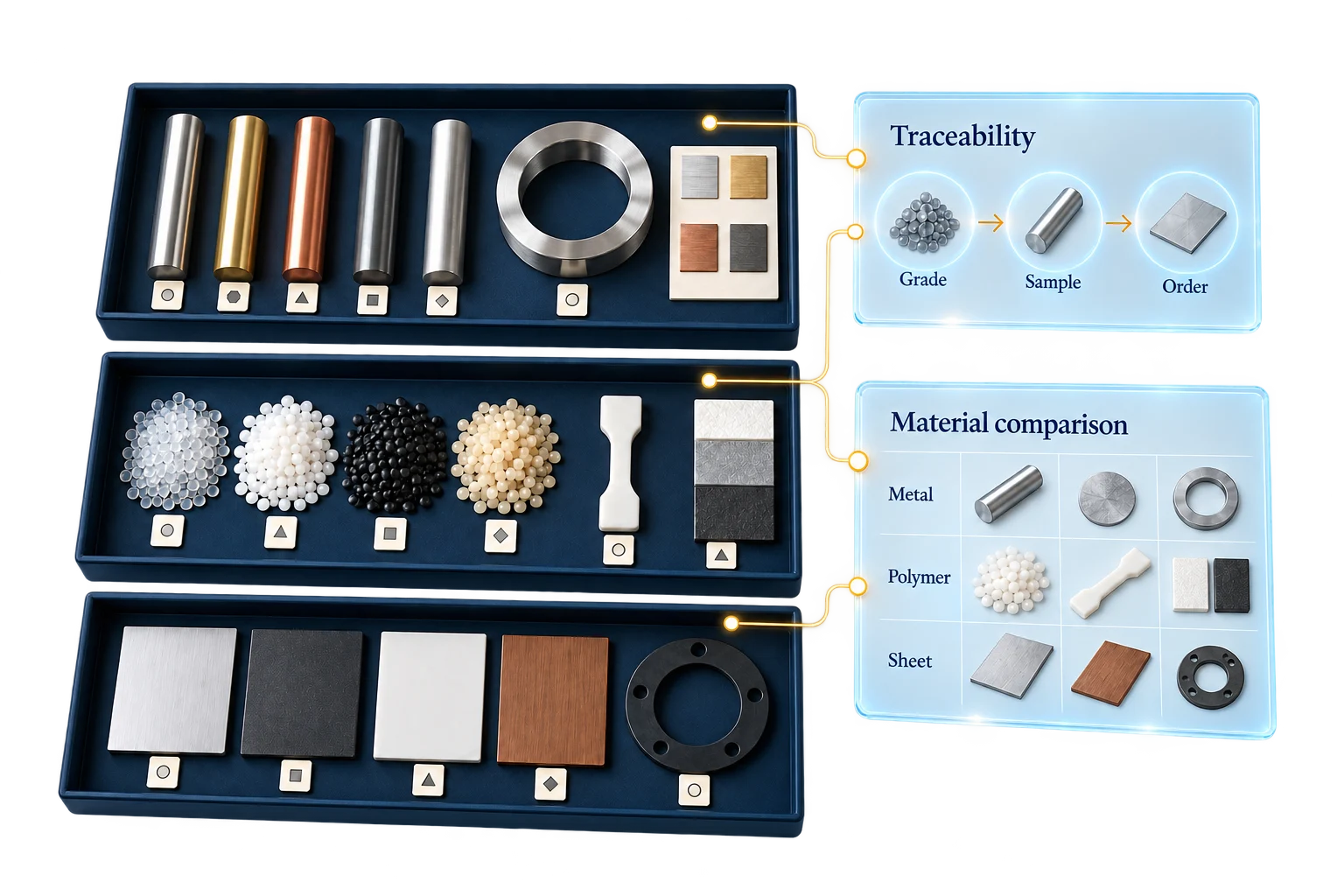
raw materials brief preparation card for Source raw materials and components with specifications, samples, documents, inspection, and packing organized.
China Raw Materials & Components Sourcing

Raw materials & components sourcing from China.

Raw materials and components are only comparable once composition, grade, tolerance, and any processing standard are written down. A quote without this detail is a guess, not a basis for supplier comparison.

Four key decisions on this page

Define grade and tolerances

State composition, dimensions, performance, surface, process, and acceptance limits.

Use representative samples

Confirm how samples relate to production lots, approved sources, and later incoming checks.

Match documents to each lot

Organize specifications, certificates of analysis, traceability, and change records.

Plan incoming verification

Define measurements, testing, sampling, packaging, and nonconformance handling before shipment.

Quick answer

Raw material and component sourcing depends on exact specifications, not product names alone

Materials and parts can look similar while using different grades, tolerances, surface treatments, hardness levels, additives, finishes, or batch controls. A useful supplier comparison starts with drawings, material requirements, sample needs, destination-market expectations, and the inspection points that matter to the buyer.

LifaSourcing.com supports buyers from Hangzhou by organizing supplier communication, comparing visible quote differences, requesting documents, coordinating samples, and preparing inspection and shipping details before the buyer commits.

China sourcing workflow
Product scope

Material and component categories LifaSourcing.com can help organize

05

Industrial materials

Metal profiles, sheet materials, plastic granules, rubber inputs, foams, coatings, textiles, packaging materials, and production inputs. Define industrial materials at a level a supplier can quote and an inspector can verify. Connect function, construction, components, ratings, artwork, packaging, test needs, and destination requirements to one dated revision, with unapproved alternatives listed separately rather than blended into the offer.


06

Functional components

Machined parts, hardware fittings, fasteners, bearings, seals, molded parts, electronic components, assemblies, and replacement inputs. Define functional components at a level a supplier can quote and an inspector can verify. Connect function, construction, components, ratings, artwork, packaging, test needs, and destination requirements to one dated revision, with unapproved alternatives listed separately rather than blended into the offer.

07

Custom requirements

Drawings, tolerance needs, surface treatment, hardness, color, material grade, packing method, label format, and document expectations. Use custom requirements to keep the product decision consistent from RFQ through sample and production. Name the exact variant, material, measurement, performance boundary, packaging, label, and reference file, and require the supplier to disclose deviations before price or lead time is approved.

Buyer problem

A low quote can hide the wrong material, weak traceability, or missing tolerance control

Raw materials and components often become part of another product or production run. If the grade, hardness, tolerance, coating, color, batch mark, or certificate scope is wrong, the problem may only appear after assembly or customer use.

LifaSourcing.com helps buyers structure supplier questions so quotes can be compared by specification, sample evidence, document support, and shipping readiness, not only unit price.

How LifaSourcing.com helps

China-side coordination for materials and components sourcing

1

Specification sorting

Clarify drawings, material grade, dimensions, tolerance, finish, quantity, destination, sample needs, and required supplier documents. Keep the owner, open questions, and buyer approval visible as work moves forward. Leave the next owner a clear handoff, including open questions and delays.

2

Supplier comparison

Compare supplier options by capability, material match, MOQ, process, sample cost, document support, packing, and lead time. Keep the owner, open questions, and buyer approval visible as work moves forward. Leave the next owner a clear handoff, including open questions and delays.

3

Document requests

Coordinate questions about material certificates, test reports, batch marks, composition, surface treatment, and supplier document scope. Keep the owner, open questions, and buyer approval visible as work moves forward. Leave the next owner a clear handoff, including open questions and delays.

4

Sample follow-up

Organize sample instructions, photos, measurements, packaging notes, material differences, and buyer feedback before bulk approval. Keep the owner, open questions, and buyer approval visible as work moves forward. Leave the next owner a clear handoff, including open questions and delays.

5

Inspection planning

Prepare checks. Keep the owner, open questions, and buyer approval visible as work moves forward. Leave the next owner a clear handoff, including open questions and delays. Inspection planning states what is being checked, which revision applies, how the result is measured, and who can release the next step. When evidence conflicts, isolate the affected product or batch and require a traceable correction or recheck before shipment approval.

6

Shipping preparation

Help coordinate carton or pallet data, packing lists, supplier pickup readiness, freight communication, and document handoff. Keep the owner, open questions, and buyer approval visible as work moves forward. Leave the next owner a clear handoff, including open questions and delays.

Risk reduction

Material sourcing needs traceable details before purchase orders are confirmed

Common risks include mixed grades, undocumented substitutions, loose dimensional tolerances, inconsistent surface treatment, weak incoming checks, unclear certificate scope, poor packing, and labels that do not match the buyer’s warehouse or production process.

LifaSourcing.com can help organize information and request supplier documents, but buyers remain responsible for technical approval, engineering validation, lab testing, compliance, import decisions, and final supplier selection.

Common mistakes to avoid

  • Requesting prices before material grade and tolerance are clear.
  • Accepting a generic certificate without checking product and batch relevance.
  • Skipping samples for materials that will enter production or assembly.
  • Ignoring packing, labeling, moisture protection, or pallet requirements.
  • Comparing suppliers without matching process, finish, MOQ, and lead time.
What to prepare

A clearer material brief reduces supplier guessing and quote gaps

08

Technical details

Drawings, photos, grade, dimensions, tolerance, finish, hardness, color, composition, sample needs, and document requirements. Define technical details before the check takes place: measurable requirement, sampling or test method, tolerance, critical and non-critical defects, evidence format, and pass, hold, or fail authority. The decision record should preserve the original finding instead of replacing it with a later correction.

09

Commercial and logistics

Quantity, target budget, destination country, packing method, carton or pallet requirements, timeline, and supplier links already found. Use commercial and logistics to reconcile the quoted scope with this page's requirement before negotiating. List included and excluded work, third-party charges, assumptions, currency, tax or duty basis, and payment trigger, then document the complete package the buyer approves rather than one price line.

Inspection and packing

Inspection should match how the material or component will be used

Inspection planning may include dimensional checks, surface finish, appearance, count, weight, material markings, labels, certificate consistency, packaging condition, moisture protection, pallet quality, and comparison against approved samples or drawings.

For safety-critical, regulated, load-bearing, food-contact, electrical, chemical, or children’s products, buyers should define technical and compliance requirements with qualified professionals. LifaSourcing.com can help coordinate supplier communication and document requests.

FAQ

Raw material and component sourcing questions

Buyer decision notes

Plan the Raw Materials Components decision

Settle these practical questions before applying Raw Materials Components to a live supplier, order, quality, compliance, or shipment decision.

Practical answer

Which specifications, materials, variants and tolerances must a buyer define?

Freeze the Raw Materials Components requirement at the level a supplier can build and an inspector can measure: material grade, dimensions, tolerances, color or finish, components, ratings, variants, workmanship limits, packaging, labels, and approved reference sample. Give each revision a date and require written approval before a supplier substitutes anything.

Decision record

What should the buyer record before the next approval?

Record the approved requirement, comparable supplier or route inputs, supporting documents, exceptions, corrective actions, and the buyer's dated approval. Keep the model, batch, quotation, sample, inspection, payment, and shipment references together so the next reviewer can see what changed and why.

Start organized

Ready to source raw materials or components from China?

Send LifaSourcing.com your drawings, material grade, tolerance needs, sample expectations, quantity, destination market, document requirements, packing needs, and supplier links if available.

  • 01
    SendProduct specification, approved sample notes, order status, defect concerns, and target date.
  • 02
    OrganizeEvidence requests, inspection scope, supplier corrections, documents, and open exceptions.
  • 03
    ApproveAcceptance criteria, correction result, payment or production step, and shipment release.
Ask LIFA AI