Evidence to collect
Photos, measurements, documents, and exceptions tied to the approved specification.

We collect supplier certificates and test records for your product and destination. Identify missing information for review with qualified laboratories or compliance specialists.
Explore Product Certification Support: scope, inputs, steps, deliverables, approvals, timing, risks and next steps with...
Importers often need certificates, test reports, declarations, material files, or product-label documents before a supplier can be...
This service is built around the practical details buyers need before approving suppliers, samples, production, inspection, or shipment.
A certificate file is not enough by itself. Buyers need to know what product, model, factory, test standard, and date the document...
Importers often need certificates, test reports, declarations, material files, or product-label documents before a supplier can be safely considered. The challenge is that supplier documents may be old, unrelated to the exact model, incomplete, or difficult to match with the product being sourced.
LifaSourcing.com helps organize supplier-side document requests and visible gap checks so buyers can review the situation more clearly. LifaSourcing.com does not issue certifications, provide legal compliance advice, or ensure market acceptance. Buyers should confirm legal requirements with qualified advisers, customs brokers, authorities, or platform rules.
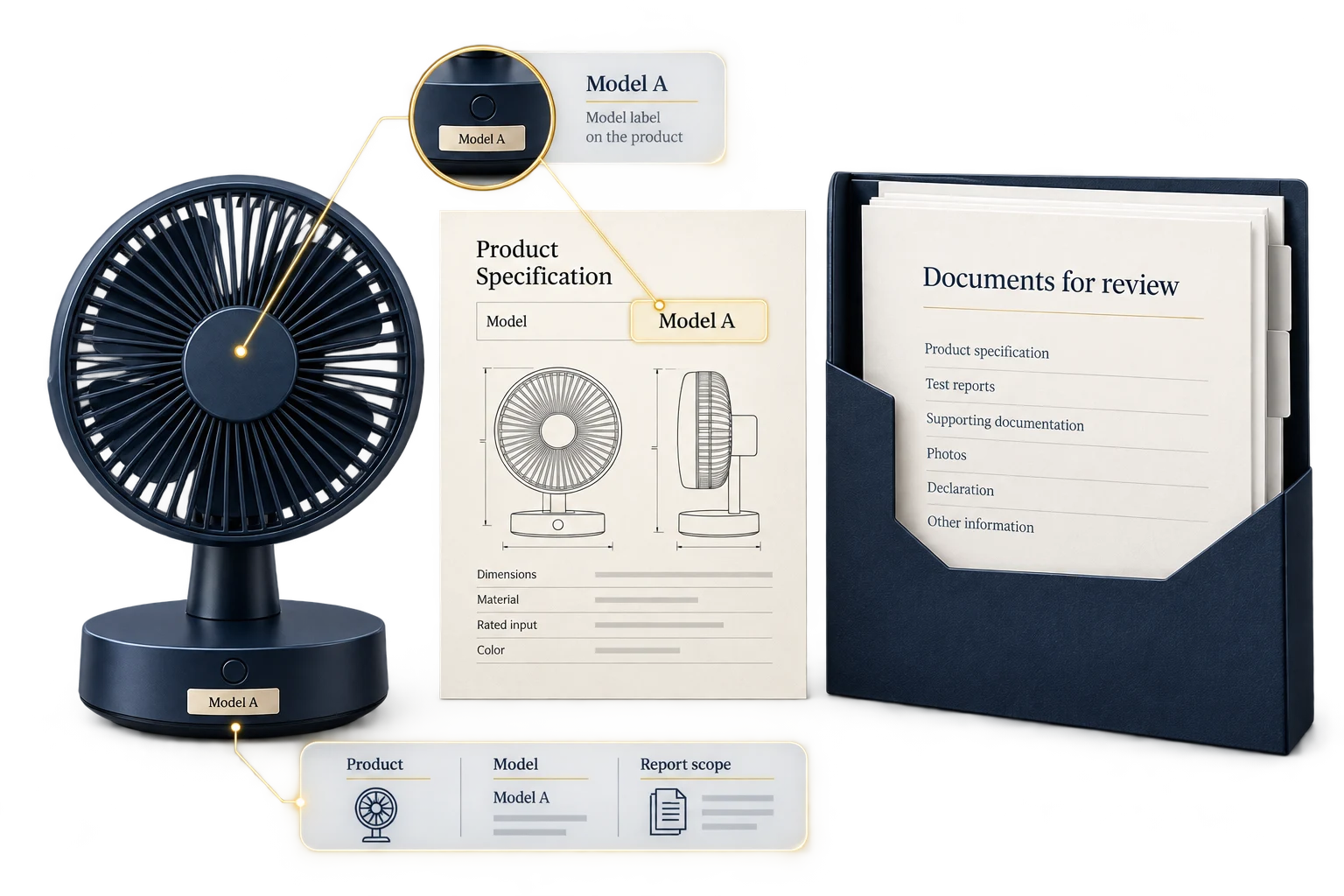
A certificate file is not enough by itself. Buyers need to know what product, model, factory, test standard, and date the document actually covers.
One certificate may cover a different size, material, power rating, age grade, factory, or version than the product a buyer is ordering.
Discuss This 06Buyers may receive screenshots, partial reports, old files, or certificates with unclear issuer details, missing attachments, or no connection to the quote.
Discuss This 07Certification, label, and test requirements should be considered before production, packaging, and shipment, not after goods are packed.
Discuss ThisThe work is practical: collect what exists, organize it, ask better supplier questions, and prepare the buyer to decide what extra compliance review is needed.
Ask suppliers. Compare the full scope before calling a quote a saving.
Discuss This 09Group files by product model, supplier, factory, report date, standard, material, and the product version the supplier claims is covered.
Discuss This 10Use visible gap notes to turn the page discussion into a decision record. State the requirement, compare evidence on one basis, mark assumptions and conflicts, assign the next action, and preserve the buyer approval that authorizes supplier, payment, quality, or shipment work to continue.
Discuss This 11When documents are missing, help pass buyer-selected testing requirements to the supplier or coordinate communication with a third-party lab chosen by the buyer.
Discuss This
When buyers wait until customs, marketplace listing, or shipment booking to review documents, the sourcing project becomes harder to control. Certification support should happen while supplier selection, quotation comparison, sample approval, packaging, labeling, and inspection planning are still adjustable.
The same product family may have several models, voltages, sizes, materials, or age grades with different document coverage.
LifaSourcing.com can coordinate supplier-side files, but legal compliance and destination-market acceptance must be confirmed by qualified sources.
Certification marks, warning text, batch codes, and product claims should match what the buyer is legally allowed to use.
This service is built around the practical details buyers need before approving suppliers, samples, production, inspection, or shipment.

LifaSourcing.com helps identify which certificates — CE, FCC, RoHS, or destination-specific marks — actually apply to your product category, and confirms with the factory which documents it can supply versus which need third-party testing. Settling this before tooling begins avoids costly rework after goods are already made.
Test reports, factory certificates, and compliance declarations are checked against the actual product specification and destination-market rules — not accepted at face value.
Confirmed certificates, labeling requirements, and declarations are organized into the shipment file so customs clearance and market entry aren't held up by missing paperwork.

Quality decisions need a written reference that connects the approved requirement with the evidence found in China.
Photos, measurements, documents, and exceptions tied to the approved specification.
Accept, correct, or escalate each finding before payment or shipment moves forward.
Carry the approved result into production, inspection, packing, and release instructions.

Certification needs depend on the product and destination market. LifaSourcing.com helps organize supplier-held certificates and test reports, and prepares the certification questions buyers should confirm with qualified specialists before ordering.
Each step keeps buyer responsibility clear while making supplier-side documentation easier to review.
Review product type, destination market, sales channel, known standards, supplier links, packaging labels, and shipment timeline.
Ask suppliers for existing certificates, lab reports, declarations, material files, label examples, and model-specific document scope.
Organize documents by supplier, product model, date, test standard, report number, issuer, and visible scope notes.
Follow up with suppliers about missing pages, model mismatch, expired files, unclear report scope, or buyer-selected testing questions.
Prepare the document set and visible gap notes so the buyer can review with their compliance adviser, platform, customs broker, or internal team.
Clear product and market information makes supplier document requests more specific and more useful.
Photos, links, model number, materials, electrical rating, age group, intended use, packaging, and product variants. The brief for product details separates mandatory requirements from preferences and links every critical feature to evidence or a measurable check. On this page, keep drawings, samples, BOM details, packaging files, and change requests under revision control so production does not drift silently.
View Service13Target country, sales channel, marketplace requirements, retailer requests, customs broker notes, or known certification questions.
Discuss This14Existing certificates, test reports, declarations, SDS/MSDS files, screenshots, label drafts, or claims the supplier already provided.
Discuss This15Sample date, order deadline, shipment timing, listing deadline, or the date a compliance adviser needs the document package.
Discuss This
Quality decisions need a written reference that connects the approved requirement with the evidence found in China.
Photos, measurements, documents, and exceptions tied to the approved specification.
Accept, correct, or escalate each finding before payment or shipment moves forward.
Carry the approved result into production, inspection, packing, and release instructions.
Certification support is strongest when the sourcing file connects document scope with supplier verification, sample review, packaging notes, and inspection planning.

Certificates, test reports, declarations, and label notes are grouped so buyers can review with clearer context. Start document organization with the product facts that determine the rule: function, material, model, user, electrical or radio features, packaging, origin, destination, and marketing claims. Record the official source and effective date, then carry approved requirements into the specification and inspection checklist.

Missing pages, model mismatches, expired files, and unclear scope points are sent back as specific supplier questions.
Certification documents are part of supplier review, quality control, packaging, labeling, and shipment preparation.
Review supplier details before accepting document claims or approving payment.
View Service17Prepare product and packaging check points linked to the approved specification.
View Service18Coordinate label text, marks, warnings, and packaging details before printing.
View Service19Review a practical guide to product certification terms and buyer responsibilities.
Read GuideCertification requirements belong to the destination market, not the factory. These explain who needs what.
Which certificates exist, who issues them, and which ones your market requires.
Read the guide 21What CE marking covers for goods entering Europe, and where responsibility sits.
Read the guide 22How documentation and classification decide whether a shipment clears cleanly.
Read the guide 23Classify goods correctly, because the code drives duty and documentation.
Read the guideThese answers keep the difference clear between document coordination and legal compliance advice.
It can include requesting existing supplier certificates and test reports, organizing documents by product model, checking visible dates and scope notes, flagging missing information, coordinating buyer-selected lab testing requests, and preparing document handoff for buyer review.
No. LifaSourcing.com can help organize supplier-side documents and communication, but legal certification requirements depend on product type, destination market, sales channel, and current regulations. Buyers should confirm requirements with qualified compliance advisers, customs brokers, authorities, or platform rules.
LifaSourcing.com can help review visible document details such as product model, issue date, expiry date, report number, and supplier match, but legal validity and market acceptance should be confirmed by qualified compliance professionals or the issuing/testing organization.
Depending on the product and market, buyers may request existing test reports, certificates, declarations of conformity, material declarations, SDS/MSDS files, lab reports, product labels, packaging marks, and model-specific document scope. The buyer should confirm which documents are required.
LifaSourcing.com can help pass testing requirements to the supplier or coordinate communication with a buyer-selected third-party lab. Testing cost, lab selection, legal requirements, and final compliance decisions remain the buyer's responsibility.
Use the request quote page or contact Simon by WhatsApp at +86 173 7653 5037 or email simon@lifasourcing.com. Send the product details, destination market, supplier links, existing documents, known certification questions, shipment timeline, and sales channel requirements if available.
Share product photos or links, destination country, sales channel, supplier contacts, documents already received, known certification concerns, packaging or label requirements, and your order or shipment timeline.