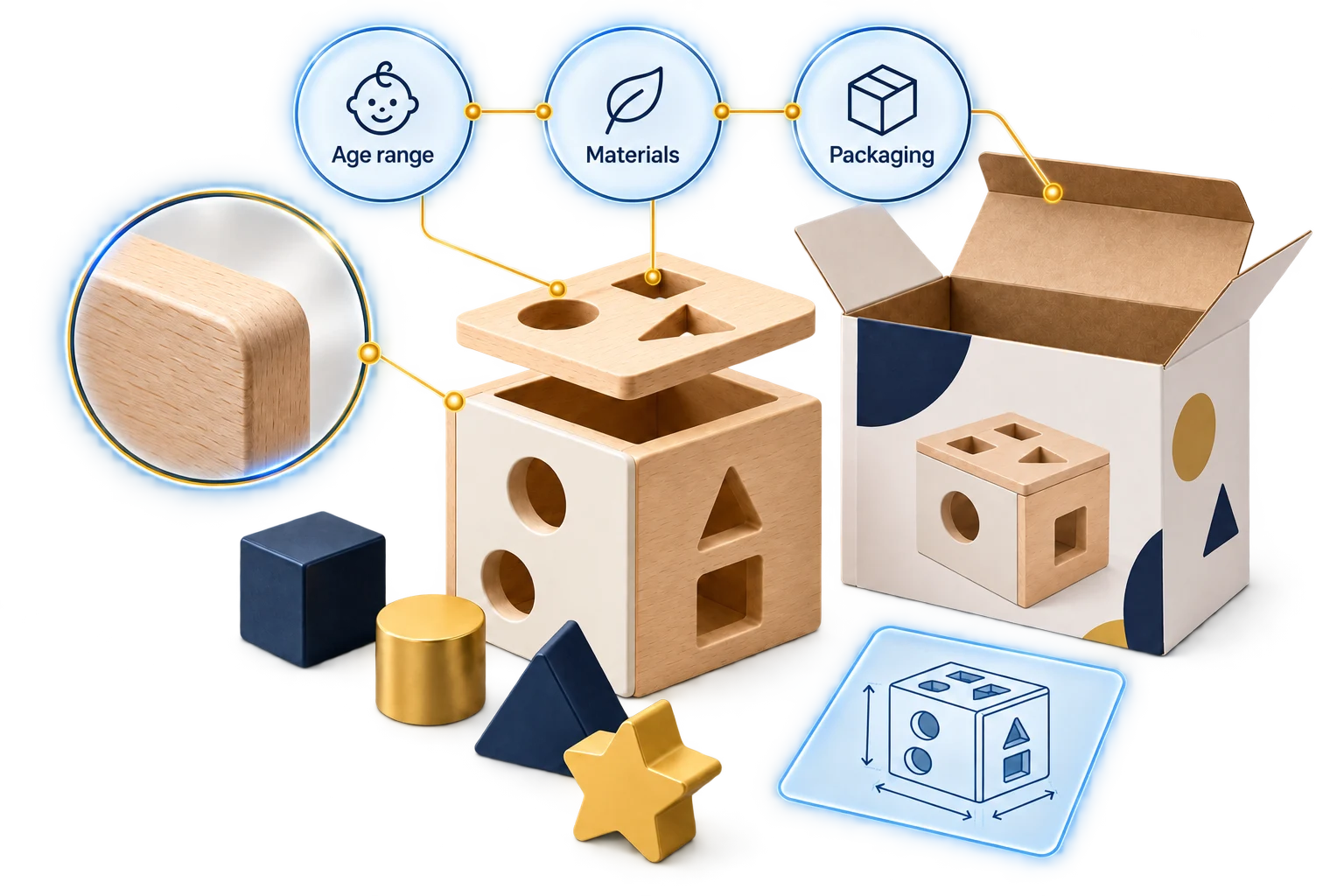
Wooden and educational toys
Wood, paint, edges, small parts, magnets, age range, packaging, and test-report availability should be discussed before quotation comparison.
LIFA Global Trade helps buyers coordinate China-side sourcing for wooden toys, plush toys, educational toys, nursery accessories, kids lifestyle products, packaging review, document requests, inspection planning, and shipping preparation.
Supplier calls, factory questions, and follow-up handled during China business hours.
Price, MOQ, materials, lead time, and terms aligned side-by-side before you decide.
Supplier and factory checks coordinated before your money moves — not after.
LIFA runs the daily sourcing work; you approve supplier choice, quotation, and payment.
Toys and kids products require more careful sourcing than ordinary consumer goods. Material, age grading, small parts, magnets, batteries, coatings, stitching, labels, warnings, packaging, inspection criteria, and destination-market rules should be considered before supplier selection.
LIFA helps organize supplier communication and sourcing comparisons from Hangzhou so buyers can review clearer options before committing. Buyers remain responsible for supplier choice, payment, product safety decisions, compliance, import rules, and final commercial decisions.

A plush toy, wooden puzzle, battery toy, storage bin, and nursery accessory can each require different materials, labels, testing documents, and inspection steps.
Wood, paint, edges, small parts, magnets, age range, packaging, and test-report availability should be discussed before quotation comparison.
Fabric, filling, stitching, seams, embroidery, accessories, odor, labels, stuffing quality, and packaging need practical sample and inspection notes.
Battery compartments, screws, wiring, charging details, instructions, warnings, testing documents, and destination rules should be reviewed carefully.
Storage, nursery accessories, craft items, kids furniture-adjacent goods, and gift sets need material, finishing, packaging, labels, and shipping checks.

Many toy sourcing problems begin when buyers compare photos without checking age range, material, small-parts risk, test documents, labels, warnings, packaging, or inspection requirements. LIFA helps organize those questions before sample and order decisions.
Product photos, age range, material, dimensions, safety concerns, packaging needs, quantity, destination, and supplier links are organized into a sourcing brief.
Suppliers are asked about materials, MOQ, sample cost, lead time, test-report availability, warnings, packaging method, inspection cooperation, and export preparation.
Buyer-facing notes compare specifications, safety-document gaps, sample differences, packaging details, price assumptions, and open questions before larger order decisions.
LIFA can help coordinate inspection scope, carton marks, packaging review, freight communication, and shipment readiness checks.
Small product details can change price, safety-document needs, sample approval, and inspection scope.
Clarify wood, plastic, fabric, filling, paint, coating, magnets, batteries, recommended age, small parts, odor, and destination-market expectations.
Ask about test reports, CPC or other document needs, warning labels, tracking labels, instructions, packaging marks, and whether reports match the exact product.
Assembly, seams, edges, pull points, button or screw security, battery compartments, sound/light function, and approved-sample matching should be reviewed.
Supplier quotations can vary because each supplier assumes a different material, age range, accessory, label, testing scope, or package. A clearer request helps buyers compare realistic supplier options.
Product photos, drawings, dimensions, age range, and reference links.
Material, color, coating, filling, battery, magnet, small-parts, and function details.
Destination market, safety-document expectations, warning labels, and tracking-label needs.
Quantity, budget range, sample expectations, and supplier links already under review.
Packaging, barcode, instructions, carton marks, and retail display needs.
Inspection points such as dimensions, appearance, assembly, labels, function, and packaging.

Existing reports may not match the exact product, material, supplier, or market. LIFA can help request documents, but buyers must confirm compliance suitability.
Samples should be checked for material, seams, edges, function, labels, warnings, packaging, odor, small-parts concerns, and approved-sample consistency.
Warnings, tracking labels, instructions, barcodes, carton marks, and protective packing affect inspection and shipment readiness, so they should be discussed early.

Inspection scope can include appearance, dimensions, material checks, function, assembly, labels, warnings, packaging, carton marks, quantity, and shipment readiness. LIFA can help coordinate inspection support, but buyers remain responsible for final acceptance and compliance decisions.
Wooden toys, plush items, activity toys, battery toys, and kids accessories can be reviewed against approved samples and buyer notes.
Warning labels, instructions, tracking labels, barcode, box, insert, carton mark, and protective packing can be included in inspection coordination.
Carton count, packing ratio, loading preparation, document communication, and freight handoff details are organized before final shipping steps.
LIFA links to its Trustpilot profile for transparency only. This page does not display fake ratings, fake review counts, or invented testimonials.
LIFA can help organize sourcing requests for wooden toys, plush toys, educational toys, activity toys, kids storage, nursery accessories, baby and toddler products, kids lifestyle items, packaging, and non-food kids products.
Prepare product photos or drawings, material requirements, age range, size details, safety or testing requirements for the destination market, packaging needs, target quantity, budget range, sample expectations, and supplier links already under review.
Compare suppliers by material clarity, sample quality, age-grade awareness, document support, warning-label ability, small-parts or battery considerations, packaging ability, inspection cooperation, MOQ, lead time, and export preparation rather than unit price alone.
No. Requirements differ by product type and destination market. Buyers should confirm standards such as ASTM F963, CPSIA/CPC, EN71, UKCA, or other applicable rules with qualified compliance support before final decisions.
LIFA can help organize inspection coordination for appearance, dimensions, material checks, function, assembly, labels, warnings, packaging, carton marks, quantity, and shipment readiness before final shipping decisions.
No. LIFA supports supplier communication, quotation comparison, document requests, sample coordination, inspection coordination, packaging review, and shipping preparation. Buyers keep responsibility for supplier choice, payment, product safety decisions, compliance, import rules, and final commercial decisions.
LIFA can help organize supplier communication, sample notes, quotation comparison, inspection coordination, document requests, and shipping preparation from China.