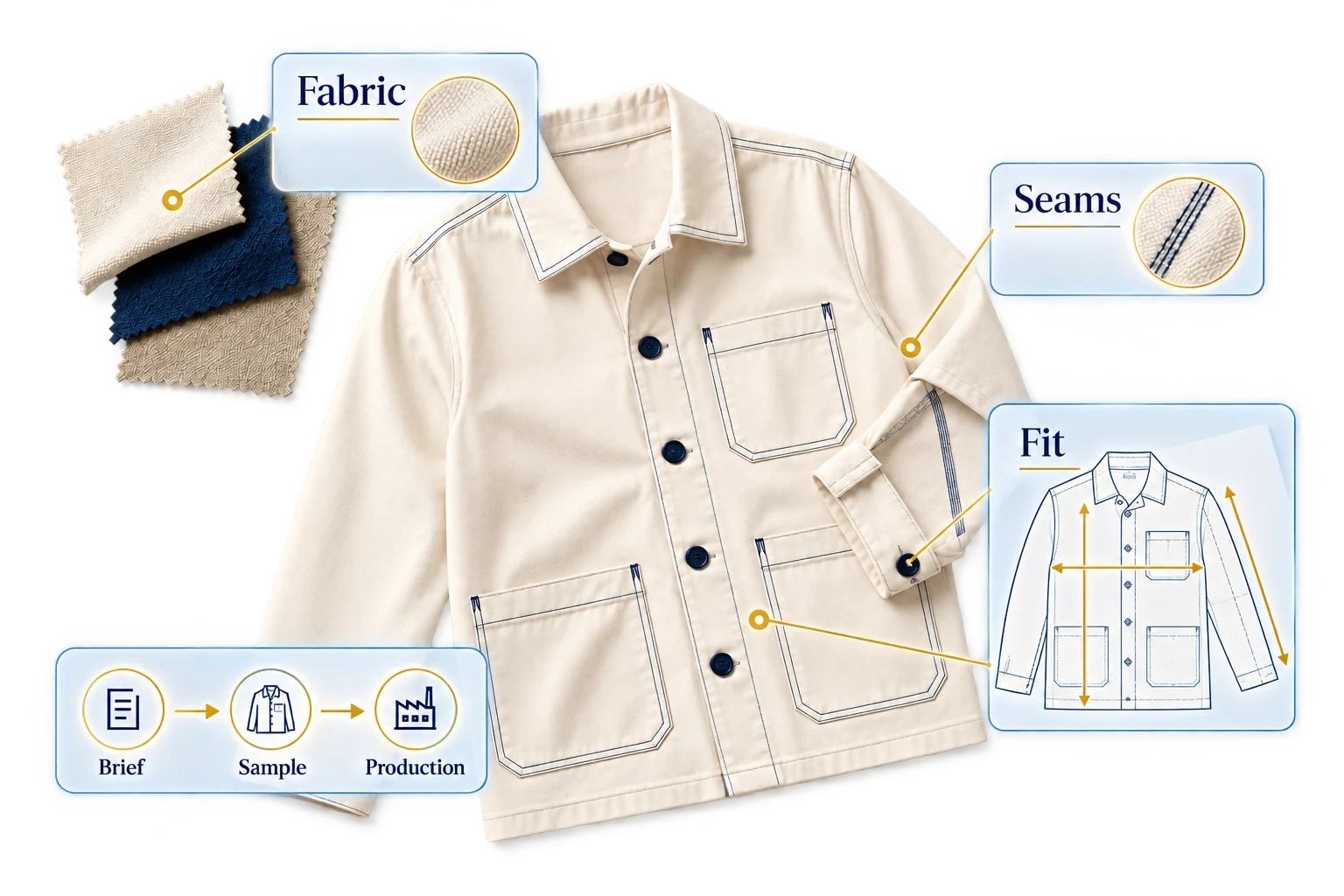
Apparel and textile sourcing review with garment samples, fabric swatches, trims, tech pack notes, labels, and factory inspection context
China Apparel & Textiles Sourcing

Source apparel with tech packs, samples, trims, labels, and inspection details organized.

LIFA Global Trade helps buyers coordinate China-side sourcing for garments, fabrics, trims, labels, private-label apparel, sample review, packaging coordination, inspection planning, and shipping preparation.

  • Compare suppliers by fabric clarity, trim details, sample accuracy, MOQ, lead time, packaging ability, and export preparation.
  • Organize tech-pack notes, size charts, color references, label placement, carton marks, and inspection scope before shipment.
  • Keep buyer control over design approval, supplier choice, payment, compliance, import rules, and final decisions.
📍

On the ground across China

Supplier calls, factory questions, and follow-up handled during China business hours.

⚖️

Quotes made comparable

Price, MOQ, materials, lead time, and terms aligned side-by-side before you decide.

Verified before deposit

Supplier and factory checks coordinated before your money moves — not after.

🤝

Buyer-approved, LIFA-managed

LIFA runs the daily sourcing work; you approve supplier choice, quotation, and payment.

Quick answer

Apparel sourcing works best when product details are clear before supplier comparison.

Garment sourcing requires more than finding a factory with a low unit price. Fabric, trims, pattern understanding, size grading, sample revisions, label placement, packaging, inspection criteria, and shipment preparation all affect whether a supplier is a practical fit.

LIFA helps organize supplier communication and comparison from Hangzhou so buyers can review clearer options before committing. Buyers remain responsible for supplier choice, payment, compliance, import rules, and final commercial decisions.

Apparel sourcing overview with garments, fabric swatches, trims, and supplier comparison notes
Product scope

Different apparel products need different supplier questions.

A clothing supplier may be strong in one fabric, construction method, or order type while being weak in another.

1

Cut-and-sew garments

T-shirts, hoodies, shirts, dresses, uniforms, activewear, and casualwear need clear fabric, pattern, stitching, size, trim, and label details.

2

Knitwear and woven items

Knitwear, woven garments, outerwear, and structured pieces need supplier capability checks around yarn, fabric, finishing, tolerance, and production method.

3

Fabric and trims

Fabric, lining, zippers, buttons, labels, hang tags, and packaging should be reviewed as part of the sourcing decision, not afterthoughts.

4

Private-label apparel

Private-label orders need brand labels, size labels, care labels, inserts, barcodes, polybags, carton marks, and photo sample planning.

Supplier communication for apparel sourcing with tech pack, garment samples, fabric cards, and sourcing notes
How LIFA helps

We help turn apparel ideas into supplier questions that can be answered clearly.

Many apparel sourcing problems begin when a buyer has a photo but no tech pack, or a tech pack but incomplete sample notes. LIFA helps organize practical communication before suppliers quote or produce samples.

1

Requirement review

Product photos, tech pack, size chart, fabric target, trims, quantity, packaging, destination, and supplier links are organized into a sourcing brief.

2

Supplier communication

Suppliers are asked about fabric, trims, MOQ, sample cost, lead time, pattern understanding, label support, inspection cooperation, and export preparation.

3

Sample and quotation notes

Buyer-facing notes compare specifications, quote assumptions, sample gaps, packaging details, and open questions before larger order decisions.

4

Inspection and shipping preparation

LIFA can help coordinate inspection scope, carton marks, packaging review, freight communication, and shipment readiness checks.

Specification control

Apparel details that should be clear before samples and quotations.

Small gaps in a tech pack can become large production differences once a supplier starts sampling or cutting fabric.

1

Fabric and trims

Composition, weight, hand feel, color reference, shrinkage expectations, zippers, buttons, thread, labels, and packaging should be described clearly.

2

Size and construction

Size chart, tolerance, seam type, stitch density, print or embroidery placement, hardware, and finishing details should be reviewed before approval.

3

Sample revisions

Sample feedback should be written clearly so suppliers understand what changed, what stayed approved, and what must be checked again.

Buyer preparation

Send better garment details so factories quote the same product.

Apparel quotations can vary widely because each supplier assumes different fabric, trims, size range, label method, or packaging. A clearer brief makes supplier comparison more useful.

1

Tech pack, drawings, or reference photos.

2

Fabric composition, weight, color, trims, and label needs.

3

Size chart, tolerance, fit notes, and sample expectations.

4

Quantity, budget range, destination country, and timeline.

5

Packaging, care labels, barcodes, hang tags, and carton marks.

6

Supplier links already under review and any compliance questions to confirm.

Apparel verification and quality checks for measurements, stitching, fabric, trims, labels, and packaging
Risk reduction

Common apparel sourcing mistakes LIFA helps organize around.

1

Quoting from photos only

Photos rarely define fabric, pattern, sizing, trims, packaging, or workmanship. LIFA helps convert visual references into supplier questions.

2

Skipping sample notes

Sample revisions should be tracked carefully so approved details are not lost and problem areas are checked again before production.

3

Leaving packaging late

Labels, polybags, barcodes, carton marks, and packing method should be confirmed early because they affect inspection and shipment readiness.

Apparel packaging and shipping preparation with cartons, labels, inspection notes, and export coordination
Inspection and packing

Garment inspection should reflect the buyer's actual product risk.

Inspection scope can include measurements, appearance, fabric, trims, stitching, print or embroidery, labels, packaging, carton marks, quantity, and shipment readiness. LIFA can help coordinate inspection support, but buyers remain responsible for final acceptance decisions.

1

Garment checks

Measurements, workmanship, fabric feel, color, print or embroidery, trims, labels, and approved sample reference can be included.

2

Packaging checks

Care label, size label, polybag, barcode, hang tag, carton mark, and packing ratio can be reviewed during inspection coordination.

3

Shipment readiness

Carton count, loading preparation, document communication, and freight handoff details are organized before final shipping steps.

Verified review profile
Transparent buyer feedback
Open Trustpilot Profile

LIFA links to its Trustpilot profile for transparency only. This page does not display fake ratings, fake review counts, or invented testimonials.

FAQ

Apparel and textile sourcing questions buyers often ask.

LIFA can help organize sourcing requests for garments, knitwear, woven apparel, activewear, uniforms, fashion accessories, fabric, trims, labels, private-label apparel, and related textile products.

Prepare a tech pack if available, reference photos, size chart, fabric target, color references, trims, labels, packaging needs, quantity, destination country, budget range, sample expectations, and supplier links already under review.

Compare suppliers by fabric and trim clarity, sample accuracy, pattern and size understanding, MOQ, lead time, packaging ability, inspection cooperation, communication quality, and export preparation rather than unit price alone.

LIFA can help coordinate sample requests, supplier communication, fabric and trim notes, revision comments, packaging references, and comparison details so buyers can review options before larger order decisions.

LIFA can help organize inspection coordination for measurements, appearance, fabric, trims, stitching, labels, packaging, carton marks, quantity, and shipment readiness before final shipping decisions.

No. LIFA supports supplier communication, quotation comparison, document requests, sample coordination, inspection coordination, packaging review, and shipping preparation. Buyers keep responsibility for supplier choice, payment, compliance, import rules, and final commercial decisions.

Ready to organize an apparel sourcing request?

Send tech pack, sample, quantity, packaging, and destination details.

LIFA can help organize supplier communication, sample notes, quotation comparison, inspection coordination, and shipping preparation from China.