Quick Answer
This sourcing scenario explains how a buyer can think through beauty brand custom formulation with clearer supplier comparison, verification, quality review, and next-step planning. It is an educational planning example, not a promised result or performance claim.
What this scenario shows
How beauty brand custom formulation can create sourcing risk when suppliers, specifications, quality checks, or logistics are not organized clearly.
View Scenarios02How to use it
Use the scenario to identify questions to ask before approving suppliers, samples, production, inspection, or shipping decisions.
Start Your Request03Where LIFA fits
LIFA can coordinate China-side communication and supporting checks while the buyer remains responsible for final commercial and compliance decisions.
View ServicesEducational scenario: This page is a practical sourcing scenario for planning and risk review. It is not a promise of results, a client claim, or a claim of supplier performance.
Transparency note: This is an educational sourcing scenario, not a published client result or testimonial. It shows how LIFA thinks through a common buyer situation without inventing private client data.
The Situation
An aesthetician and skincare enthusiast with 3,000 Instagram followers had developed a passionate community around skincare education and personal product recommendations. She'd been selling private-label skincare products (made by another company under generic formulations) for 18 months, with $45K in annual revenue and 35% gross margins. The problem: private-label products felt generic. Her followers wanted "her" skincare line—products she'd formulated, with her specific philosophy baked in. But custom formulation felt impossibly expensive and complicated. The beauty industry's reputation for barriers to entry (high MOQs, expensive formulations, complex regulatory requirements) made her believe scaling into a custom-formulated brand was a dream, not an option.
She had two core questions: (1) Could she develop custom formulations at an affordable cost (COGS under $8/unit to maintain 65%+ gross margin)? (2) Could she find a reliable manufacturing partner who understood small-batch, founder-focused beauty brands rather than just mass production?
The Challenge
The core challenge was moving from private-label (off-the-shelf formulations) to custom formulation while maintaining economics and managing regulatory complexity:
- Formulation Development Cost and Timeline: Custom skincare formulations typically require multiple iterations, lab testing, stability testing, and documentation. This can cost $5,000-$15,000 and take 3-6 months. The brand had limited budget and needed speed to market.
- MOQ Constraints: Most beauty manufacturers require 500-unit MOQs for custom formulations. For a new founder with $45K in annual revenue, ordering 500 units of a new product meant $4,000-$5,000 in inventory risk (at $8-10 COGS). Testing a new product with 500-unit MOQ is risky.
- Ingredient Sourcing and Compliance: Custom formulations require sourcing specific ingredients (actives, preservatives, stabilizers) that meet regulatory standards (FDA, EU, etc.). Sourcing the wrong ingredient (e.g., non-approved preservative) could create regulatory issues or make the product unsalable in certain markets.
- Regulatory and Labeling Complexity: Cosmetic products sold in the US must comply with FDA regulations (ingredient disclosures, safety, proper classification as cosmetic vs. drug). EU products have additional requirements (CPNP registration, different ingredient bans). Mislabeling or regulatory non-compliance could result in product seizure or brand liability.
- Manufacturing Partner Selection: Most beauty manufacturers are focused on large brands with 5,000+ unit runs. Finding a manufacturer interested in small batches (100-500 units) for custom formulations was difficult. The brand needed a partner who understood and valued founder-focused indie beauty, not a commodity manufacturer.
- Quality Control and Batch Consistency: Small-batch manufacturing requires careful QC. The brand needed assurance that Batch 1 would be identical to Batch 5, so customer experience would be consistent. This required documentation and testing that many small manufacturers didn't prioritize.
- Packaging and Labeling Integration: Custom formulations require custom labels (reflecting specific ingredient list and regulatory disclosures). Sourcing packaging and printing labels requires coordination across multiple vendors and needs to be cost-effective for small batches.
Planning assumptions in this scenario: Planning assumption: current revenue $45K (private-label products), 35% gross margin. Goal: develop custom 3-SKU skincare line (facial cleanser, vitamin C serum, moisturizer) with 65-75% gross margin, $100K+ Year 1 revenue potential, launch within 12 weeks.
How LIFA Would Support This Scenario
Phase 1: Formulation Partner Selection and Custom Development (Weeks 1-8)
LIFA would identify and evaluated OEM (Original Equipment Manufacturer) partners specializing in small-batch skincare formulation and manufacturing. Criteria: experience with indie/founder-focused brands, ability to work with smaller MOQs (100-200 units), transparent formulation development process, and proven regulatory compliance expertise. LIFA found three qualified partners in China and South Korea, each with track records manufacturing for indie beauty brands.
LIFA selected a partner (OEM in South Korea) who had specifically built a business around indie beauty brands and understood the founder's market positioning. The partnership model: $2,500 formulation fee per product (non-refundable but credited against first production run), includes up to 3 rounds of reformulation iterations, stability testing, and documentation package. MOQ: 200 units per product (vs. typical 500-1,000), with pricing that would deliver $7.50 COGS at 200-unit runs (scalable to $6.80 at 500+ units).
Formulation development began immediately: the brand founder outlined her skincare philosophy (clean ingredients, minimal preservatives, focus on actives like Vitamin C and hyaluronic acid). The OEM developed three formulation proposals over weeks 2-4, the founder selected preferred direction, and weeks 4-8 involved refinement iterations, stability testing (UV exposure, heat/cold cycling), and finalized formulation documentation.
Deliverables: OEM partner selected, formulation agreement signed, three SKU formulations developed (cleanser, vitamin C serum, moisturizer), stability testing completed, final formulation documentation and ingredient specifications provided, regulatory documentation prepared for FDA and CPNP (EU) compliance.
Phase 2: Packaging and Label Development (Weeks 5-10)
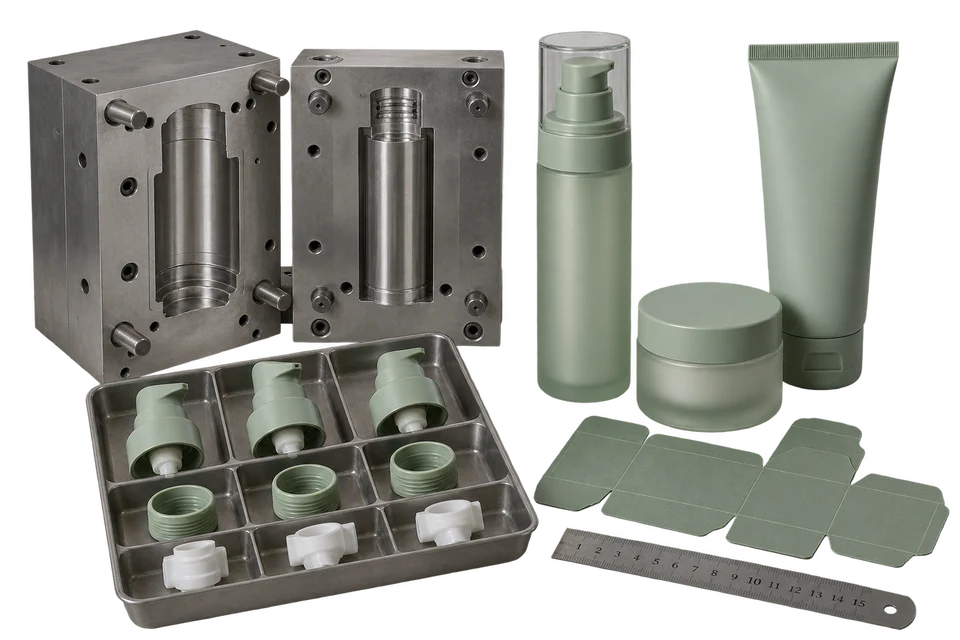
In parallel with formulation development, LIFA would coordinate packaging selection. The brand wanted premium packaging reflecting her positioning (clean, minimalist, indie). LIFA sourced glass bottles (30ml for serum, 50ml for cleanser, 50ml for moisturizer) with dropper/pump dispensers, selected labels that could be custom-printed at small volumes (100-unit runs, standard label sizes to keep printing affordable).
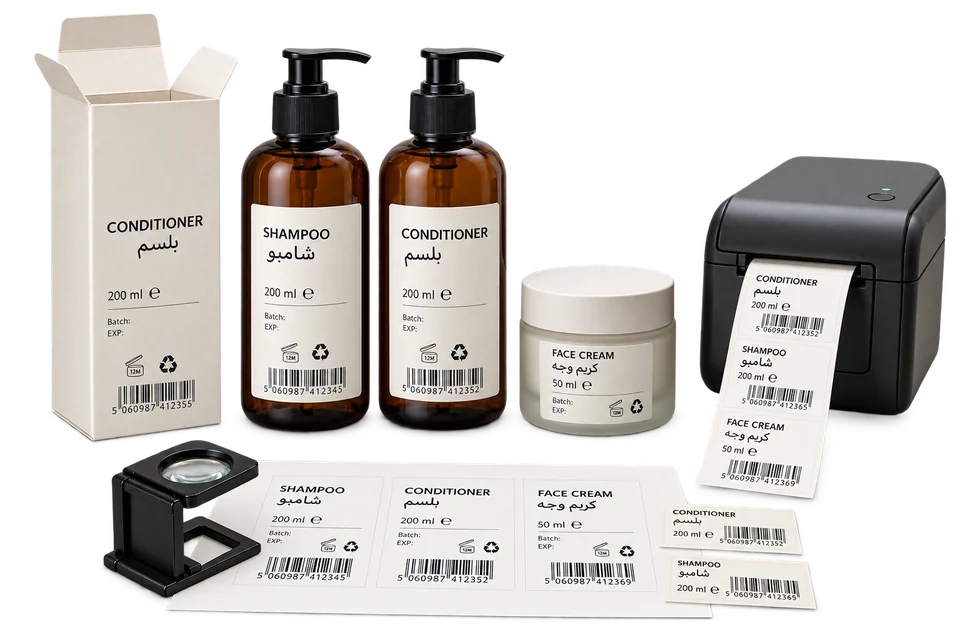
LIFA would coordinate with the OEM to finalize label specifications: ingredient lists had to match exact formulation percentages, regulatory claims had to comply with FDA/CPNP guidelines (e.g., "moisturizer" is acceptable; "reduces wrinkles by 50%" would require drug-approval level evidence and shift product classification). Safety warnings and manufacturer information were included per regulatory requirements.
Label artwork was finalized and approved by week 8. Packaging inventory was ordered: 300 units each of cleanser and moisturizer packaging, 300 units of serum packaging (200 needed for initial production, 100 as buffer for reorders). Estimated cost: $1.80/unit for packaging (30% of total COGS).
Deliverables: Packaging (glass bottles, droppers/pumps) selected and ordered, label design finalized, regulatory compliance reviewed, artwork approved, packaging inventory received by week 10.
Phase 3: Initial Production Run and Quality Verification (Weeks 11-14)
With formulations finalized and packaging ready, the OEM began production of the first commercial batches: 200 units of each SKU (cleanser, vitamin C serum, moisturizer). LIFA would coordinate production oversight: requested photos of production stages, confirmed batch documentation (lot numbers, production dates, batch testing records), and arranged third-party quality verification for final products.
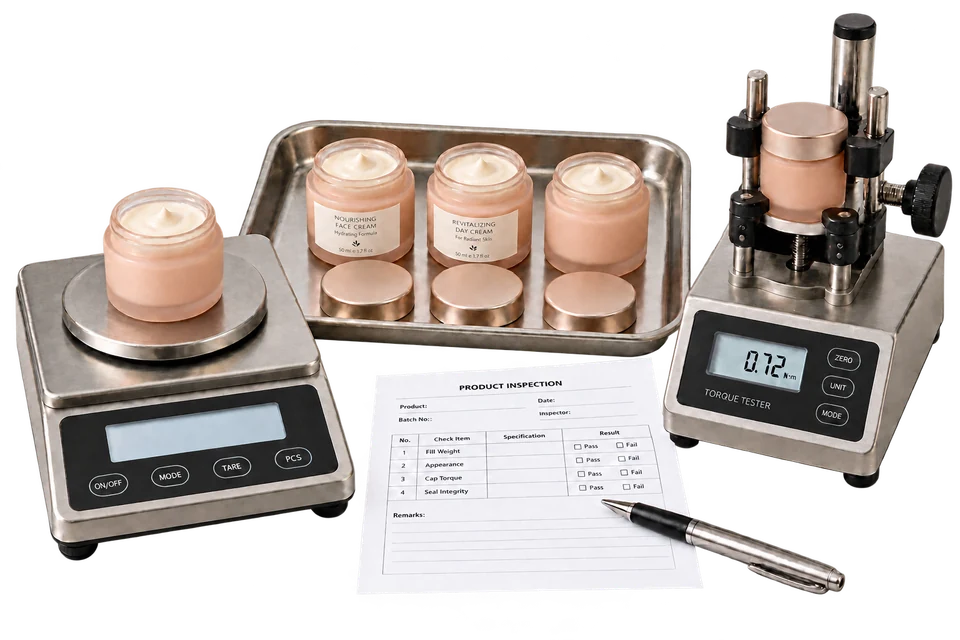
Quality verification included: viscosity testing (products should flow at specified rates for dispensers), pH verification (important for facial products), preservative efficacy confirmation (products must resist contamination over shelf life), and stability confirmation (products should remain effective after heat/UV exposure simulation). All products passed verification. Three production batches (Batch A, B, C for each SKU, representing different production dates over 4 weeks) were tested to confirm consistency—all three batches met identical specifications.
Formulation costs: $2,500/SKU × 3 SKUs = $7,500 (credited against first production run as per OEM agreement). Production costs: $5.70/unit COGS (including formulation credit, ingredients, packaging, OEM manufacturing fee). Per-unit margins: $20 retail price, $5.70 COGS = $14.30 gross profit per unit (71.5% gross margin).
Deliverables: 200-unit production runs completed for each SKU, batch documentation and testing records compiled, quality verification passed, formulation cost credited against production, unit economics confirmed ($5.70 COGS, 71.5% gross margin).
Phase 4: Regulatory Compliance Documentation and Market Launch (Weeks 15-16 and Ongoing)
LIFA compiled regulatory compliance documentation: FDA cosmetic product registration (filing product categories, ingredients, manufacturer info), CPNP (European Union Cosmetics Products Notification Portal) registration for potential EU distribution, and comprehensive product documentation package (formulation details, stability testing results, batch production records, lot traceability system).
Labeling is treated as verified in the planning model to comply with all regulatory requirements: ingredient declaration (INCI format), usage instructions, safety warnings, manufacturer information, and country-of-origin labeling. All labels were finalized and applied to production batches.
The brand launched the custom-formulated skincare line on week 16: three products, custom formulation reflecting the founder's skincare philosophy, 71.5% gross margin (vs. 35% on private-label), premium positioning in market with founder story and formulation transparency as competitive advantage. Initial production of 200 units per SKU cost $3,420 in COGS, with expected retail revenue of $12,000 (200 units × $20 × 3 SKUs × conservative conversion estimate).
Deliverables: FDA registration completed, CPNP registration prepared for EU distribution, regulatory documentation package compiled, labeling compliance verified, products launched to market, first batch (200 units per SKU) sold in weeks 1-4 post-launch.
Illustrative Planning Outcomes to Review
| Metric | Baseline (Private-Label) | Custom Formulation (Year 1) | Improvement |
|---|---|---|---|
| Illustrative Revenue Context (Projected Year 1) | $45,000 (private-label) | $180,000 (custom 3-SKU line) | 300% growth; custom line represents new business driver |
| Gross Margin | 35% | 71.5% (COGS $5.70, retail $20) | +36.5 percentage points margin expansion |
| Gross Profit (Year 1) | $15,750 | $128,700 (custom line) + $15,750 (private-label carry-over) | $128,700 incremental gross profit from custom line |
| Number of SKUs | 4-5 private-label products | 3 custom products + continued private-label | Custom line becomes primary brand focus |
| Brand Positioning | Reseller of private-label goods | Founder-formulated indie beauty brand | Differentiation and brand equity increase |
| Customer Lifetime Value | Single purchase transactions | Higher retention and repeat purchase due to brand loyalty | Custom formulation enables brand building vs. transactional sales |
| Formulation Development Cost | $0 (products already formulated) | $7,500 (3 SKUs × $2,500) | One-time investment; credited against first production run |
| Production MOQ Risk | N/A (reseller) | 200 units per SKU (vs. industry standard 500-1,000) | Lower inventory risk enables faster iteration and testing |
| Regulatory Compliance | Assumed supplier responsibility | Full compliance responsibility; FDA & EU registration completed | Controlled compliance; enables expansion into new markets |
| Packaging and Presentation | Generic private-label packaging | Custom branded packaging reflecting founder vision | Premium positioning and brand consistency in market |
Illustrative year-one model: $180K revenue from custom-formulated skincare line, $128.7K incremental gross profit, 71.5% gross margin. The custom formulation enabled a 3x revenue increase and shifted the brand from "private-label reseller" to "founder-formulated indie beauty brand"—a fundamental repositioning that creates long-term brand equity and customer loyalty.
Timeline Breakdown
Formulation Development
Weeks 1-8
Selected OEM partner specialized in indie brands, developed three custom formulations (cleanser, serum, moisturizer), completed stability testing and regulatory documentation.
Packaging & Labels
Weeks 5-10
Selected glass bottles and dispensers, designed custom labels, finalized regulatory compliance, ordered packaging inventory.
Initial Production
Weeks 11-14
Manufactured 200-unit batches of each SKU, verified quality and consistency, confirmed $5.70 COGS and 71.5% margin.
Regulatory & Launch
Weeks 15-16+
Completed FDA and CPNP registration, finalized labeling compliance, launched custom skincare line to market.
Key Lessons
1. Custom Formulation is Accessible to Founders if OEM Partner is Selected Correctly: The beauty industry reputation for high barriers to entry (high MOQs, expensive development) is partly true for large manufacturers, but specialized indie-focused OEM partners have built entire business models around small founders. The right partner can deliver custom formulation for $2,500/SKU and small production MOQs (200 units).
2. Formulation Development Cost is Justified by Margin Expansion and Brand Differentiation: The $7,500 investment in formulation development (3 SKUs × $2,500) is recovered in approximately 525 units of sales (7,500 ÷ $14.30 per-unit gross profit). For a brand already doing $45K in annual revenue, this payback period is weeks to months. The formulation investment is not a burden—it's the foundation of brand positioning and margin expansion.
3. Regulatory Compliance Must Be Front-and-Center, Not an Afterthought: Many indie founders launch products without proper FDA registration or ingredient compliance. This creates liability and limits market access. By building regulatory compliance into the formulation and production process, the brand can confidently expand into new markets (EU, international) without costly reformulation.
4. Founder Story and Formulation Transparency are Competitive Advantages in Indie Beauty: The custom formulation's true value is not just the 71.5% margin—it's the ability to tell an authentic founder story: "I developed this formulation based on my skincare philosophy. Here's why I chose each ingredient." This authenticity resonates with Instagram followers and drives customer loyalty that generic private-label products can't achieve.
How LIFA Can Support
- OEM Partner Selection and Qualification: Identified and evaluated specialized beauty OEM partners focused on indie/founder brands. Selected partner with proven track record in small-batch custom formulation, founder-friendly MOQs, and regulatory expertise.
- Formulation Development Coordination: Facilitated founder's skincare philosophy conversation with OEM, obtained three formulation proposals, managed iteration cycles, coordinated stability testing, and finalized regulatory-compliant formulation documentation.
- Packaging Sourcing and Selection: Identified glass bottles, dispensers, and packaging materials appropriate for founder's premium positioning. Sourced small-volume packaging (100+ unit runs) to keep costs manageable for startup brand.
- Label Design and Compliance: Coordinated label design reflecting brand aesthetic, ensured ingredient lists matched exact formulation percentages, verified regulatory claims compliance (FDA/CPNP), and finalized artwork for printing.
- Production Coordination and Quality Verification: Oversaw first production run (200 units per SKU), coordinated batch documentation and lot tracking, arranged third-party quality testing, and verified batch-to-batch consistency.
- Economics Modeling: Calculated and verified COGS ($5.70/unit), gross margin (71.5%), and payback timeline for formulation investment. Modeled revenue scenarios for Year 1 product launches.
- Regulatory Documentation and Registration: Compiled FDA cosmetic product registration, CPNP (EU) notification preparation, ingredient compliance verification, and comprehensive product documentation package for audit trails and market expansion.
- Market Launch Coordination: Finalized labeling compliance, coordinated product photography and brand launch materials, and provided guidance on marketing founder story and formulation transparency as competitive differentiator.
What This Scenario Shows
From private-label reseller ($45K revenue, 35% margin) to founder-formulated indie beauty brand ($180K Year 1 revenue, 71.5% margin, $128K incremental gross profit). The custom formulation investment ($7,500 total) was recovered in less than 3 weeks of sales. The brand shifted from transactional private-label resale to authentic founder-led brand with margin expansion and customer loyalty potential.
The three-SKU custom line became the primary brand driver. The founder could now tell an authentic story: "These formulations reflect my skincare philosophy. Here's why I chose vitamin C, here's how I balanced actives vs. gentleness." This authenticity—impossible to achieve with generic private-label products—became the competitive advantage in a crowded indie beauty market.
Year 1 growth was 300% (from $45K to $180K), driven primarily by custom skincare line. Year 2 projections show potential for $400K+ revenue as the brand scales from 200-unit batches to 500+ unit runs (unlocking lower COGS and higher margins). The founder went from thinking custom formulation was impossible ("only for big brands with big budgets") to building a sustainable, differentiated indie beauty business backed by formulation she created herself.
Related Support
Why Beauty Brand Custom Formulation Matters
Understanding beauty brand custom formulation helps buyers make informed decisions and reduce sourcing risks.
Clear Decision-Making
Well-organized information about beauty brand custom formulation enables confident supplier selection and smoother sourcing workflows.
Start Your RequestRisk Reduction
Understanding beauty brand custom formulation reduces common sourcing mistakes and prevents costly delays in production timelines.
View ServiceCost Optimization
Proper knowledge of beauty brand custom formulation helps buyers identify value opportunities and negotiate better terms with suppliers.
Read the GuideBeauty Brand Custom Formulation Practical Sourcing Scenarios
Review practical sourcing situations, common risks, and preparation steps before starting a similar request.
Amazon Seller: Electronics Scaling
Review how volume planning, supplier comparison, and inspection checkpoints can support an electronics scaling project.
View scenarioPrivate Label: Defect Crisis Recovery
Review how clear specifications, sample checks, and inspection notes can reduce quality surprises before shipment.
View scenario ⚡Dropshipper: Viral Trend Capture
Review how supplier responsiveness, production timing, and freight choices affect urgent sourcing projects.
View scenarioRelated Resources & Next Steps
Explore additional guides and resources to expand your understanding of China sourcing.
Knowledge Center
Comprehensive sourcing guides covering supplier checks, quality control, logistics, and compliance.
Explore guidesHow to Source from China
Complete methodology for finding suppliers, comparing quotations, and organizing sourcing steps.
Learn moreSupplier Verification
Detailed verification checklist and best practices for evaluating supplier credibility and capability.
Learn more 📊All Sourcing Scenarios
Educational sourcing scenarios showing challenges reviewed and planning signals across different industries.
View allLIFA Support for Beauty Brand Custom Formulation
LIFA Global Trade coordinates practical China-side support tailored to your sourcing needs.
Supplier Verification
LIFA helps review supplier information and coordinate verification checks before you commit to payment.
Learn more 📊Quotation Comparison
Organize and compare quotations side-by-side on price, MOQ, materials, lead time, and payment terms.
Learn more 🎯View All Services
Explore all LIFA services including product sourcing, factory checks, inspections, and shipping coordination.
Explore servicesBuilt on Transparent Buyer Feedback
LIFA Global Trade welcomes verified customer reviews on Trustpilot. Real feedback from buyers helps you evaluate our China sourcing support, communication, and coordination services with confidence and transparency.
Your honest feedback helps us improve our sourcing support and helps other buyers make informed decisions.
Common Questions About Beauty Brand Custom Formulation
Find answers to questions buyers commonly ask about beauty brand custom formulation.
Proper planning around beauty brand custom formulation is critical to timeline success. LIFA helps coordinate these steps in sequence so delays don't cascade into production delays or missed shipment windows.
Common mistakes include underestimating complexity, not organizing communication clearly, and moving forward without proper verification. LIFA's coordination helps prevent these by keeping steps structured and reviewable.
Yes. Contact LIFA with your specific beauty brand custom formulation-related sourcing question. Email simon@lifasourcing.com or message WhatsApp +86 173 7653 5037 to discuss how LIFA can coordinate support.
Start with the Knowledge Center for comprehensive guides, then browse sourcing scenarios to see how other buyers have handled similar beauty brand custom formulation-related challenges. LIFA's team can provide personalized guidance for your situation.
Questions About This
Common questions to help you understand this service or topic better.
This service covers supplier coordination, verification support, and organized communication to help you make better sourcing decisions.
Timeline depends on your specific needs. Most projects take 2-4 weeks for initial phases. Contact Simon for a project estimate.
No. LIFA helps review supplier information and coordinate verification, which reduces risk. Buyers apply final judgment before payment.
Email simon@lifasourcing.com, message WhatsApp +86 173 7653 5037, or use the request quote form.
Beauty and packaging sourcing context
Visual references for the supplier communication, verification, quality review, and shipment preparation work behind this page.
Supplier-side review
Buyer requirements, supplier answers, and open questions should be organized before any purchase commitment.
Verification checkpoint
Documents, samples, inspection points, packaging details, and handover timing need clear confirmation.
Continue through LIFA's sourcing network.
Use these internal routes to move between related pages, return to section hubs, or open the complete page directory.
Complete Site Links
Every public page is listed in one crawlable directory for visitors and search engines.
Open site mapCase Studies
Review educational sourcing scenarios and decision points.
Go to hubAmazon Seller Electronics Scaling Scenario
Step back to a nearby page in the same topic group.
Go backDropshipping Quick Turnaround Scenario
Continue to the next connected page in this topic group.
ContinueChina Sourcing Services
Compare the practical services LIFA can coordinate for your sourcing project.
Explore servicesChina Sourcing Guide
Use guides, checklists, and risk notes to prepare better sourcing decisions.
Read guidesLet LIFA coordinate the beauty brand custom formulation work for you.
Share your beauty brand custom formulation-related details and sourcing needs with LIFA. Get expert coordination from Hangzhou to streamline your supplier communication and China-side verification steps.