

Quick Answer
This sourcing scenario explains how a buyer can think through electronics compliance certification with clearer supplier comparison, verification, quality review, and next-step planning. It is an educational planning example, not a promised result or performance claim.
What this scenario shows
How electronics compliance certification can create sourcing risk when suppliers, specifications, quality checks, or logistics are not organized clearly.
View Scenarios02How to use it
Use the scenario to identify questions to ask before approving suppliers, samples, production, inspection, or shipping decisions.
Start Your Request03Where LIFA fits
LIFA can coordinate China-side communication and supporting checks while the buyer remains responsible for final commercial and compliance decisions.
View ServicesEducational scenario: This page is a practical sourcing scenario for planning and risk review. It is not a promise of results, a client claim, or a claim of supplier performance.
Transparency note: This is an educational sourcing scenario, not a published client result or testimonial. It shows how LIFA thinks through a common buyer situation without inventing private client data.
The Situation
An electronics brand had developed a portable power bank with integrated multi-device charging (USB-C, Lightning, Micro-USB). The product was already selling in the US market through Amazon and direct e-commerce channels. Now the founder wanted to expand into the EU market, which required CE certification (and in some cases, RoHS compliance). Simultaneously, she decided to refine the design for the US market, which already required FCC certification.
The challenge: both certifications required testing and documentation that the existing Chinese supplier had never coordinated for her. The supplier had supplied power banks for years but primarily to other US sellers who either handled compliance independently or outsourced it. For this founder, compliance felt like a black box: she didn't know what tests were actually needed, which testing labs were legitimate, how much it would cost, or how long it would take. A mistaken approach could delay product launch by weeks or cost thousands in unnecessary testing.
The Challenge
The compliance challenge had multiple layers:
- Dual-Market Requirements: US-market products needed FCC certification (electromagnetic compatibility and device safety), while EU-market expansion required CE certification (broader EU product directive compliance) and specific RoHS compliance (restriction of hazardous substances). These are different standards with different testing requirements, not just "one certification".
- Supplier Knowledge Gap: The existing Chinese supplier was experienced at manufacturing but had not coordinated certifications for international markets. They knew the factory could "probably" meet standards, but had no documentation, test results, or previous certification experience to reference.
- Testing Lab Selection and Verification: Multiple labs claimed to offer FCC and CE testing, but not all are accredited. Choosing a non-accredited lab would mean wasted testing fees and invalid certifications. How to verify legitimacy was unclear.
- Sample Submission and Testing Protocol: FCC and CE testing require specific sample submissions, testing procedures, and documentation. Mistakes in sample preparation or testing request could invalidate results or require expensive retesting.
- Cost and Timeline Uncertainty: FCC certification typically costs $3,000-$8,000 and takes 4-8 weeks. CE certification costs $2,000-$7,000 and takes 3-6 weeks. Design modifications discovered during testing could delay everything or require additional testing rounds.
- Design Modifications for Compliance: If testing revealed design issues (electrical safety margins, radiation emissions, material substitutions), modifications might be needed. Modifying the product mid-production would create delays and rework costs.
- Documentation Trail: Each certification requires maintaining a file of test reports, engineering documentation, material certifications, and design records. Incomplete documentation could create liability issues or import problems.
Planning assumptions in this scenario: Timeline goal: 12 weeks to dual-market (US + EU) certification and production ready. Existing FCC compliance status: unknown. EU certification status: not started. Estimated cost budget: $7,500 allocated for testing and documentation.
How LIFA Would Support This Scenario
Phase 1: Compliance Requirement Mapping and Lab Selection (Weeks 1-2)
LIFA would conduct a detailed compliance requirements analysis for both markets. For the US FCC requirement, the power bank required FCC Part 15 (unintentional radiators) testing to confirm electromagnetic compatibility. For EU, CE certification required compliance with Low Voltage Directive (LVD) and Radio Equipment Directive (RED), plus RoHS material compliance. This required two parallel testing paths: FCC lab in the US and a Notified Body lab in the EU (labs officially recognized to perform CE certification under EU directives).
LIFA would identify and vetted testing labs: US-side, selected an FCC testing lab in California (A2LA accredited, 15-year history of power bank certifications). EU-side, identified a Notified Body lab in Germany (officially designated for RED/LVD testing, 20-year history, multiple power bank certifications on file). Both labs confirmed ability to accept samples on a fast-track timeline (4-week turnaround for both FCC and CE testing if samples were submitted within 10 days).
LIFA also coordinated with the existing Chinese supplier to verify that the current design could theoretically meet both standards (reviewing internal materials lists for RoHS compliance, checking power output specifications against FCC limits). Minor concerns were flagged: one component (a particular capacitor model) might have RoHS material issues and would need substitution.
Deliverables: Compliance requirements document (FCC Part 15, CE LVD/RED/RoHS), accredited lab selection with documentation, lab confirmations of fast-track timeline, preliminary design review identifying component RoHS risk.
Phase 2: Sample Preparation and Submission (Weeks 3-4)
LIFA would coordinate with the Chinese supplier to prepare certification samples. For FCC testing, 3 production units were required; for CE testing, 2 units were required (5 units total). These needed to be manufactured using the exact production tooling and materials that would be used in full production runs, not prototype units. The supplier prepared samples on week 2, LIFA received them for quality verification on week 3 (confirming they represented illustrative production quality), and immediately submitted them to both testing labs on week 3.
For component RoHS compliance, LIFA obtained the supplier's material certifications for all components and cross-referenced them against the RoHS restricted substance list. The flagged capacitor component was confirmed to have a lead-based solder, requiring substitution. LIFA would coordinate with the supplier to identify a RoHS-compliant alternative capacitor (electronically equivalent, same footprint) and confirmed the substitution would not impact electrical performance or cost (less than $0.05 unit cost difference).
Lab submissions included: technical specifications, circuit diagrams, block diagrams, material declarations, internal photos (for FCC), and detailed operating instructions. LIFA prepared this documentation package to FCC/CE standards to prevent delays from incomplete submissions.
Deliverables: Production-representative samples prepared, component material certifications reviewed, RoHS non-compliance issue identified and resolved with supplier, complete technical documentation package submitted to both labs.
Phase 3: Testing and Design Modifications (Weeks 5-7)
FCC testing began immediately (week 3 of submission), with preliminary results available by week 5. Good news: the power bank passed EMI (electromagnetic interference) testing on the first attempt. Minor note: a small design revision could improve performance margins (adding a shielding plate on one circuit board section), but it was not required for compliance. The designer chose to implement the optional improvement for product robustness.
CE testing (Germany lab) proceeded in parallel, with preliminary results on week 5 as well. LVD (Low Voltage) testing passed all safety margins. RED (Radio Equipment Directive) testing showed one minor issue: the device's RF power output was within limits but at the higher end of acceptable range. The Notified Body recommended adding filtering to the antenna line to add performance margin and reduce potential for future issues if manufacturing tolerances shifted. Again, not required for certification, but recommended for robustness.
The design modification (shielding plate addition and antenna filtering) were implemented: circuit board revision released week 5, new samples manufactured by the supplier week 6, and retesting completed week 7. Final test modeled result: all tests passed with comfortable performance margins on both FCC and CE standards.
Deliverables: FCC preliminary test report (week 5), CE preliminary test report (week 5), design improvement recommendations implemented, design revisions retested and confirmed (week 7), final test reports ready for certification.
Phase 4: Certification Issuance and Documentation (Weeks 8-9)
FCC issued the certification on week 8 (FCC ID assigned to the product). CE certification issued week 8 from the Notified Body (EC Declaration of Conformity prepared). LIFA prepared the complete compliance documentation package: FCC test reports, FCC ID documentation, CE test reports, Notified Body Certificate, EC Declaration of Conformity, RoHS material certifications, and technical design records. This documentation package was filed and copies provided to the brand for both US and EU market entries.
LIFA also coordinated with the supplier to update product packaging and documentation: FCC ID labeling was added to product and packaging per FCC requirements, CE mark was added to product per EU requirements, RoHS compliance statements were added to product literature. All changes were verified against certification requirements to ensure compliance.
Production was confirmed ready week 9: the supplier had the RoHS component substitution implemented, the design modifications completed, and all certifications in hand. The founder could launch production at scale knowing that both US and EU market products were fully compliant and certified.
Deliverables: FCC certification issued with ID, CE certification and EC Declaration of Conformity issued, complete compliance documentation package compiled, product labeling updated for FCC ID and CE mark, RoHS component substitution confirmed in production, production ready for dual-market launch.
Illustrative Planning Outcomes to Review
| Metric | Baseline / Projection | Example Planning Target | Impact |
|---|---|---|---|
| Timeline to FCC Certification | Estimated 8-12 weeks (typical) | 8-week example | On track for schedule |
| Timeline to CE Certification | Estimated 6-10 weeks (typical) | 8-week example | On track for dual-market simultaneous launch |
| Total Certification Cost | $7,500 budget | $7,250 example | Under budget by $250 |
| Design Modifications Required | Unknown / potential risk | Two recommended (not required), both implemented | Improved product robustness; no blocking issues |
| Component Substitutions Required | Unknown / potential risk | One capacitor substitution for RoHS (cost: $0.05) | No redesign cost; resolved early |
| Testing Retesting Cycles | Unknown; potential for 1-2 rounds | One retest cycle for design improvements | Minimal delay; improvements caught in testing phase |
| FCC ID Assignment | Required for US sales | FCC ID issued, product labeled | Legal US market entry enabled |
| CE Mark Assignment | Required for EU sales | CE mark issued, EC Declaration prepared | Legal EU market entry enabled |
| RoHS Compliance Verified | Unknown / potential liability | 100% confirmed across all components | No hazardous substance liability |
| Documentation Package for Import | Uncertain requirements | Complete package prepared (test reports, certificates, design records) | Streamlined customs entry and regulatory inquiry response |
| Production Timeline Impact | Risk of 4-8 week delay if compliance failed | Zero production delays; designs completed in parallel | No impact to production schedule; on-time market entry |
Illustrative project model: Dual-market (US + EU) certification modeled in 9 weeks, under budget by $250, with one design enhancement cycle that improved product robustness. FCC ID and CE mark both issued, RoHS compliance verified, and complete documentation package modeled. The brand could proceed with production for both markets simultaneously, with zero regulatory risk on either market entry.
Timeline Breakdown
Requirements & Lab Selection
Weeks 1-2
Mapped compliance requirements (FCC, CE, RoHS), identified and vetted accredited testing labs (US and EU), confirmed fast-track timeline capability.
Sample Prep & Submission
Weeks 3-4
Prepared production samples, resolved RoHS component issue, prepared technical documentation package, submitted to both labs.
Testing & Modifications
Weeks 5-7
Received preliminary test results, implemented design improvements, retested, confirmed all tests passing with performance margins.
Certification & Production Ready
Weeks 8-9
Received FCC ID and CE certification, compiled complete compliance documentation, updated product labeling, confirmed production ready for dual-market launch.
Key Lessons
1. Compliance Requirements Vary Significantly by Market: FCC, CE, and RoHS are not interchangeable certifications. Each market has specific technical standards, documentation requirements, and testing procedures. Attempting to apply US compliance to EU markets (or vice versa) often results in missed requirements and wasted time/cost.
2. Lab Selection Directly Impacts Timeline and Credibility: Accredited labs with experience in your specific product category can fast-track testing (4-8 weeks instead of 8-12 weeks). Non-accredited labs might be cheaper upfront but their certifications may not be recognized by customs or retailers. Choosing the right lab upfront saves weeks of rework.
3. Design Improvements Discovered During Testing Should Be Evaluated and Often Implemented: The recommended shielding plate and antenna filtering were not required for certification, but they significantly improved product robustness and reduced risk of compliance failures if manufacturing tolerances shifted. Implementing optional improvements during the certification cycle is far cheaper than discovering compliance issues in production later.
4. Component Compliance Must Be Verified Before Full Production: The RoHS-non-compliant capacitor was caught during the certification preparation phase, when only 5 sample units had been ordered. If it had been caught after 50,000 units were manufactured, the cost and delay would have been catastrophic. Early verification prevents expensive downstream problems.
How LIFA Can Support
- Compliance Requirements Analysis: Detailed mapping of US FCC, EU CE/RoHS, and other market requirements. Identified that dual-market certification required two parallel testing paths with different accredited labs.
- Testing Lab Vetting and Selection: Identified and verified accreditation status of testing labs in both US and EU. Confirmed fast-track testing capability (4-week turnaround) and prior experience with power bank certifications.
- Design Review and Risk Identification: Coordinated preliminary design review with supplier to identify potential compliance issues before sample submission (flagged RoHS-non-compliant capacitor component).
- Component Compliance Verification: Obtained and reviewed material certifications for all components against RoHS restricted substance list. Coordinated substitution of non-compliant capacitor with RoHS-compliant alternative.
- Sample Preparation and Quality Verification: Coordinated production-representative sample preparation with supplier, verified samples met production quality standards before submission to labs.
- Technical Documentation Package Preparation: Prepared complete FCC/CE submission documentation including technical specifications, circuit diagrams, material declarations, and operating instructions to prevent submission delays.
- Testing Coordination and Results Interpretation: Coordinated sample submission to both labs, monitored testing progress, interpreted preliminary results, and identified design improvement recommendations.
- Design Modification Implementation: Coordinated implementation of design improvements (shielding plate, antenna filtering) for robustness and performance margin. Managed revised sample preparation and retesting.
- Certification Issuance and Documentation Compilation: Coordinated receipt of FCC ID and CE certification, compiled complete compliance documentation package (test reports, certificates, EC Declaration of Conformity, design records).
- Product Labeling and Production Update: Ensured product and packaging were updated with FCC ID labeling and CE mark per regulatory requirements. Confirmed RoHS substitutions were implemented in production tooling.
What This Scenario Shows
Dual-market certification (US FCC and EU CE) modeled in 9 weeks, staying inside the 12-week planning goal and leaving 3 weeks of buffer. The brand could launch production for both US and EU markets simultaneously with zero regulatory risk and zero compliance documentation gaps. FCC ID and CE mark are treated as issued in the planning model, RoHS compliance is treated as verified in the planning model across 100% of components, and a complete compliance documentation package (test reports, design records, material certifications) was filed for future reference and customs purposes.
More strategically, the certification process identified and implemented design improvements (shielding plate, antenna filtering) that were not required for compliance but significantly improved product robustness and reduced the risk of future compliance failures as manufacturing scaled. The one component substitution (RoHS-compliant capacitor) was identified and resolved for $0.05/unit costβa minimal impact when caught in the certification phase versus a catastrophic cost if discovered after 50,000 units were manufactured.
The total project cost was $7,250 (under the $7,500 budget). For a brand planning to sell across two major markets, the certification cost is essentially 1-2% of total product revenue in year oneβa worthwhile investment to eliminate regulatory risk and ensure unobstructed market entry. The founder would proceed to production with confidence that both markets were legally accessible and that product compliance was thoroughly documented and verified.
Related Support
Why Electronics Compliance Certification Matters
Understanding electronics compliance certification helps buyers make informed decisions and reduce sourcing risks.
Clear Decision-Making
Well-organized information about electronics compliance certification enables confident supplier selection and smoother sourcing workflows.
Start Your RequestRisk Reduction
Understanding electronics compliance certification reduces common sourcing mistakes and prevents costly delays in production timelines.
View ServiceCost Optimization
Proper knowledge of electronics compliance certification helps buyers identify value opportunities and negotiate better terms with suppliers.
Read the GuideElectronics Compliance Certification Practical Sourcing Scenarios
Review practical sourcing situations, common risks, and preparation steps before starting a similar request.
All Sourcing Scenarios
Browse all 10 sourcing scenarios covering different buyer types and sourcing strategies.
View all β¬ οΈPrevious: E-commerce
First-time sourcing: validating and launching a product in 8 weeks with zero defects.
View previous β‘οΈNext: Furniture
Logistics optimization: splitting suppliers to reduce costs and improve delivery.
View nextElectronics Compliance Certification Practical Sourcing Scenarios
Review practical sourcing situations, common risks, and preparation steps before starting a similar request.
Amazon Seller: Electronics Scaling
Review how volume planning, supplier comparison, and inspection checkpoints can support an electronics scaling project.
View scenarioPrivate Label: Defect Crisis Recovery
Review how clear specifications, sample checks, and inspection notes can reduce quality surprises before shipment.
View scenario β‘Dropshipper: Viral Trend Capture
Review how supplier responsiveness, production timing, and freight choices affect urgent sourcing projects.
View scenarioRelated Resources & Next Steps
Explore additional guides and resources to expand your understanding of China sourcing.
Knowledge Center
Comprehensive sourcing guides covering supplier checks, quality control, logistics, and compliance.
Explore guidesHow to Source from China
Complete methodology for finding suppliers, comparing quotations, and organizing sourcing steps.
Learn moreSupplier Verification
Detailed verification checklist and best practices for evaluating supplier credibility and capability.
Learn more πAll Sourcing Scenarios
Educational sourcing scenarios showing challenges reviewed and planning signals across different industries.
View allLIFA Support for Electronics Compliance Certification
LIFA Global Trade coordinates practical China-side support tailored to your sourcing needs.
Supplier Verification
LIFA helps review supplier information and coordinate verification checks before you commit to payment.
Learn more πQuotation Comparison
Organize and compare quotations side-by-side on price, MOQ, materials, lead time, and payment terms.
Learn more π―View All Services
Explore all LIFA services including product sourcing, factory checks, inspections, and shipping coordination.
Explore servicesBuilt on Transparent Buyer Feedback
LIFA Global Trade welcomes verified customer reviews on Trustpilot. Real feedback from buyers helps you evaluate our China sourcing support, communication, and coordination services with confidence and transparency.
Your honest feedback helps us improve our sourcing support and helps other buyers make informed decisions.
Common Questions About Electronics Compliance Certification
Find answers to questions buyers commonly ask about electronics compliance certification.
Proper planning around electronics compliance certification is critical to timeline success. LIFA helps coordinate these steps in sequence so delays don't cascade into production delays or missed shipment windows.
Common mistakes include underestimating complexity, not organizing communication clearly, and moving forward without proper verification. LIFA's coordination helps prevent these by keeping steps structured and reviewable.
Yes. Contact LIFA with your specific electronics compliance certification-related sourcing question. Email simon@lifasourcing.com or message WhatsApp +86 173 7653 5037 to discuss how LIFA can coordinate support.
Start with the Knowledge Center for comprehensive guides, then browse sourcing scenarios to see how other buyers have handled similar electronics compliance certification-related challenges. LIFA's team can provide personalized guidance for your situation.
Questions About This
Common questions to help you understand this service or topic better.
This service covers supplier coordination, verification support, and organized communication to help you make better sourcing decisions.
Timeline depends on your specific needs. Most projects take 2-4 weeks for initial phases. Contact Simon for a project estimate.
No. LIFA helps review supplier information and coordinate verification, which reduces risk. Buyers apply final judgment before payment.
Email simon@lifasourcing.com, message WhatsApp +86 173 7653 5037, or use the request quote form.
Quality and inspection context
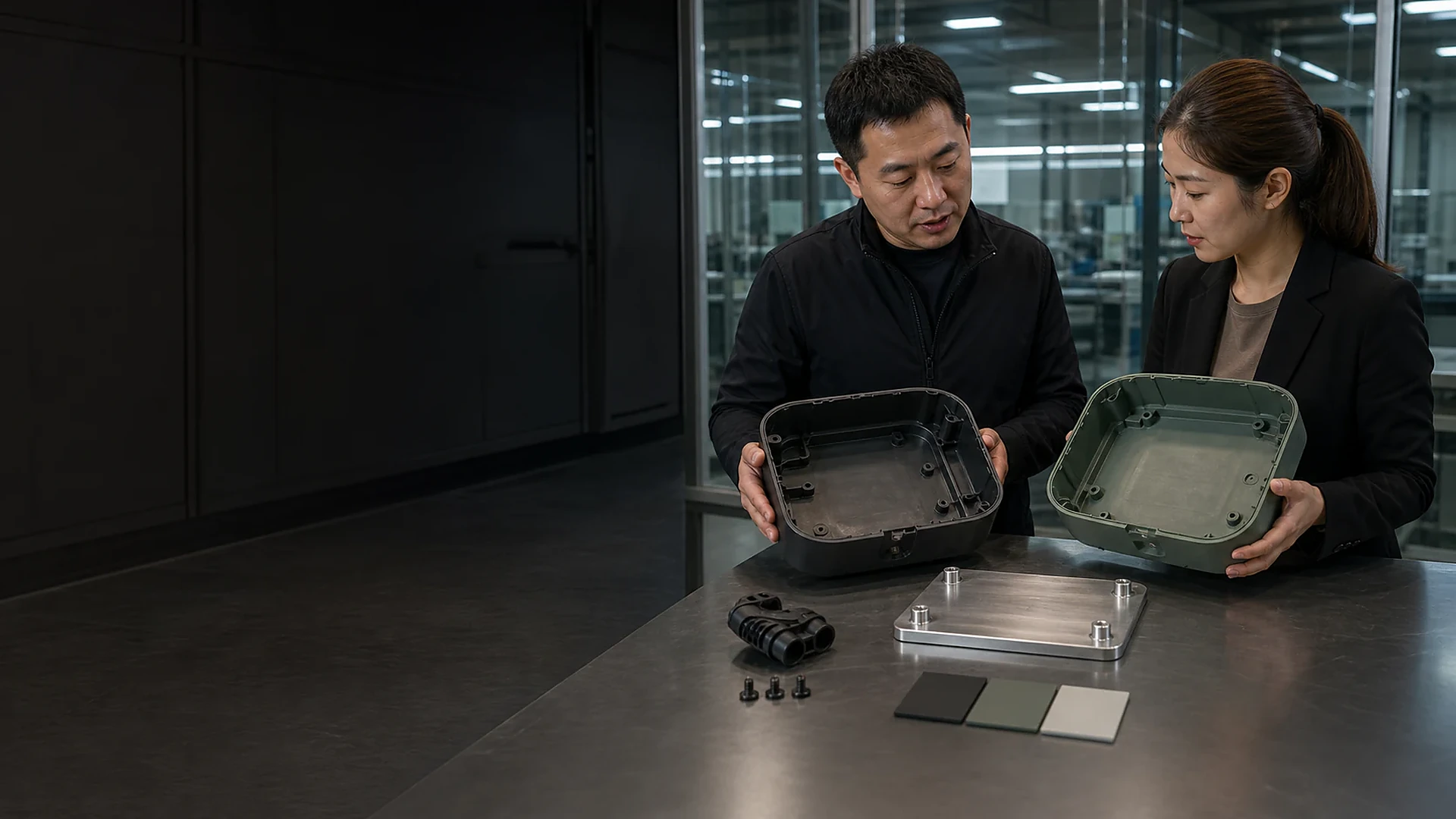
Visual references for the supplier communication, verification, quality review, and shipment preparation work behind this page.
Supplier-side review
Buyer requirements, supplier answers, and open questions should be organized before any purchase commitment.
Verification checkpoint
Documents, samples, inspection points, packaging details, and handover timing need clear confirmation.
Continue through LIFA's sourcing network.
Use these internal routes to move between related pages, return to section hubs, or open the complete page directory.
Complete Site Links
Every public page is listed in one crawlable directory for visitors and search engines.
Open site mapCase Studies
Review educational sourcing scenarios and decision points.
Go to hubE-commerce Founder First Sourcing Scenario
Step back to a nearby page in the same topic group.
Go backFurniture Logistics Optimization Scenario
Continue to the next connected page in this topic group.
ContinueChina Sourcing Services
Compare the practical services LIFA can coordinate for your sourcing project.
Explore servicesChina Sourcing Guide
Use guides, checklists, and risk notes to prepare better sourcing decisions.
Read guidesLet LIFA coordinate the electronics compliance certification work for you.
Share your electronics compliance certification-related details and sourcing needs with LIFA. Get expert coordination from Hangzhou to streamline your supplier communication and China-side verification steps.