


Beginner: identify the sample
State whether the request is for an existing stock item, a modified version or a production-intent reference. Record the exact variant and purpose before payment.
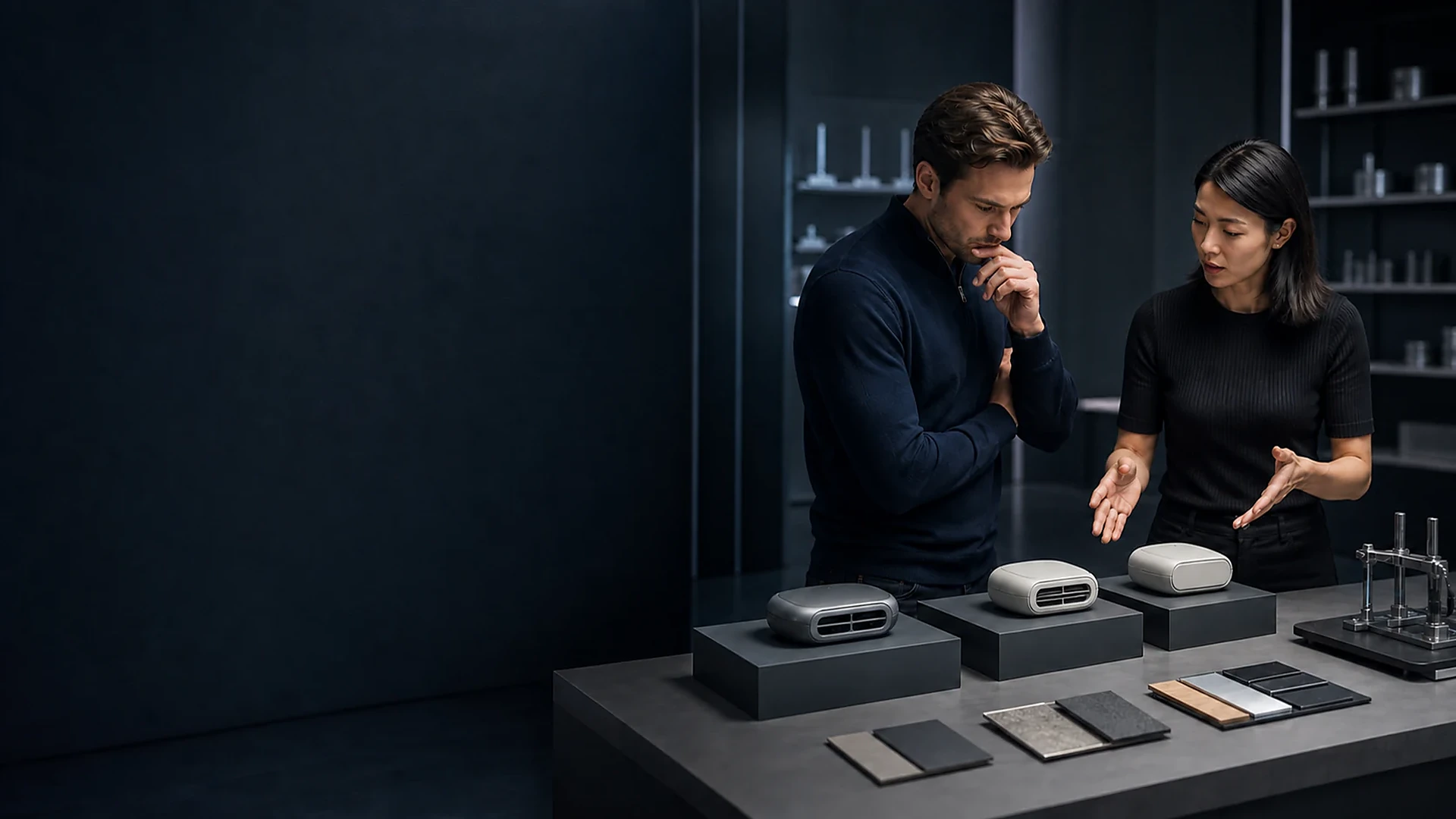
Define the product revision, sample purpose, costs and evaluation criteria before ordering. Record supplier deviations, review the sample and carry approved details into the production specification.
Name its purpose, product revision, configuration, questions and acceptance criteria.
Connect quotation, deviations, courier, receipt, evaluation and feedback in one record.
Separate an early stock reference from development, production-intent and lot evidence.
Record what passed, what remains open and what must transfer into production controls.
State the sample's purpose, exact variant and questions before asking for a price. Confirm what the supplier will build, every deviation, the cost and courier basis, the evaluation method, the feedback route and the limited meaning of approval. Keep the sample ID connected to the same specification revision used for production.
Use the level that matches the product and decision, but keep the identity, configuration and disposition record at every level.
State whether the request is for an existing stock item, a modified version or a production-intent reference. Record the exact variant and purpose before payment.
Connect each material, dimension, function, label and packaging question to a method, result, evidence and disposition.
Govern design changes, tooling and IP, specialist validation, retained samples, production references and reopen triggers across revisions and orders.
A useful request connects one identified sample to the product revision, evaluation purpose, acceptance criteria and production handoff.
Name materials, critical components, dimensions, color, finish, function, artwork, labels and packaging. Require a written deviation list so a convenient stock item is not mistaken for the configuration intended for production.
Record the sample price, setup or tooling, courier basis, stated milestones, refund or credit condition and who owns each follow-up. Compare suppliers only after their sample scope is aligned.
Transfer approved characteristics, open deviations, test evidence and change rules into the specification, order, quality plan and inspection criteria. A physical item cannot carry hidden requirements by itself.
State the sample's purpose, exact variant and the questions it must answer. Identify whether it is a stock sample, modified development sample or intended production reference. Confirm costs, dispatch arrangements and the feedback process before ordering, and keep the sample linked to the specification revision.
Use it when an importer, ecommerce seller, small business or procurement team needs physical evidence before approving a design, supplier, tooling step or production release. The educational guide explains the buyer record. Sample Coordination describes commissioned China-side support.

Keep the same sample ID, requirement revision and decision owner visible from the first request through production handoff.
State what the sample must help the buyer accept, reject, compare or learn. Separate appearance, fit, function, packaging, validation and production-reference purposes.
Send the same dated brief, files, variants, quantity and response format to each supplier. Mark confidential assets and permitted use.
Require the supplier to identify the item, factory or development source, materials, components, tooling or process status, and every deviation before payment.
Separate sample, setup, tooling, packaging, freight, insurance where used, customs and destination assumptions. Record milestones rather than one unsupported arrival date.
Assign a sample ID and record supplier, product, revision, dispatch and receipt dates, package condition, photographs, custody and any mismatch with the declared build.
Check each named requirement using the planned method. Record results, evidence, not-tested items, uncertainty and one controlled list of requested changes.
State rejected, conditional or approved status; the exact approved use; open deviations; next validation; production handoff; and the event that reopens the decision.
The buyer owns the requirements and approvals. The supplier, courier, evaluator and any specialist should each have a defined input, evidence handoff and escalation route.
Check that the purpose, exact variant, files, quantity, destination and evaluation questions are complete before contacting suppliers.
Collect the proposed build, deviations, sample charge, setup or tooling, milestone dates, courier basis and responsible legal party.
Record the package, sample ID, configuration, condition, photographs, custody and conflicts with the supplier confirmation.
Compare results with written criteria, consolidate feedback, identify open actions and authorize another round only from a controlled revision.
Record the limited approval purpose and carry the specification, evidence, deviations and change rules into the order and quality controls.
Compare the same configuration and evidence scope. A lower sample price is not comparable when materials, tooling status, packaging, courier or evaluation support differ.
Compare exact model, material, component, finish, function, artwork, label, packaging and every difference from production intent.
Compare sample, setup, tooling, packaging, courier, insurance where used, customs and destination assumptions, plus any stated credit or refund condition.
Compare supplier build records, internal checks, revision support, file and asset control, due milestones and how an approved reference enters production.
Use this checklist before the supplier begins preparation, then record any approved exception.
Use a SKU, drawing number, artwork version and date rather than a product name alone.
Name the buyer question and acceptance method; do not request an undefined best sample.
Ask the supplier to list substitutions and differences before payment or dispatch.
Record setup, tooling, sample, packing, courier and destination assumptions on the same currency basis.
Assign the evaluator, sample ID, custody location, checks, evidence format and decision date.
Use one revision record and transfer approved requirements into the order, quality plan and inspection criteria.
These three records preserve what was requested, what was observed and what the buyer authorized. The images are contextual illustrations, not evidence of a client result.

Keep the brief, drawings, artwork, reference images, evaluation questions, supplier build confirmation, deviations, charges, milestones and courier instructions together under one request ID.

Connect each requirement to a method, result, photograph or measurement, evaluator, date, status and consolidated feedback. Preserve the original result when a later sample corrects it.

Record the approved sample ID and use, accepted characteristics, open deviations, retained-reference location, next validation, change-notification rule and buyer authority for production release.
Use the next route that matches the decision still open; these links do not create another primary call to action.
Plan sample rounds, evaluation depth and the evidence needed for different decisions.
Read the guide02Review the commissioned service scope for supplier communication, sample follow-up and records.
Review the service03Carry the approved product reference into production checks and buyer release decisions.
Read the guideRequest the sample that answers the next decision, not simply one sample. State the product revision, intended configuration, questions, tests, acceptance criteria, deviations allowed, quantity, cost, courier, due date, ownership and disposition route. A sample supports only the characteristics and conditions actually examined.
| Sample purpose | What it should represent | Decision it can support | What it does not prove |
|---|---|---|---|
| Stock or supplier reference | An identified existing item with every known difference from the buyer requirement listed | Early review of construction, material direction, finish, mechanism, communication or feasibility questions | Custom branding, final materials, regulatory configuration, production process, exact cost, exclusivity or bulk consistency |
| Appearance or packaging proof | Controlled artwork, color reference, print method, material, finish, dieline, label, barcode data, dimensions and pack-out assumptions | Review of hierarchy, text, placement, print, color, finish, fit and pack sequence | Product function, transit performance, final batch color, legal compliance or barcode performance without the relevant verification |
| Functional or engineering prototype | A documented build used to test named technical, user, assembly, material, interface or performance assumptions | Learning against defined methods and criteria before design freeze or tooling release | Production-intent materials, tooling, line process, reliability, conformity or scale unless represented and tested |
| Pre-production or production-intent sample | The intended design, critical components, materials, tooling, process, firmware where relevant, branding, labels, packaging and manufacturing site | Release of a controlled configuration into pilot or production after required validation and open-action review | That every production unit will conform, unauthorized change cannot occur or shipment inspection is unnecessary |
| Production, shipment or retention sample | An identified unit selected from a known lot with method, date, traceability and storage condition recorded | Lot comparison, selected verification, complaint review, future reference or dispute evidence under agreed rules | Representativeness when supplier-selected from an undefined lot, or long-term stability without controlled retention |
Use the product sample request and evaluation CSV to capture these fields. The template organizes evidence; it does not verify a supplier, certify a product or turn one sample into proof of future production.
Reviewed 2 September 2026. ISO lists ISO 9001:2015 as the current published edition and edition six as under publication. ISO 2859-1:2026 covers acceptance sampling for lots, which is different from approving one development sample. WIPO explains why supplier agreements should address IP ownership, permitted use, confidentiality, assets and termination.
These sources provide management-system, production-lot sampling and supplier-IP context. They do not define the right sample for a live product, approve a supplier or design, establish customs treatment, determine legal ownership, certify compliance or replace product- and jurisdiction-specific review. Public reviews provide independent service context; they do not validate this sample method, a supplier, a product, an approval or an outcome.
CLIENT REVIEWS
Feedback shared by clients.
I had a folder full of attractive product photos and no sensible way to choose a supplier. LIFA narrowed the search to businesses that could handle our finish and order size, then explained why the others had been left out. The shortlist was shorter than I expected. That turned out to be the useful part; I could spend time on relevant conversations instead of starting from scratch with everyone.
The first call felt rather detailed for a simple tote bag enquiry. Once we discussed carrying weight, handle length and how the bags would be packed, I understood the questions. I did have to repeat our delivery address in a later email, which was mildly frustrating, but the final brief captured the things my original message had missed.
A supplier described itself as the manufacturer, although the paperwork suggested otherwise. Our contact at LIFA separated the trading company from the production site in the supplier notes. There was no dramatic claim that the business was dishonest. We just needed to understand who would make the goods and who would be taking our payment.
Most responses to our furniture enquiry focused on appearance. LIFA noticed the assembly restriction for our delivery team and asked suppliers about it before requesting prices. We would have rejected several lovely-looking options once the cartons arrived. Catching that early was more valuable to me than another page of designs.
Use these answers to define the request, compare the supplier response and limit what an approval means.
Send the sample purpose, exact product and revision, intended use, destination, materials, critical components, dimensions and tolerances, color and finish references, function or test criteria, artwork, labels, packaging, quantity, due date and prohibited substitutions. Identify attached drawings and reference files by version. Ask the supplier to list every deviation before quoting or building the sample.
Only after the buyer confirms that it represents the agreed product and records the characteristics that production must match. List every known difference in material, component, tooling, process, firmware, branding, label and packaging. A stock sample can support an early screen, but it should not silently become approval for a custom or production-intent configuration.
There is no reliable universal lead time. Separate requirement clarification, material availability, tooling or setup, sample build, supplier checks, revision, packing, courier pickup, transit, customs, local delivery and buyer evaluation. Ask for dated milestones and add time for questions or another round. A dispatch estimate is not a delivered-and-approved date.
The parties should agree the sample price, setup or tooling charge, packaging, courier, insurance where used, customs and destination charges, currency, payment method and any refund or credit condition in writing. A supplier may charge, waive or later credit part of the cost, but no refund should be assumed unless the trigger, amount and treatment are stated clearly.
No. Record the limited purpose of the approval and the exact sample ID, revision, accepted characteristics, open deviations and required validation. Then carry the controlled requirements into the purchase order, specification, quality plan and inspection criteria. A sample does not prove bulk consistency, capacity, compliance or that unrecorded changes will not occur.
Issue consolidated feedback against the sample ID and requirement revision. For each change, record the reason, old and new requirement, affected material or asset, feasibility, cost, timing, tooling, validation, obsolete parts and responsible approver. The supplier may accept, price, reschedule, counter or reject the change. Do not release the next build or production on scattered chat messages.
The approved sample becomes the production reference, so it links straight into quality.
The sequence keeps the product request, supplier confirmation, received item, evaluation and buyer disposition traceable to the same revision.
Write what the sample must help the buyer learn or decide and which result would require another round or a stop.
Identify the exact variant, files, requirements, intended use, destination, quantity and evaluator under one dated request ID.
Record the proposed build, deviations, source or factory, charges, ownership, milestones, courier route and evidence due.
Approve only the stated scope and payment basis. Keep tooling, IP, refund or credit and change terms separate and explicit.
Assign the physical item to the request, record condition and custody, and hold evaluation if identity or configuration conflicts.
Connect each question to a method, result and evidence; issue one consolidated revision record rather than scattered comments.
Reject, conditionally accept or approve for a defined use, then transfer the controlled requirements and reopen triggers into production.
Do not pay for production-intent evidence when an early stock reference will answer the question, or approve production from a sample that never represented it.
| Route | Use it when | Minimum record | Stop condition |
|---|---|---|---|
| Stock reference | Screen basic construction, size direction, mechanism or supplier communication before customization. | Supplier item, photos, received ID and explicit differences from the buyer brief. | The supplier presents the item as proof of custom or production-intent requirements. |
| Modified development sample | Test selected material, dimension, function, artwork or packaging changes before design freeze. | Request revision, build configuration, deviations, results and feedback record. | Critical components, methods or changes are unknown or undocumented. |
| Production-intent sample | Review the intended materials, tooling, process, site, labels, packaging and configuration before release. | Controlled specification, validation evidence, open-action log and named approval. | The item differs from intended production or required specialist evidence is open. |
| Lot-selected or retention sample | Support lot comparison, complaint review or a retained physical reference after production begins. | Lot identity, selection method, traceability, seal or custody and storage conditions. | The supplier selected an untraceable display item outside the defined lot. |
This rechargeable desk-lamp example is hypothetical. It demonstrates the record, not a client result, supplier approval, compliance finding or production outcome.
Local quotes ran 34% over budget; two earlier factory samples failed fire-retardant testing; the delivery schedule allowed only 14 weeks including sea freight.
Bring in the relevant engineer, laboratory, legal adviser, IP adviser, broker or market specialist when the decision depends on credentials or interpretation outside a visual or functional sample review.
Do not use an attractive or functional sample as a substitute for product-specific standards, testing, technical documentation, labels or importer responsibilities.
State ownership, permitted use, confidentiality, improvements, files, molds, return of assets and termination rules before exposing valuable designs or paying for development.
Use controlled pilot, production and inspection evidence for production questions. A hand-made development sample does not establish lot consistency or capacity.
This guide was reviewed on 2 September 2026. Standards, product rules, customs treatment, courier restrictions and legal rights can change. Confirm the exact product, configuration, origin, destination, importer, declared value, intended use and claim before relying on a sample shipment or approval.
Use the blank record for the request, supplier response, receipt, evaluation, revision and production handoff.
Keep the sample useful after the parcel is opened by preserving its identity, evidence, disposition and production handoff.
Keep the request and file versions, supplier build confirmation, deviation list, charges, milestones, courier record, receipt identity, photographs, evaluation results, consolidated feedback, change decisions, final disposition, retained-sample location and production handoff. Mark estimates and not-tested items explicitly.
Weak records ask for the supplier's best sample, accept an unspecified substitute, approve from chat messages, compare unlike sample scopes, forget artwork or packaging, confuse one unit with bulk evidence, hide untested requirements, or release production before approved changes enter the controlled specification.
In the hypothetical desk-lamp example, a stock sample supports only an early review because the proposed battery, label and package differ. The buyer records a limited acceptance and keeps production on hold. This demonstrates decision logic; it is not a client result or product approval.
A sample does not verify supplier identity, production capacity, bulk consistency, regulatory compliance, customs treatment, delivery performance, IP ownership or future change control. Approve only the evidence examined and obtain current specialist review where the decision requires it.