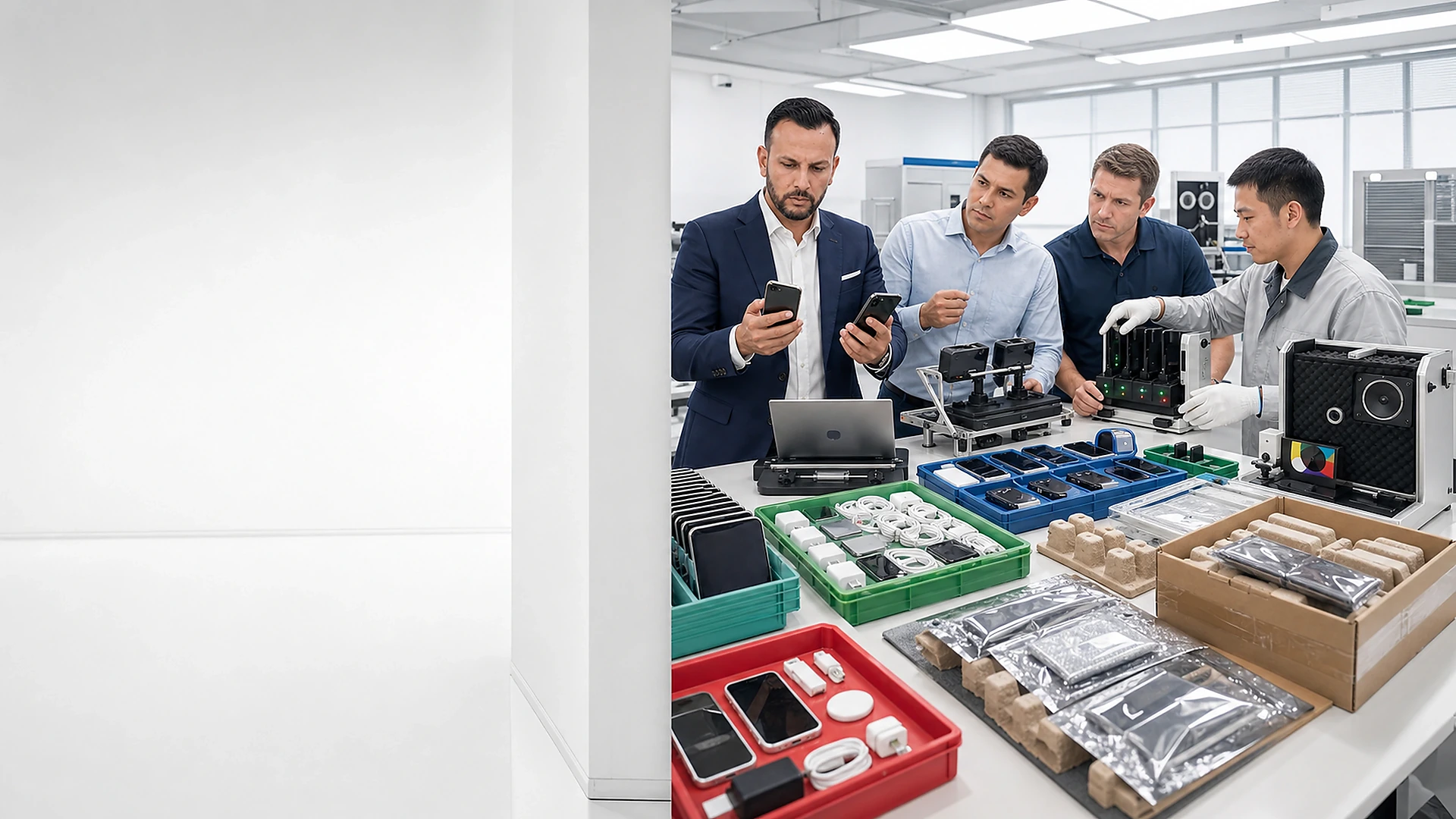
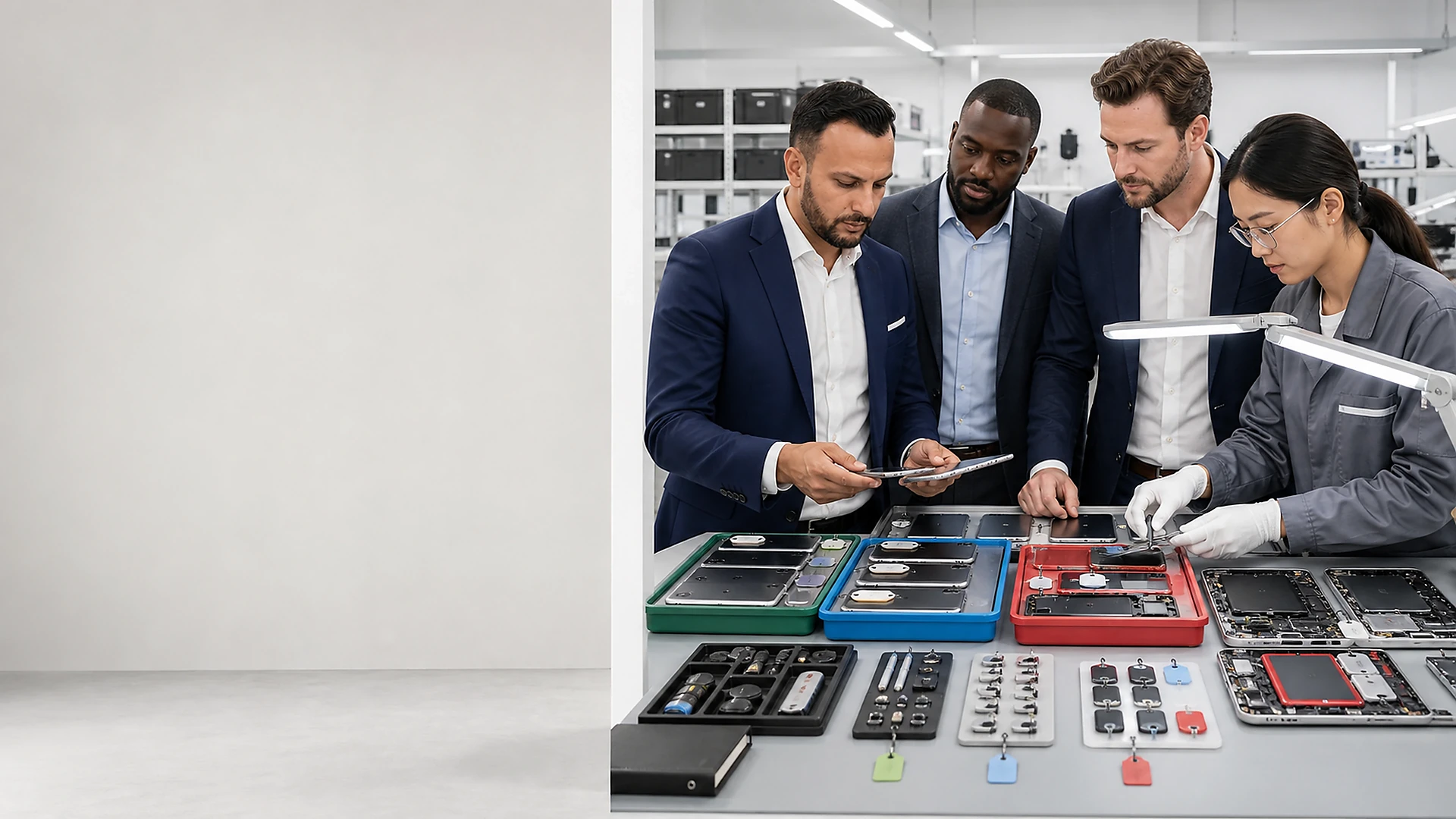
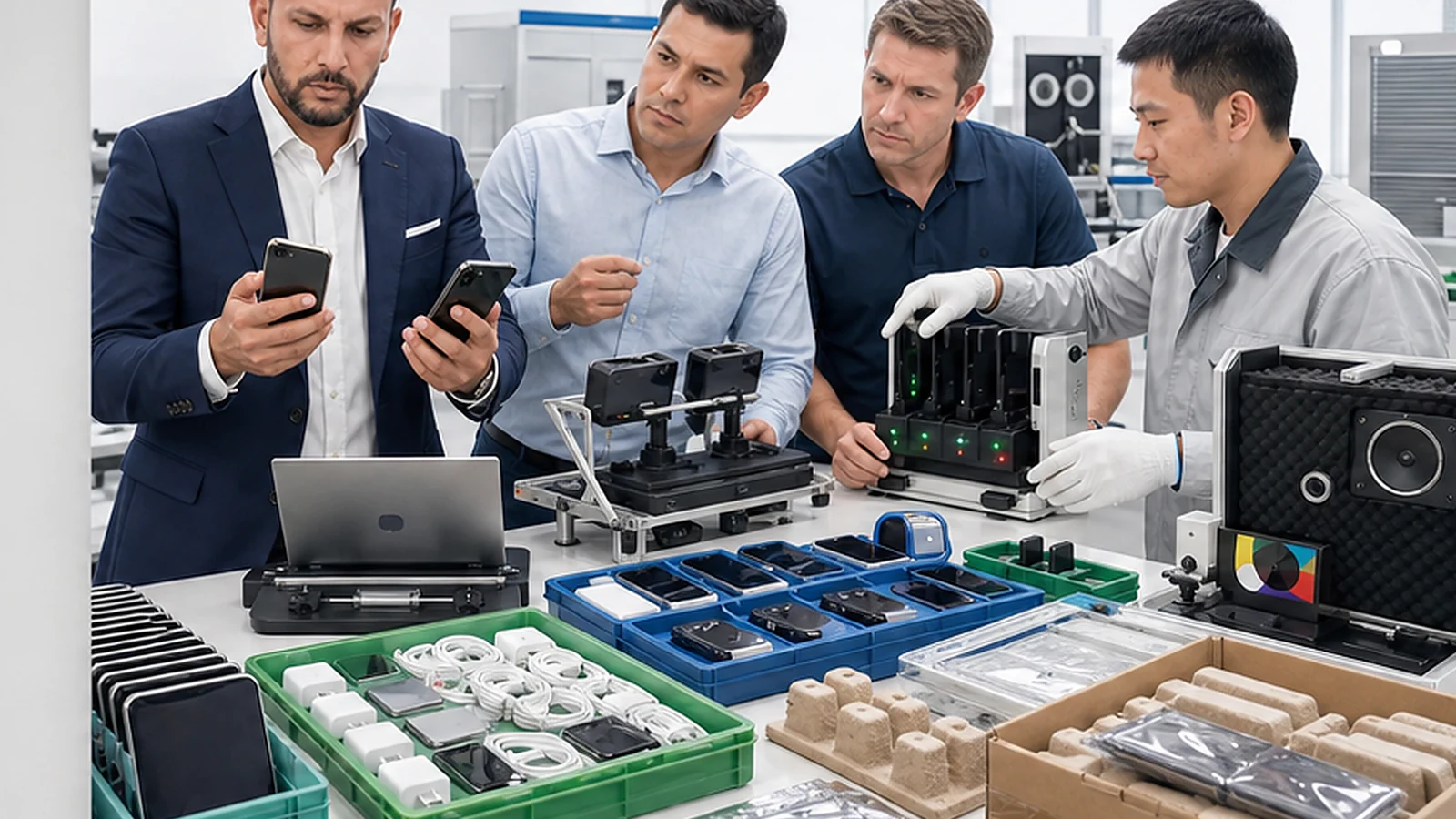
Used & Refurbished Products Sourcing Complete Guide hero image Used & Refurbished Products Sourcing Complete Guide hero image alternate workspace scene Used & Refurbished Products Sourcing Complete Guide hero image detailed sourcing coordination scene

Used & Refurbished Products Sourcing Complete Guide

Grading standards, testing protocols, source verification, warranty liability, compliance, and risk mitigation for refurbished electronics and products.

11 min read2,500 wordsTier 3 • Category Sourcing
🗂️

Category-specific sourcing guidance

Electronics, apparel, furniture, and more — sourcing notes specific to each category.

🔍

Sourced beyond Alibaba listings

Supplier search covers 1688, trade fairs, and factory networks — not just marketplace ads.

🛡️

Verified before deposit

Supplier and factory checks coordinated before your money moves — not after.

🤝

Buyer-approved, LIFA-managed

LIFA runs the daily sourcing work; you approve supplier choice, quotation, and payment.

Page visuals

Visual checkpoints for Used & Refurbished Products Sourcing Complete Guide

Additional realistic images have been added to support the page content while keeping the current LIFA layout and card styling.

Used & Refurbished Products Sourcing Complete Guide - Research notes

Research notes

A practical view of the sourcing work behind this page.

Used & Refurbished Products Sourcing Complete Guide - Supplier examples

Supplier examples

Details buyers can review before they compare supplier options.

Used & Refurbished Products Sourcing Complete Guide - Checklist view

Checklist view

China-side coordination evidence organized for clearer decisions.

Used & Refurbished Products Sourcing Complete Guide - Practical review

Practical review

Operational details that help reduce avoidable sourcing mistakes.

Used & Refurbished Products Sourcing Complete Guide - Next steps

Next steps

Preparation notes for production, packing, or shipment follow-up.

The Refurbished Products Market

Refurbished products are a distinct sourcing category with higher margins but higher risk:

  • Used phones: $80-150 cost → $200-350 retail (2-3x markup)
  • Refurbished laptops: $300-400 cost → $700-1,000 retail
  • Used monitors/keyboards: $20-50 cost → $60-150 retail

But: Return rates are 15-25% (vs. 5% for new products), warranty costs are 5-10% of revenue, and supplier disputes are common.

Key Reality: Used/refurbished sourcing is not easier than new products — it's different. Lower cost per unit doesn't mean higher profit when you account for returns and warranty.

Refurbished vs. Used vs. Reconditioned

Definitions Matter (Legally)

Term Definition Warranty Expected Cost Risk Level
New/Open Box Opened but never used, original components Full manufacturer warranty Lowest Very low
Refurbished Grade A Fully tested, cosmetic imperfections only, fully functional 30-90 day warranty typical Low Low
Refurbished Grade B Tested, minor cosmetic/functional issues, fully functional 30 day warranty Medium Medium
Refurbished Grade C Heavy use, significant cosmetic issues, functional but degraded No warranty typical High High
Used/As-Is No testing or restoration, sold as-is No warranty Highest Very high

FTC Guidance

The FTC requires disclosure: If selling refurbished products, you must clearly state the grade and warranty period. Misrepresentation can result in fines and forced buybacks.

Source Verification: The Critical Step

The Risk

Billions of dollars of stolen goods move through China annually. Stolen phones, laptops, and electronics are mixed into "refurbished" lots. You need to verify source.

Red Flags

  • Supplier won't explain where products come from — Major red flag
  • Huge quantities available (10,000+ units) — Bulk liquidation is legitimate, but verify source
  • Mix of brands/models (random assortment) — Suggests mixed sources, harder to trace
  • Prices extremely low (50% below market) — Could indicate stolen goods
  • No documentation of origin — Cannot prove legitimacy

Verification Process

  1. Ask supplier directly: "Where do your products come from? Do you have documentation?"
  2. Legitimate sources include:
    • Carrier/carrier partnerships (Verizon, AT&T liquidation)
    • Retailer returns (Best Buy, Amazon liquidation)
    • Manufacturer refurbished products
    • Corporate bulk upgrades (businesses trading in old equipment)
  3. Request documentation: Shipping manifests, supply contracts, liquidation certificates
  4. For high-value items: Get serial numbers and IMEI checks (phones). Verify they're not blacklisted.
  5. Start with small order: Don't buy 1,000 units on first order. Test with 100-200.

IMEI Check (For Phones)

Every phone has an IMEI (unique identifier). Use it to verify:

  • Is the phone stolen/blacklisted?
  • What carrier was it on?
  • What is the original carrier status?

Services like IMEI.info and carrier lookup databases can verify legitimacy. Cost: $0.50-2.00 per phone. Always spot-check 10-20% of incoming shipment.

Testing & Grading Protocol

Functional Testing

For electronics, test:

  • Power on/off cycle
  • Display functionality (dead pixels, brightness, responsiveness)
  • Keyboard/touchpad (if applicable)
  • Battery health (for laptops/phones - report percentage)
  • Speakers and mic
  • Camera (if applicable)
  • Ports (USB, charging, HDMI)
  • Wireless connectivity (WiFi, Bluetooth)

Cosmetic Assessment

Grade Cosmetic Condition Typical Acceptable Defects
Grade A Like new or excellent None or very minor (light scratches)
Grade B Good condition Light scratches, minor dings (no structural damage)
Grade C Fair condition Obvious scratches, dents, cosmetic wear (functional OK)

Documentation

Create grading report for each batch:

  • Unit serial number
  • Grade assigned (A/B/C)
  • Functional test results
  • Cosmetic notes
  • Battery health % (if applicable)
  • Any missing components (charger, cable, etc.)

This documentation protects you against disputes and supports warranty claims.

Warranty & Returns Policy

Amazon/eBay Requirements

  • Amazon: Refurbished items require 90-day seller warranty (mandatory)
  • eBay: Minimum 30-day returns required for refurbished
  • Your own store: 30-90 days industry standard

Budget for Returns

Realistic return rates for refurbished:

  • Grade A: 5-8% return rate
  • Grade B: 10-15% return rate
  • Grade C: 20-25% return rate

If selling 1,000 Grade B units:

  • Expected returns: 100-150 units
  • Cost per return: $20-50 (inspection, restocking, logistics)
  • Total impact: $2,000-7,500 per 1,000 units
  • Must factor into margin calculations

Policy Recommendation

  • Grade A: 90-day warranty, 30-day returns
  • Grade B: 30-day warranty, 30-day returns (mark return inspection fee)
  • Grade C: 30-day warranty, no returns (as-is)

Compliance & Legal Risks

Critical Issues

  • Stolen goods liability: If you knowingly sell stolen products, you're liable. Verify source thoroughly.
  • Blacklisted devices: A phone on a carrier blacklist cannot be used. You become liable for replacement.
  • Warranty claims: Manufacturers may not honor warranties on refurbished products you sold. You're the warranty holder.
  • Environmental (e-waste): Some jurisdictions require proper disposal certificates for certain electronics. Verify compliance.

Insurance

Consider:

  • Product liability insurance (covers defective products)
  • Inventory insurance (covers stolen/lost shipments)
  • Cost: $500-2,000/year depending on volume

Pricing Strategy

Example: Used iPhone 12 Pro

  • Supplier cost (Grade A): $400
  • Packaging/testing: $20
  • Shipping to you: $30 (in bulk, amortized)
  • Total cost: $450
  • Expected returns/warranty: -$30-50 (6-10% impact)
  • Adjusted cost: $480-500
  • Selling price (Amazon): $650-750 (3x-5x markup, but account for fees)
  • Actual profit: $100-200 per unit after Amazon fees and returns

Key insight: Margins look good (2-3x cost) but account for marketplace fees (15%), returns (10%), and warranty (5%). Actual profit is 20-30% of selling price, not 150-200%.

Supplier Red Flags (Refurbished Specific)

  • Won't provide source documentation or origin
  • Pressure to buy large quantities on first order (1,000+ units)
  • Can't explain where products come from
  • No testing/grading system (sells everything as-is)
  • Extreme prices (too cheap to be believable)
  • Refusal to accept returns from you (major red flag)
  • No documentation of refurbishment process
  • Won't provide serial numbers for verification

Built on Transparent Buyer Feedback

Verified review profile
Transparent Buyer Feedback

LIFA Global Trade welcomes verified customer reviews on Trustpilot. Real feedback from buyers helps you evaluate our China sourcing support, communication, and coordination services with confidence and transparency.

Your honest feedback helps us improve our sourcing support and helps other buyers make informed decisions.

Used & Refurbished FAQ

Yes, but margins are tighter. Used phones: $80-150 cost, $200-350 retail. Per-unit profit is lower, but volume can be higher. However, 10-20% returns and warranty costs cut into margin significantly.

Ask supplier for source documentation. Legitimate sources include carrier partnerships, retailer liquidation, or corporate bulk upgrades. For phones, use IMEI checks. Start with small orders and verify before scaling.

Grade A: Cosmetic imperfections only, fully functional. Grade B: Minor issues, fully tested. Grade C: Significant damage/wear, still functional. Each has different warranty, return rate, and pricing.

Major risk. On Amazon/eBay, you're liable for 30-90 day warranty. Budget 5-10% of inventory for returns. Thoroughly test all units and document grading to protect yourself.

Used & Refurbished Products Sourcing Support

LIFA specializes in refurbished electronics sourcing with verified supplier networks, source documentation, and comprehensive testing protocols. We handle grading, IMEI verification, and quality assurance to minimize your risk.

Request Refurbished Sourcing Support

Common Questions About Used Refurbished Products Sourcing

Find answers to questions buyers commonly ask about used refurbished products sourcing.

Proper planning around used refurbished products sourcing is critical to timeline success. LIFA helps coordinate these steps in sequence so delays don't cascade into production delays or missed shipment windows.

Common mistakes include underestimating complexity, not organizing communication clearly, and moving forward without proper verification. LIFA's coordination helps prevent these by keeping steps structured and reviewable.

Yes. Contact LIFA with your specific used refurbished products sourcing-related sourcing question. Email simon@lifasourcing.com or message WhatsApp +86 173 7653 5037 to discuss how LIFA can coordinate support.

Start with the Knowledge Center for comprehensive guides, then browse case studies to see how other buyers have handled similar used refurbished products sourcing-related challenges. LIFA's team can provide personalized guidance for your situation.

Ready for hands-on support

Let LIFA coordinate the used refurbished products sourcing work for you.

Share your used refurbished products sourcing-related details and sourcing needs with LIFA. Get expert coordination from Hangzhou to streamline your supplier communication and China-side verification steps.

Questions About This

Common questions to help you understand this service or topic better.

This service covers supplier coordination, verification support, and organized communication to help you make better sourcing decisions.

Timeline depends on your specific needs. Most projects take 2-4 weeks for initial phases. Contact Simon for a project estimate.

No. LIFA helps review supplier information and coordinate verification, which reduces risk. Buyers apply final judgment before payment.

Email simon@lifasourcing.com, message WhatsApp +86 173 7653 5037, or use the request quote form.

Industrial sourcing context

Visual references for the supplier communication, verification, quality review, and shipment preparation work behind this page.

Industrial equipment sourcing and supplier capability review

Supplier-side review

Buyer requirements, supplier answers, and open questions should be organized before any purchase commitment.

Industrial equipment sourcing and supplier capability review supporting sourcing checkpoint

Verification checkpoint

Documents, samples, inspection points, packaging details, and handover timing need clear confirmation.