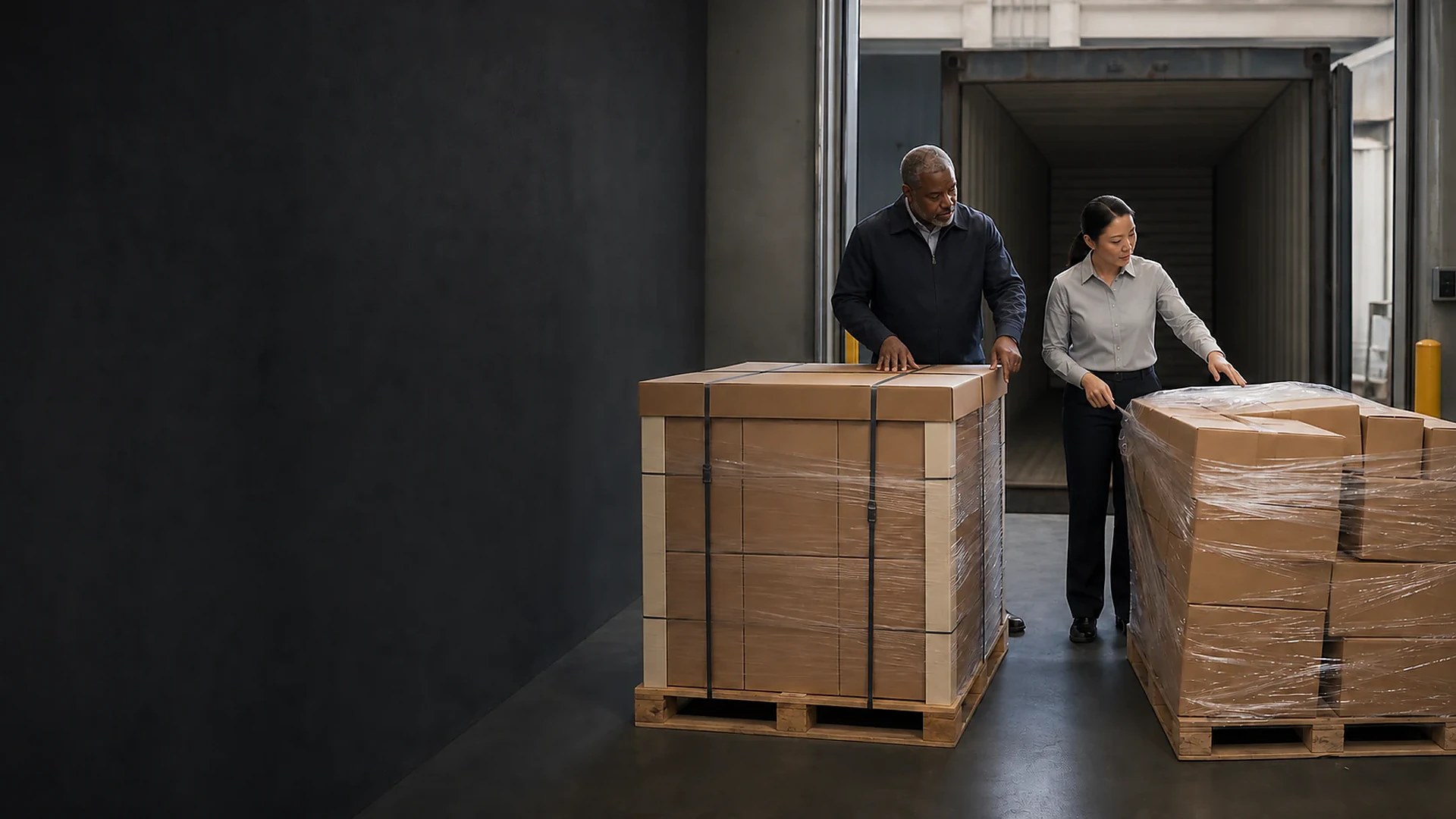
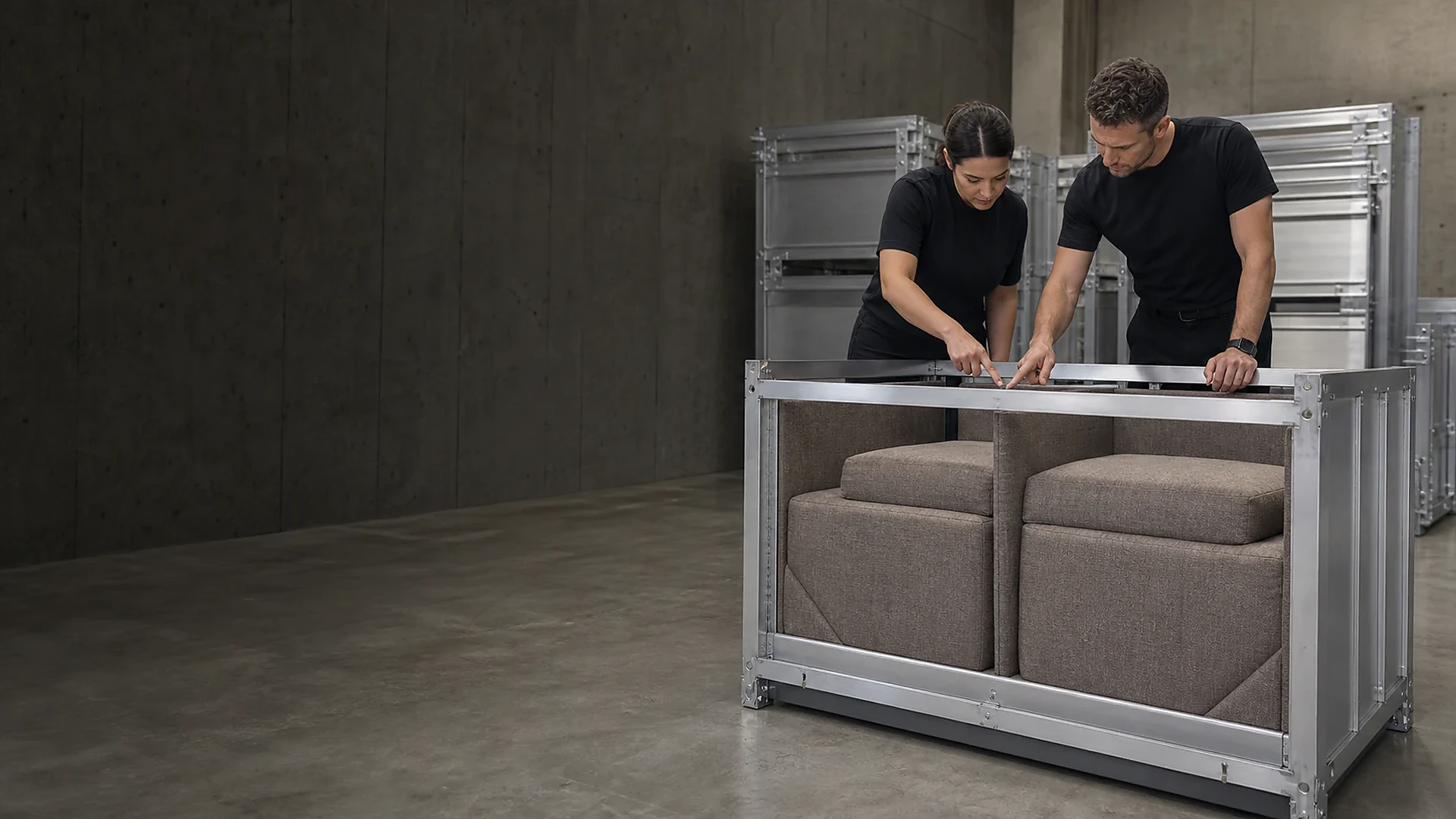
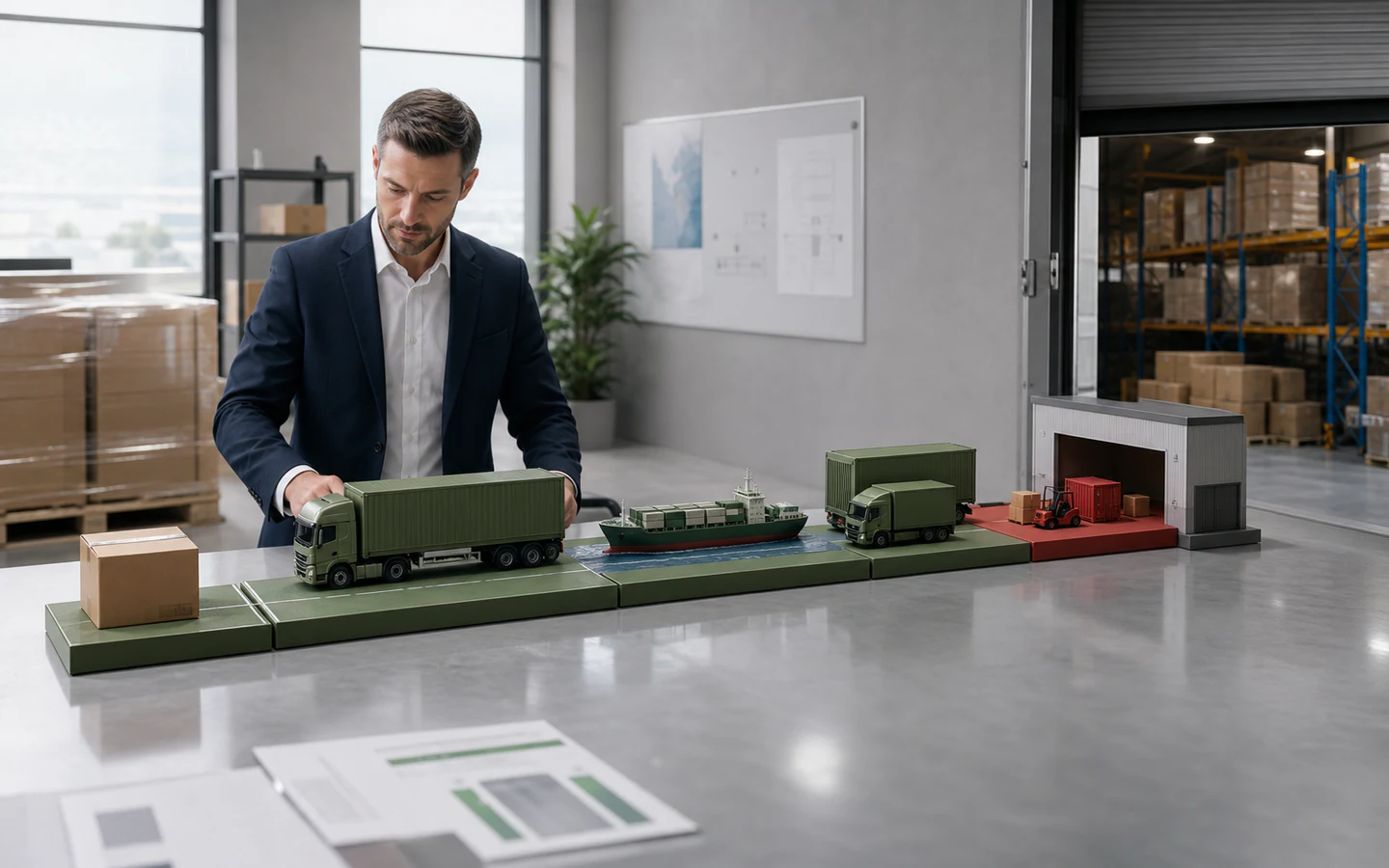
DAP Delivered at Place Incoterm shipment arriving at destination warehouse with delivery documents DAP Delivered at Place Incoterm shipment arriving at destination warehouse with delivery documents alternate workspace scene DAP Delivered at Place Incoterm shipment arriving at destination warehouse with delivery documents detailed sourcing coordination scene
Incoterms Library · DAP

DAP — Delivered at Place, Explained

Door delivery without surrendering your import. This guide shows what DAP commits each side to, exactly where it stops short of DDP, and why "DDP" offers from China are often DAP wearing a costume.

🚢

Any Incoterm, explained

FOB, CIF, DDP, and EXW broken down in plain terms, not legal jargon.

🧾

Tariffs estimated by HS code

Duty rates matched to your product's classification before you commit to an order.

🛡️

Verified before deposit

Supplier and factory checks coordinated before your money moves — not after.

📦

Shipped under your Incoterm

Any Incoterm, coordinated from factory to your destination port.

Page visuals

Visual checkpoints for DAP — Delivered at Place, Explained

Additional realistic images have been added to support the page content while keeping the current LIFA layout and card styling.

DAP — Delivered at Place, Explained - Research notes

Research notes

A practical view of the sourcing work behind this page.

DAP — Delivered at Place, Explained - Supplier examples

Supplier examples

Details buyers can review before they compare supplier options.

DAP — Delivered at Place, Explained - Checklist view

Checklist view

China-side coordination evidence organized for clearer decisions.

DAP — Delivered at Place, Explained - Practical review

Practical review

Operational details that help reduce avoidable sourcing mistakes.

DAP — Delivered at Place, Explained - Next steps

Next steps

Preparation notes for production, packing, or shipment follow-up.

DAP in one paragraph

DAP (Delivered at Place) means the seller delivers the goods — ready for unloading — at a named destination of the buyer's choosing, carrying all transport cost and risk to that point, including export clearance. The buyer unloads, clears imports, and pays duties and taxes. DAP is DDP minus one step: the import stays in the buyer's hands.

That one retained step is the point. Door-to-door convenience is attractive, but the import declaration carries your name, your product compliance, and your duty bill. DAP gives you the convenience while keeping the legally sensitive step — the import — under your own control.

The responsibility split, task by task

DAP: who does what and who pays
TaskSellerBuyer
Export packaging
Export customs clearance
Main international freight
Transport to the named destination✔ Risk ends on arrival
Unloading at destination✔ Cost and risk
Import clearance
Import duties & taxes
Cargo insuranceNot obligedNot obliged — agree who insures

Incoterms® 2020 note: DAP carried over unchanged from 2010, while the old DAT term was renamed DPU — if a contract template still says DAT, it means DPU. Neither side is obliged to insure under DAP. The seller carries risk in transit, so a prudent seller insures — but confirm it in the contract rather than assume it. See shipping insurance & risk.

Where risk transfers

Seller's leg: factory to your named place

Production, export clearance in China, ocean or air freight, destination haulage — all on the seller's cost and risk. Your job in this phase is document review, not logistics.

Arrival, ready for unloading — risk transfers

The truck arrives at the named place. From this moment — before the first carton comes off — cost and risk are yours. A dropped pallet during unloading is a buyer-side loss under DAP.

Your leg: unload, clear, pay

Your team or warehouse unloads; your customs broker files the import declaration; duties and taxes are settled by you. Delays at customs — storage, demurrage — also land on your side, so have documents ready before arrival.

DAP vs DDP vs DPU: one table

The three delivered-terms compared
FactorDAPDPUDDP
Delivery pointNamed place, ready for unloadingNamed place, unloadedNamed place, ready for unloading
Who unloadsBuyerSeller — the only Incoterm that requires itBuyer
Import clearanceBuyerBuyerSeller
Duties & taxesBuyerBuyerSeller
Seller obligation levelHighHigh + unloadingMaximum of all Incoterms
Buyer keeps import control✘ — seller (or their agent) imports

The "fake DDP" trap — and why DAP is the honest alternative

Real DDP requires the seller to act as importer of record in your country — which in many markets legally requires a locally registered, tax-registered entity. Most Chinese suppliers have none. Yet "DDP shipping" is quoted everywhere in China trade. What fills the gap is often a freight agent's grey channel: consolidated customs entries, averaged duty payments, declarations you never see, made in names you don't know.

  • The risk isn't hypothetical. If a grey-channel entry is challenged, the goods are yours, the declaration isn't — an unpleasant combination at an audit.
  • The price can't be audited. A "DDP" lump sum hides what was actually declared and paid on your goods.
  • DAP is the clean version of the same convenience. The seller still delivers to your door; your own broker files a declaration you can stand behind. See importer of record for why that matters.

When DAP is the right call

  • You want door delivery without freight management — the seller runs the journey; you run the import.
  • Your country restricts foreign import clearance — where sellers legally can't act as importer, DDP is off the table and DAP is the correct term.
  • You have a customs broker you trust — DAP pairs a seller-managed journey with a buyer-managed border.
  • Compare it properly: a DAP quote embeds freight at the seller's rates. Check it against FOB plus your own freight using the Landed Cost Calculator before assuming the bundle is cheaper.

DAP orders with a China-side partner

Under DAP the seller controls the whole China-side journey — which means your visibility depends on what gets checked before departure. LIFA closes that gap from China: pre-shipment inspection while rework is still possible, document review against your import requirements, and shipping coordination so the freight the seller booked matches the delivery the contract promises.

Mistakes this guide prevents

  • Accepting "DDP" without asking who the importer of record is. If the answer is vague, it's a grey channel — insist on DAP with your own broker.
  • Assuming the seller unloads. Under DAP they don't; that's DPU.
  • Having no broker lined up before arrival. Customs delays under DAP bill storage to you.
  • Judging the DAP bundle price blind. Compare against FOB + your own freight — sometimes the bundle wins, sometimes it hides a margin.

Shipping documents and freight preparation for export from China — dap delivered at place
LogisticsFreight, documents, and handover timing are settled before goods move.
TP

Open to Transparent Buyer Feedback

Trustpilot profile link
No invented ratings or review counts

LIFA Global Trade welcomes honest customer reviews on Trustpilot. Real feedback helps buyers evaluate our China sourcing support, communication, and coordination services with transparency.

Your honest feedback helps us improve our sourcing support and helps other buyers make informed decisions.

Buyer questions

DAP, answered simply.

The questions importers ask most about Delivered at Place terms.

Under DAP, the seller delivers the goods — ready for unloading — at a named destination the buyer chooses, and carries all transport cost and risk to that point, including export clearance. The buyer unloads the goods and handles import clearance, duties, and taxes.

One step: import clearance. Under DAP the buyer clears imports and pays duties and taxes; under DDP the seller does. DDP is the maximum seller obligation, DAP stops just short of it. Everything else — transport to the named place, export clearance — is the same.

The buyer. DAP means delivered ready for unloading — the seller's risk ends with the goods arriving at the named place, and unloading is the buyer's cost and risk. If you want the seller to unload as well, the correct term is DPU (Delivered at Place Unloaded).

Only the unloading. DAP delivers ready for unloading (buyer unloads); DPU delivers unloaded (seller unloads). DPU is the only Incoterm that obliges the seller to unload, so it suits terminals and warehouses where the seller controls handling equipment.

Because import clearance in many countries legally requires a locally registered importer or tax-registered entity. A Chinese seller without one often cannot lawfully act as importer of record — so a genuine DDP is impossible for them, and what is sold as "DDP" may run through grey channels the buyer never sees. DAP with your own customs broker keeps the import in your control.

Choose DAP when you want door delivery convenience but intend to keep import clearance, duty payment, and compliance in your own hands — or when regulations in your country make seller-side import clearance impractical. It suits buyers with a customs broker but no desire to manage international freight legs.

Shipping documents and freight preparation for export from China — dap delivered at place
LogisticsComparable freight quotes start with accurate carton and cargo details.
Door delivery, import in your hands

Quoted DAP or "DDP" by a Chinese supplier?

Send the quotation and destination. LIFA reviews the terms from China, checks who would really act as importer of record, and helps organize inspection and documents before the journey starts — so the delivery matches the promise.