


Page visuals

Visual checkpoints for Importing from China to Europe : Complete Customs, Tariff & Compliance Guide (2026)

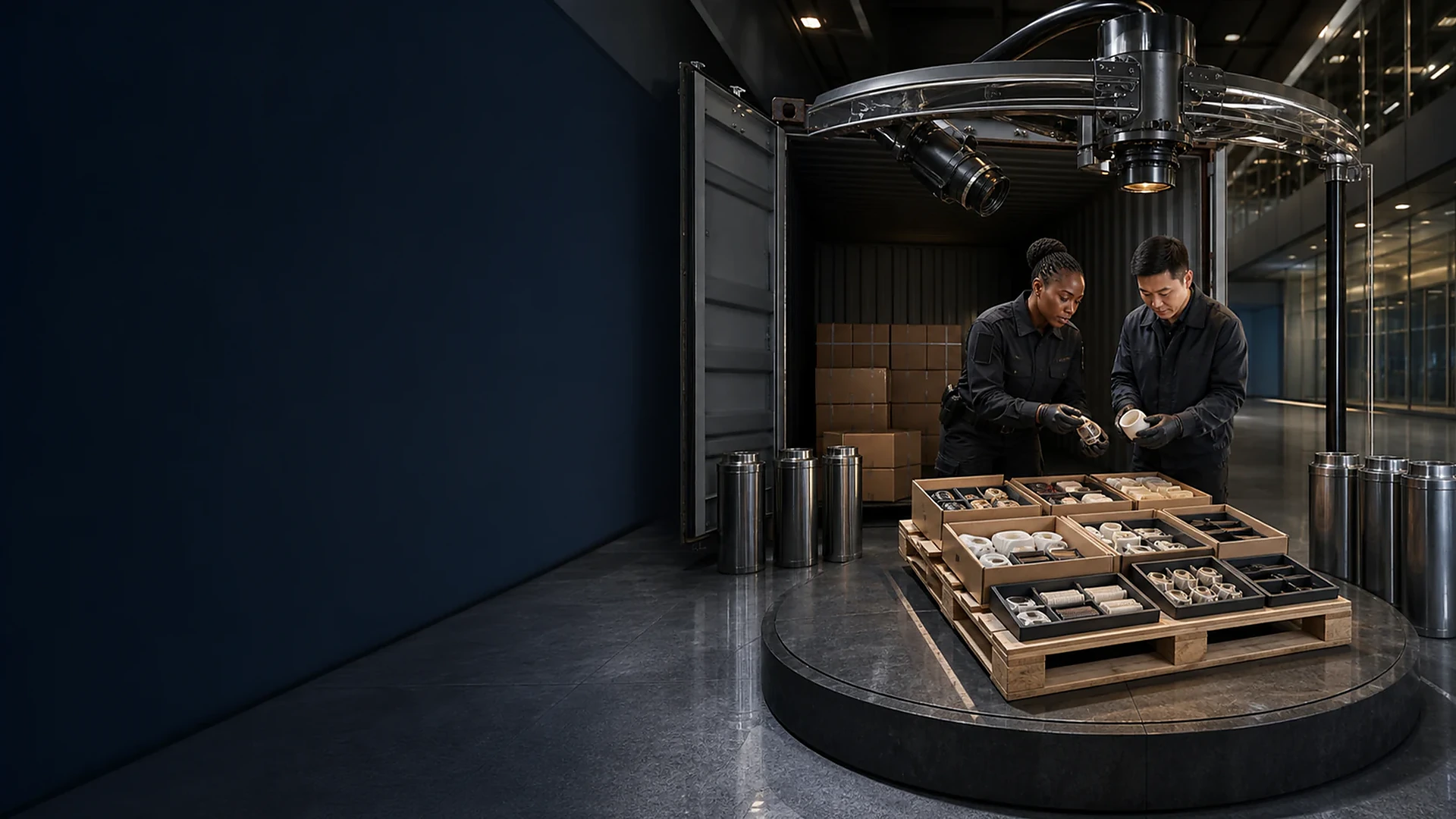
Additional realistic images have been added to support the page content while keeping the current LIFA layout and card styling.

Importing from China to Europe : Complete Customs, Tariff & Compliance Guide (2026) - Shipment planning

Shipment planning

A practical view of the sourcing work behind this page.

Importing from China to Europe : Complete Customs, Tariff & Compliance Guide (2026) - Carton review

Carton review

Details buyers can review before they compare supplier options.

Importing from China to Europe : Complete Customs, Tariff & Compliance Guide (2026) - Freight comparison

Freight comparison

China-side coordination evidence organized for clearer decisions.

Importing from China to Europe : Complete Customs, Tariff & Compliance Guide (2026) - Document check

Document check

Operational details that help reduce avoidable sourcing mistakes.

Importing from China to Europe : Complete Customs, Tariff & Compliance Guide (2026) - Handoff prep

Handoff prep

Preparation notes for production, packing, or shipment follow-up.

Customs clearance and EU regulations for importing from China to Europe Customs clearance and EU regulations for importing from China to Europe alternate workspace scene Customs clearance and EU regulations for importing from China to Europe detailed sourcing coordination scene
European Import Guide

Importing from China to Europe: Complete Customs, Tariff & Compliance Guide (2026)

EU customs procedures, tariff calculations, post-Brexit UK regulations, VAT requirements, compliance procedures, and strategies to minimize duties. Everything you need to import successfully to Europe.

  • EU common tariff vs. separate post-Brexit UK procedures explained.
  • Full duty, VAT, and broker fee calculation with a worked example.
  • 7 strategies to legally minimize European import costs.
Tariff & Duty Calculation

How European Tariffs Work: HS Codes, Rates, and Total Cost Calculation

Your product's duty cost depends on its HS code classification. A small HS code error can add 5-20% to your import cost unexpectedly.

1

FIND YOUR HS CODE (8-digit)

HS Code = Classification of your product used globally for tariff calculation

Example Products & Codes:

  • Plastic storage containers: 3923.30 (2.7% EU tariff)
  • Ceramic mugs: 6912.00 (2.7% EU tariff)
  • Metal hinges: 7326.90 (0% EU tariff)
  • Electronic switches: 8536.50 (0% EU tariff)
  • Textiles/clothing: 6204.62 (12-15% EU tariff)

How to Find Your Code:

  • 1️⃣ Use TARIC database (European tariff database): tariff-app.ec.europa.eu
  • 2️⃣ Describe your product + materials precisely
  • 3️⃣ System returns HS code + applicable tariff rate
  • 4️⃣ Verify by asking your supplier or customs broker (they know)

Why This Matters:

Misclassifying a product can result in surprise tariff: 500 units at $5/unit suddenly cost $500 more in duty. Customs can reclassify at clearance.

2

EU TARIFF RATES: Most Common Range 0-15%

Tariff by Category:

  • Raw materials: 0-3% (metal ingots, raw textiles, chemicals)
  • Semi-finished goods: 2-8% (processed metals, fabrics, components)
  • Finished consumer goods: 5-15% (electronics, ceramics, plastics)
  • Textiles/clothing: 9-15% (highest tariff sector)
  • Machinery/equipment: 0-8% (typically low)

Real Examples (2026 Rates):

Product Category HS Code EU Tariff Rate
Ceramic mugs 6912.00 2.7%
Plastic storage boxes 3923.30 6.5%
Cotton t-shirts 6204.62 11.9%
Mobile phone cases 4202.92 8.5%
Electronics (USB cables) 8544.30 0%
3

CALCULATE TOTAL IMPORT COST

Formula:

Total EU Cost = Product Cost + Shipping + Insurance + Tariff + VAT + Broker Fees

Real Calculation Example:

Product: Ceramic mugs, 5,000 units
Factory price: $1.00/mug = $5,000
Shipping (China to Rotterdam): $1,200
Insurance: $100
Subtotal (CIF value): $6,300

Tariff Calculation:
HS Code 6912.00 = 2.7% EU tariff
Duty = $6,300 × 2.7% = $170

VAT Calculation (using Germany 19% rate):
VAT Base = $6,300 + $170 (tariff) = $6,470
VAT = $6,470 × 19% = $1,229

Customs Broker Fees: $150 (typical for container)

Total EU Import Cost = $6,300 + $170 + $1,229 + $150 = $7,849
Per-mug cost = $7,849 / 5,000 = $1.57/mug
Markup from factory = +57% (from $1.00 to $1.57)

4

VAT: The Hidden Cost (17-27% by Country)

How VAT Works:

VAT (Value-Added Tax) is a consumption tax added by every EU country. Rates vary 17-27% depending on country.

VAT Rates by Country (2026):

  • Hungary: 27% (highest)
  • Denmark, Sweden: 25%
  • France, Germany, Italy, Spain: 19-23%
  • Poland, Greece: 23-24%
  • Luxembourg: 17% (lowest)

Important:

If you're VAT-registered: You can reclaim VAT paid on imports (import VAT is refundable). But you must register for VAT in each country you sell to—and file quarterly returns.

If you're NOT VAT-registered: You pay VAT on import and can't reclaim it. This is a permanent cost.

Implication:

EU buyers assume VAT is reclaimed (they have business VAT registration). If you're not VAT-registered, you'll be undercut on price. Consider VAT registration if selling significant volume to EU.

5

POST-BREXIT UK: Different Tariff Schedule

UK vs EU Tariff Differences:

UK has its own tariff schedule since Brexit. Most products are identical, but ~500 products differ.

Common UK-Specific Differences:

  • Textiles: UK rates sometimes lower (trade deal advantages)
  • Ceramics: UK aligns with EU (2.7% same)
  • Electronics: UK 0% (same as EU)
  • Automotive parts: UK may differ (check UK tariff schedule)

Look Up UK Tariff:

Use UK Trade Tariff database: trade-tariff.service.gov.uk

UK VAT:

Standard rate: 20% (simpler than EU's 17-27% variation)

EU Customs Clearance Process: Step-by-Step

Your shipment arrives at EU port. Here's exactly what happens (and what you need to provide).

⚠️ Cost of Delays

Port storage costs: €10-20/day per container. A 10-day delay = €100-200 in port fees. Proper documentation gets you cleared faster (saves money).

Illustrative Example: How an HS Code Error Triggers a Hold, Even at 0% Duty

The scenario below illustrates how a classification mismatch can cause a costly delay even when it doesn't change the duty owed — it's a worked example, not a specific documented shipment.

📦

The Situation

  • Importer: A European electronics retailer
  • Product: A batch of smart home devices
  • HS code provided by supplier: A telecom equipment code

The Problem

The container arrives at port, customs scans and flags it for inspection, and a sample check finds the devices contain radio frequency components not reflected in the declared classification. The correct code turns out to be a different one — for computing equipment with RF components — rather than the telecom equipment code the supplier had provided.

In this scenario, both the originally declared code and the correct code happen to carry the same EU tariff rate, so the misclassification itself didn't change the duty owed — but it still triggered the inspection.

The Cost

Even with no change in duty, the mismatch causes real cost: the container sits in inspection for extra days accruing port storage charges, a customs broker charges a fee to correct and re-submit the declaration, and the delay in delivery to retail customers has its own knock-on cost in missed sales windows and strained customer relationships.

Lesson

An HS code error doesn't need to change the tariff rate to be costly — an inconsistency between the declared classification and the actual product is often enough to trigger an inspection hold on its own, independent of whether more duty is ultimately owed.

Prevention

  • Verify the HS code with the supplier before production, based on the product's actual components and function.
  • Use the EU's TARIC database to confirm the code and its current rate.
  • Provide an accurate technical description — materials, components, and capabilities — to whoever is preparing the customs declaration.
  • Consider having a customs broker pre-review the classification for any product where the correct code isn't obvious.
Discuss This

7 Strategies to Minimize European Import Costs

TP

Open to Transparent Buyer Feedback

Trustpilot profile link
No invented ratings or review counts

LIFA Global Trade welcomes honest customer reviews on Trustpilot. Real feedback helps buyers evaluate our China sourcing support, communication, and coordination services with transparency.

Your honest feedback helps us improve our sourcing support and helps other buyers make informed decisions.

Buyer questions

Importing to Europe, answered simply.

The questions buyers ask most about EU and UK customs when importing from China.

Yes. An inconsistency between the declared classification and the product's actual components or function can trigger an inspection on its own, independent of whether the correct code carries a different duty rate. The hold and its associated storage and re-declaration costs happen regardless of whether more duty is ultimately owed.

TARIC is the EU's integrated tariff database, used to look up the correct HS/CN code for a product and confirm its current applicable tariff rate before importing, reducing the risk of a classification mismatch at customs.

No. Since Brexit, the UK operates its own separate customs regime distinct from the EU's, with its own tariff schedule and clearance procedures, so a shipment plan built for one does not automatically apply to the other.

A broker can pre-review the classification for any product where the correct code isn't obvious, based on an accurate technical description of materials, components, and capabilities. Catching a classification issue before shipment is far cheaper than resolving it at the border.

Incomplete or inconsistent documentation and HS classification mismatches are common causes, alongside product-specific compliance requirements like CE marking or safety certifications that weren't confirmed before the shipment left China.

Importing to Europe?

Let LIFA Optimize Your EU Customs & Tariff Strategy

We work with European importers daily. We know the customs procedures, tariff classifications, and strategies to minimize duty. We can help you avoid costly delays and classification errors.