


Visual checkpoints for Importing from China to India : Customs Duty, IGST & Compliance Guide (2026)
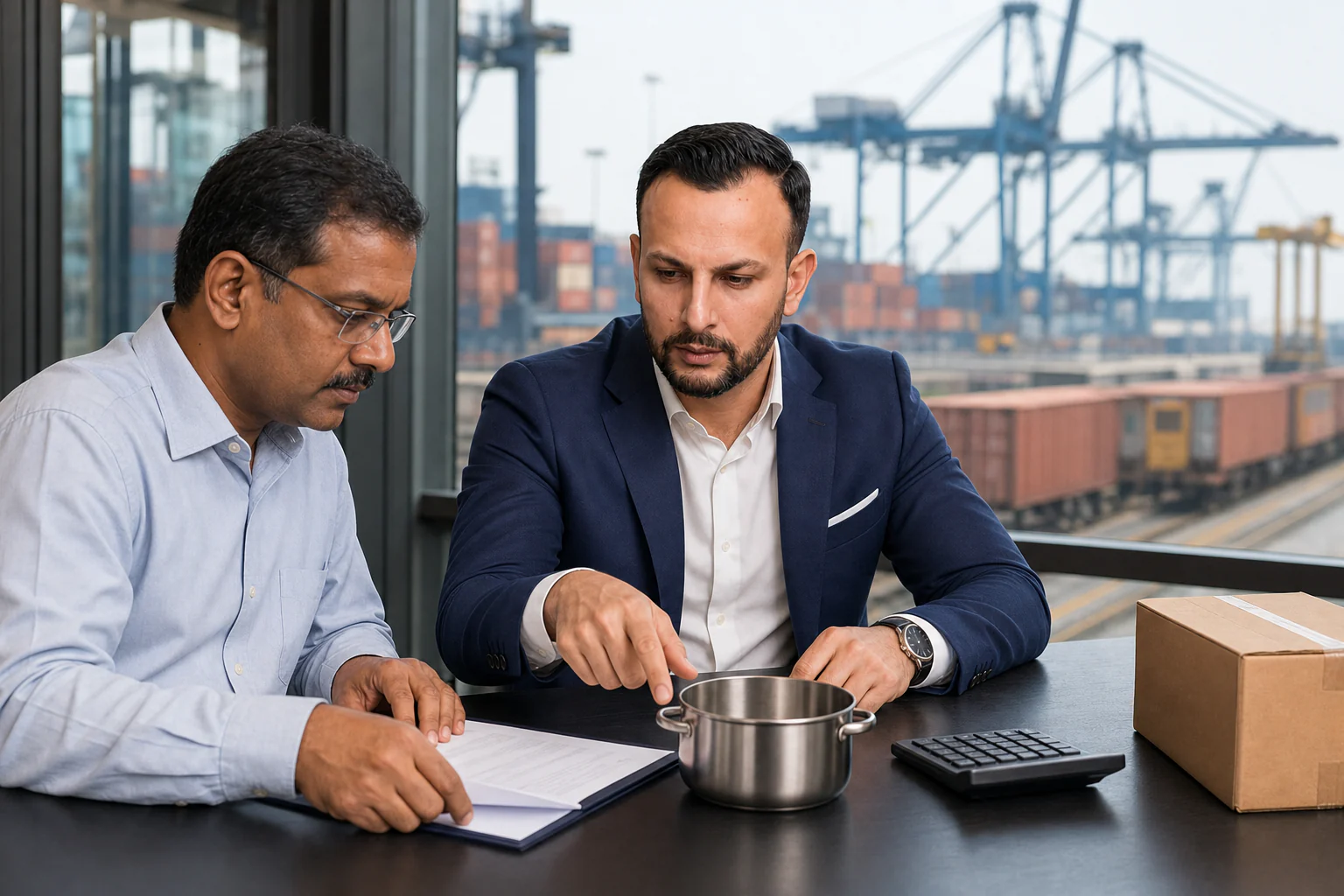
Additional realistic images have been added to support the page content while keeping the current LIFA layout and card styling.

Shipment planning
A practical view of the sourcing work behind this page.

Carton review
Details buyers can review before they compare supplier options.

Freight comparison
China-side coordination evidence organized for clearer decisions.

Document check
Operational details that help reduce avoidable sourcing mistakes.

Handoff prep
Preparation notes for production, packing, or shipment follow-up.
Importing from China to India: Customs Duty, IGST & Compliance Guide (2026)
Basic Customs Duty (BCD) rates, IGST calculation, BIS certification requirements, customs clearance procedures, and strategies to navigate India's complex but lucrative import landscape.
- The full 4-layer duty stack: BCD, SWS, IGST, and Compensation Cess.
- Which product categories require mandatory BIS certification.
- What actually happens at port when a required BIS certification is missing.
Sourcing support for India buyers
Time zones and language aren't a barrier — communication handled in China hours.
China-hours communication
Supplier calls and factory questions handled during China business hours, not yours.
Verified before deposit
Supplier and factory checks coordinated before your money moves — not after.
Shipped to India
Any Incoterm, coordinated from factory to your port of choice.
India's Import Duty Structure: Higher Than You'd Expect
India protects domestic manufacturing with higher tariffs than most countries. Total landed cost (duty + IGST + cess) can add 25-45% to product cost. Understanding the full stack prevents budget surprises.
The Complete Duty Stack (4 Layers)
- 1. Basic Customs Duty (BCD): 5-20% depending on product (main tariff)
- 2. Social Welfare Surcharge (SWS): 10% of BCD amount
- 3. IGST (Integrated GST): 5-28% depending on product category (India's VAT equivalent)
- 4. Compensation Cess: Applies to specific "luxury" categories (0-15%)
Why India Is Different
- 🇮🇳 "Make in India" policy = protective tariffs on manufactured goods
- 🇮🇳 Multiple duty layers stack (not single flat rate)
- 🇮🇳 Anti-dumping duties on specific China categories (steel, chemicals, some electronics)
- 🇮🇳 BIS certification required for 100+ product categories
- 🇮🇳 GST registration mandatory for importers (IEC + GST number required)
Real Example: Full Duty Stack Calculation
Product: 5,000 plastic kitchenware items
CIF value: $5,000 (~₹4,15,000)
Layer 1 - BCD (10%): ₹41,500
Layer 2 - SWS (10% of BCD): ₹4,150
Layer 3 - IGST (18% on CIF+BCD+SWS): ₹82,917
Total duty+tax: ₹1,28,567 (31% of CIF value)
Total landed cost = ₹4,15,000 + ₹1,28,567 = ₹5,43,567 (31% markup from factory price)
BIS Certification: The #1 Reason Indian Imports Get Stuck
Bureau of Indian Standards (BIS) certification is mandatory for many product categories. Importing without it = goods held indefinitely or rejected entirely.
PRODUCTS REQUIRING BIS CERTIFICATION
- Electronics: Mobile phones, chargers, batteries, LED lights, power banks
- Toys: All children's toys (BIS mandatory since 2021)
- Steel products: Various steel/metal categories
- Kitchen appliances: Pressure cookers, electric kettles, induction cooktops
- Cables/wires: Electrical cables and wiring products
- Helmets: Motorcycle/bicycle helmets
Why This Matters:
Importing electronics or toys WITHOUT BIS certification = customs rejects entire shipment. No exceptions, no grace period.
HOW TO GET BIS CERTIFICATION (Timeline: 2-4 Months)
- Step 1: Determine if your product needs BIS (check BIS website's mandatory list)
- Step 2: Choose certification scheme (ISI mark for domestic-style, or CRS for electronics)
- Step 3: Submit product samples to BIS-approved lab for testing
- Step 4: Factory audit (BIS may require factory inspection in China)
- Step 5: Certificate issued (valid 1-2 years typically)
Cost:
$2,000-8,000 depending on product category + testing complexity
Critical Timing:
Start BIS certification BEFORE placing bulk orders. 2-4 month process means you can't get it "later" — plan it into your launch timeline.
IMPORTER EXPORTER CODE (IEC) - MANDATORY FIRST STEP
Before ANY import to India, you need an IEC number (issued by DGFT - Directorate General of Foreign Trade)
How to Get IEC:
- Apply online via DGFT portal
- Requires: PAN card, bank account, business registration
- Processing time: 1-3 business days
- Cost: ₹500 government fee
Without IEC:
You legally cannot import goods into India. This is the foundational registration.
GST REGISTRATION (Required for IGST Credit)
Register for GST to claim Input Tax Credit on IGST paid at import.
Benefit:
IGST paid on import (18-28%) can be claimed back as credit against your output GST liability—if you're GST registered. Without registration, IGST is a permanent cost.
Timeline:
7-10 business days for GST registration approval
Indian Customs Clearance: Step-by-Step Process
Step 1-2: Pre-Arrival Filing (Days 1-2)
Customs House Agent (CHA) files Bill of Entry electronically via ICEGATE system before/upon arrival. Includes invoice, packing list, BIS certificate (if applicable), IEC number.
Discuss This 2Step 3: Risk Assessment (Day 2-3)
Risk Management System (RMS) flags shipment: Green (facilitated clearance) or Red (examination required). ~30-40% of China shipments get flagged for examination.
Read More 3Step 4: Examination (If Flagged) (Days 3-6)
Customs officer physically examines goods, verifies HS code, checks BIS marks on products, confirms quantity matches invoice.
Discuss This 4Step 5: Duty Assessment (Day 4-6)
System calculates BCD + SWS + IGST + Cess based on assessable value and HS classification.
Read the Guide 5Step 6: Duty Payment (Day 5-7)
Importer pays duty via ICEGATE e-payment. Payment must clear before goods release.
Read the Guide 6Step 7: Out of Charge & Release (Day 6-8)
Customs issues "Out of Charge" order. Goods released from port/CFS (Container Freight Station).
Discuss This⏱️ Realistic Timeline
Green channel (no BIS issues): 4-5 days
Red channel (examination): 7-10 days
BIS certification missing: Goods held indefinitely (may require re-export)
Illustrative Example: What Shipping Without BIS Certification Actually Costs
The scenario below illustrates the consequences of skipping a mandatory certification — it's a worked example, not a specific documented shipment.
The Situation
- Importer: A Delhi-based electronics retailer
- Product: A batch of USB power banks from a Shenzhen supplier
The Mistake
The importer doesn't realize power banks fall under a mandatory BIS certification scheme, and orders and ships the product without certification, assuming it could be "handled at customs" if needed.
What Happens
At the port, customs examination reveals no BIS mark on the products. The goods are detained under the Customs Act, and the importer is left with two costly options: re-export the shipment at their own cost, or destroy it.
The Cost
Beyond the risk of losing the full value of the shipment if it must be destroyed or re-exported, the importer also faces re-export shipping costs, port demurrage for the time the goods sit detained, and a potential customs penalty — costs that compound well beyond the original product value.
Lesson
BIS certification is non-negotiable for regulated categories, and there is no "handle it at customs" fallback once goods without a required certification arrive at port. Verify certification requirements before ordering, not after shipping, and build the multi-month certification timeline into your production and launch schedule from the start.
Discuss This5 Strategies to Reduce Indian Import Costs
1. Claim GST Input Tax Credit
Register for GST and claim IGST paid on imports as credit against your sales GST liability. Effectively makes IGST a pass-through cost, not permanent expense.
Discuss This 22. Verify Correct HS Classification
Many products can be classified 2-3 ways with different BCD rates. A customs broker review before shipment can find the lower-duty classification.
View Service 33. Use FTA Benefits (ASEAN-India, etc.)
If goods transit through or are partially manufactured in ASEAN countries, preferential tariff rates may apply under trade agreements.
Discuss This 44. Bonded Warehouse for Re-Export
If re-exporting goods, use bonded warehouse to defer duty payment until goods are sold domestically (or avoid entirely if re-exported).
View Service 55. Batch BIS Certifications
If launching multiple product variants, certify the full range together—reduces per-SKU certification cost through shared testing.
View ServiceOpen to Transparent Buyer Feedback
LIFA Global Trade welcomes honest customer reviews on Trustpilot. Real feedback helps buyers evaluate our China sourcing support, communication, and coordination services with transparency.
Your honest feedback helps us improve our sourcing support and helps other buyers make informed decisions.
Importing to India, answered simply.
The questions buyers ask most about BIS certification and customs when importing from China to India.
Goods without a required BIS mark are typically detained at customs under the Customs Act, leaving the importer with costly options like re-exporting the shipment at their own cost or destroying it entirely — there is no way to obtain the certification after the goods have already arrived.
BIS certification is mandatory for over 100 product categories including many electronics, toys, and other regulated goods. Requirements are updated periodically, so checking the current mandatory list before ordering is essential rather than assuming a category is exempt.
The process commonly takes two to four months, including product sample testing at a BIS-approved lab and potentially a factory audit in China. This timeline needs to be built into the production and launch schedule from the start, since it cannot be compressed after goods have already shipped.
Imports are generally subject to Basic Customs Duty (BCD) plus Integrated GST (IGST), calculated on the customs value plus duty, meaning the total landed cost is meaningfully higher than the BCD rate alone would suggest.
No. BIS certification must be obtained before the product ships, since the certification process includes lab testing of samples and can take months. Attempting to resolve a missing certification once goods reach an Indian port typically results in detention, not a fast-tracked approval.
Where to Go Next
Continue exploring related shipping and country topics.
All Country Guides
Compare import procedures across every market LIFA supports.
Browse Countries 02Shipping & Forwarding
Any Incoterm, coordinated from factory to your Indian port.
Explore This Service 03Product Certification Support
Coordinate BIS and other required certifications before you ship.
Explore This ServiceLet LIFA Navigate BIS Certification & Customs
India's regulatory landscape is complex. We help importers determine BIS requirements, calculate true landed costs, and avoid costly customs detentions.