


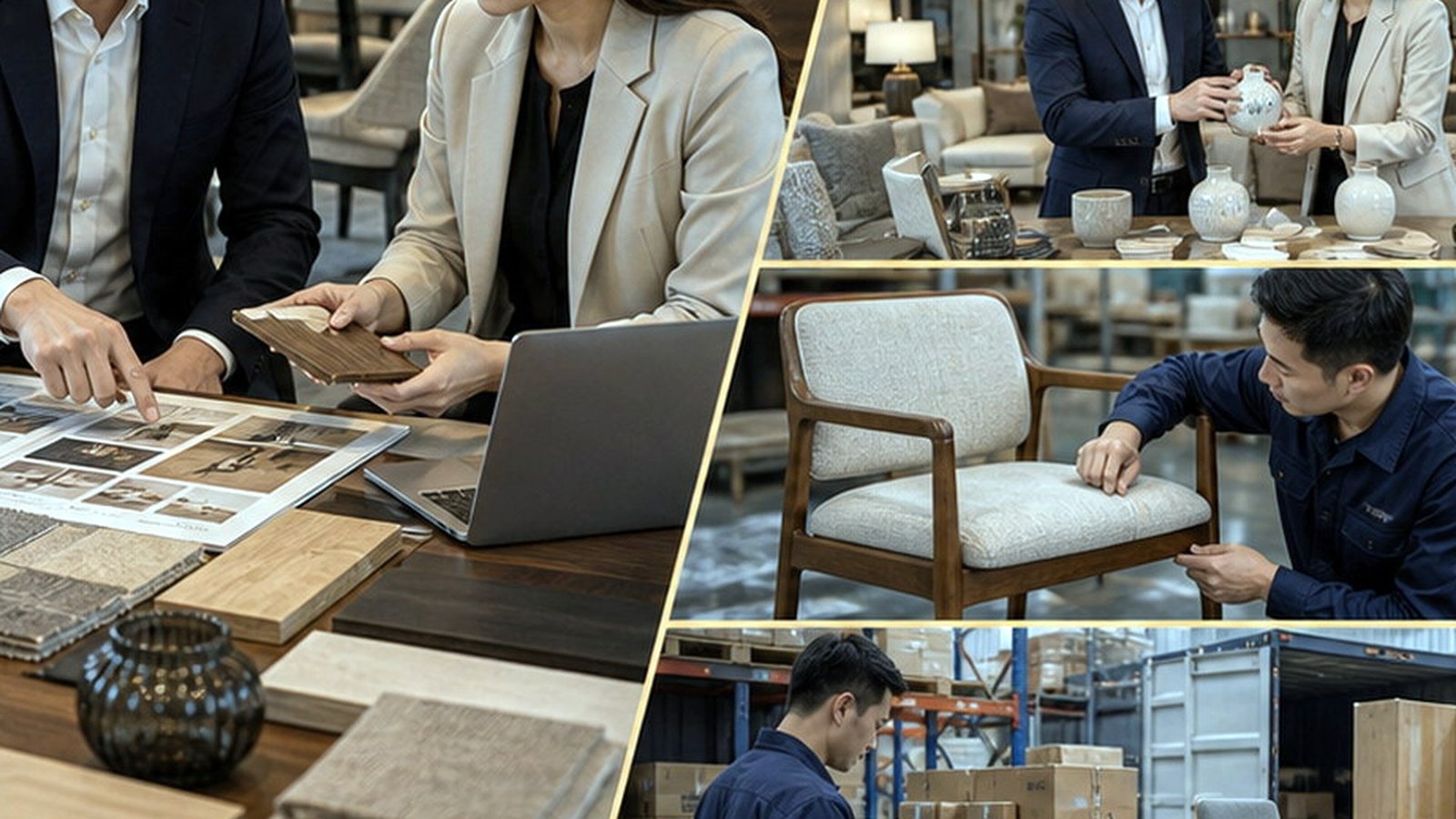
Visual checkpoints for The Foshan Furniture Market Guide
Additional realistic images have been added to support the page content while keeping the current LIFA layout and card styling.

Research notes
A practical view of the sourcing work behind this page.
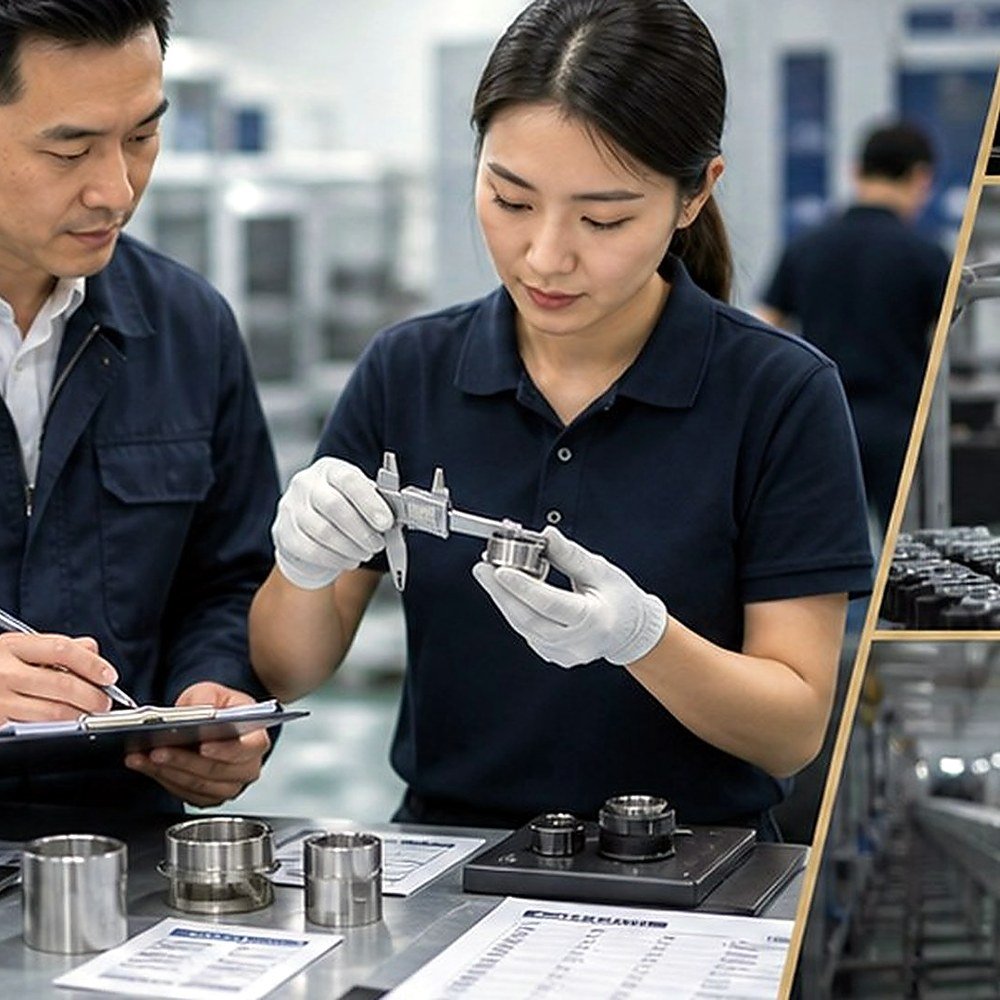
Supplier examples
Details buyers can review before they compare supplier options.

Checklist view
China-side coordination evidence organized for clearer decisions.

Practical review
Operational details that help reduce avoidable sourcing mistakes.

Next steps
Preparation notes for production, packing, or shipment follow-up.
Foshan in one paragraph
Foshan, bordering Guangzhou in Guangdong Province, is China's furniture capital. The trade concentrates in Shunde district and splits into two halves a short drive apart: Lecong, a corridor of furniture malls and showrooms stretching roughly ten kilometers and widely described as the world's largest furniture wholesale hub — and Longjiang, the manufacturing belt where much of that furniture, and the boards, foams, and hardware inside it, is actually produced.
That two-town structure is the single most useful thing to understand about Foshan: Lecong is where furniture is compared; Longjiang is where it is made. Buyers who only ever see showrooms pay showroom economics. This guide covers both sides — and the freight mathematics that matter more in furniture than in any other category.
The real map: where to actually go
| Location | What it is | Best for |
|---|---|---|
| Lecong market strip | Kilometers of connected furniture malls and showrooms along the main corridor in Shunde. | Comparing styles and price tiers across hundreds of brands in one day. |
| Louvre International Furniture Exhibition Center | The flagship high-end exhibition mall — polished showrooms, mid-to-premium lines. | Hotel projects, premium retail, and design-led buyers. |
| Sunlink Group malls | One of Lecong's biggest operators, spanning multiple buildings and tiers. | Broad browsing across residential categories. |
| Longjiang factory belt | The production town: sofa, board, mattress, and frame factories plus material suppliers. | Volume orders, OEM/custom work, and real factory pricing. |
| Material & hardware markets | Boards, foams, fabrics, fittings feeding the factories. | Spec verification — knowing what your sofa is actually made of. |
Malls renovate and operators rebrand; treat names as orientation and confirm current details before a trip. The geography — showrooms in Lecong, factories in Longjiang — is the stable part.
Showroom economics vs factory economics
Most Lecong showrooms are sales channels for factories located minutes away — or trading operations curating several factories' lines. The distinction drives your price and your accountability, exactly as in Factory vs Trading Company:
- Showroom orders buy convenience: finished displays, easy comparison, English-speaking sales — at a margin above factory pricing.
- Factory orders buy economics and control: real production pricing, custom specs, line access for inspection — at higher MOQs and slower communication.
- The standard play for serious buyers: shortlist in Lecong showrooms, then verify and negotiate with the factories behind the products you liked.
The CBM math that decides furniture profits
Furniture freight is priced by volume, and volume is where furniture importing is won or lost. Three numbers rule every order:
| Number | Why it rules | What to do |
|---|---|---|
| CBM per unit | An assembled sofa can occupy several times the volume of the same sofa flat-packed — multiplying per-unit freight. | Get packed dimensions (not product dimensions) on every quotation. |
| Container fill rate | A 40' high-cube holds roughly 68–76 usable CBM; empty air in it is money burned. | Plan the order mix to fill the container — mixed items nest better than one bulky SKU. |
| Flat-pack vs assembled | Knock-down (KD) designs trade assembly labor at your end for dramatic freight savings. | Ask every supplier whether a KD version exists before comparing prices. |
Run the complete calculation — product, freight, duty, delivery — in the Landed Cost Calculator before committing; a "cheaper" sofa that ships badly is the expensive one. Container strategy details live in LCL vs FCL Shipping.
Furniture-specific quality checks
Furniture fails in ways a showroom visit never reveals. These are the checks that belong in your specification and your pre-shipment inspection:
Foam density (seating)
Density (kg/m³) decides how a sofa feels after a year, not a minute. Specify it numerically; "high-density foam" without a number is a vibe, not a spec.
Frame material and joinery
Solid wood, plywood, or particleboard frames behave completely differently under load. Ask what the frame is and how corners are joined and reinforced.
Moisture content (solid wood)
Wood dried for Guangdong humidity can crack in a Canadian winter. Specify moisture content for your climate and have it measured at inspection.
Finish and coatings
Scratch resistance, color consistency across batches, and — for some markets — chemical compliance of coatings and glues (formaldehyde standards).
Hardware cycles (moving parts)
Drawer slides, hinges, recliner mechanisms: ask for cycle ratings, and have samples worked at inspection.
Packaging drop-resistance
Furniture arrives damaged more often than defective. Corner protection, carton strength, and pallet plans deserve their own spec line.
The buying workflow
1. Define range, tier, and container plan
Style direction, target price tier, and a rough container-fill sketch — Foshan rewards buyers who arrive knowing their CBM budget.
2. Shortlist in Lecong, verify in Longjiang
Compare lines in the malls, then run supplier verification on the factories behind your shortlist.
3. Specify in writing
Foam density, frame, finish, hardware, packaging — the checks above become your spec sheet and contract annex.
4. Sample or first-article check
For custom lines, approve a production sample — the golden sample your inspection will judge against.
5. Inspect during and before shipment
In-production checks for long runs; pre-shipment inspection with the furniture checks above; loading supervision so the container plan survives contact with the warehouse.
6. Ship on clear terms
Agree the Incoterm and export handling like any China order — see FOB vs CIF vs DDP.
Foshan in the market-city map
| City | Best at | Guide |
|---|---|---|
| Foshan | Furniture: showrooms in Lecong, factories in Longjiang | This guide |
| Guangzhou | Fashion depth: clothing, shoes, leather, fabrics | Guangzhou Markets Guide |
| Shenzhen | Electronics: components, accessories, prototyping | Shenzhen Electronics Guide |
| Yiwu | Small-commodity breadth at the lowest MOQs | Yiwu Market Guide |
Foshan pairs naturally with a Guangzhou trip — the cities border each other — and with the Canton Fair's furniture phase; see the China Trade Fairs Guide.
Sourcing Foshan with LIFA
Furniture orders concentrate risk in exactly the places a remote buyer can't see: the factory behind the showroom, the foam inside the cushion, and the loading of a container you paid to fill. LIFA coordinates Foshan assignments from Hangzhou with the same documented method as the other market cities — showroom and factory searches against your range plan, factory verification, spec-sheet enforcement at inspection, and container loading checks before the doors seal.
Mistakes this guide prevents
- Buying showroom, assuming factory pricing. Know which economics you're in — and when volume justifies going to Longjiang.
- Comparing unit prices without packed CBM. In furniture, the freight is part of the product.
- Accepting "high-density foam" as a spec. Numbers or it didn't happen.
- Skipping loading supervision. A perfect order loaded badly arrives as a damaged one.
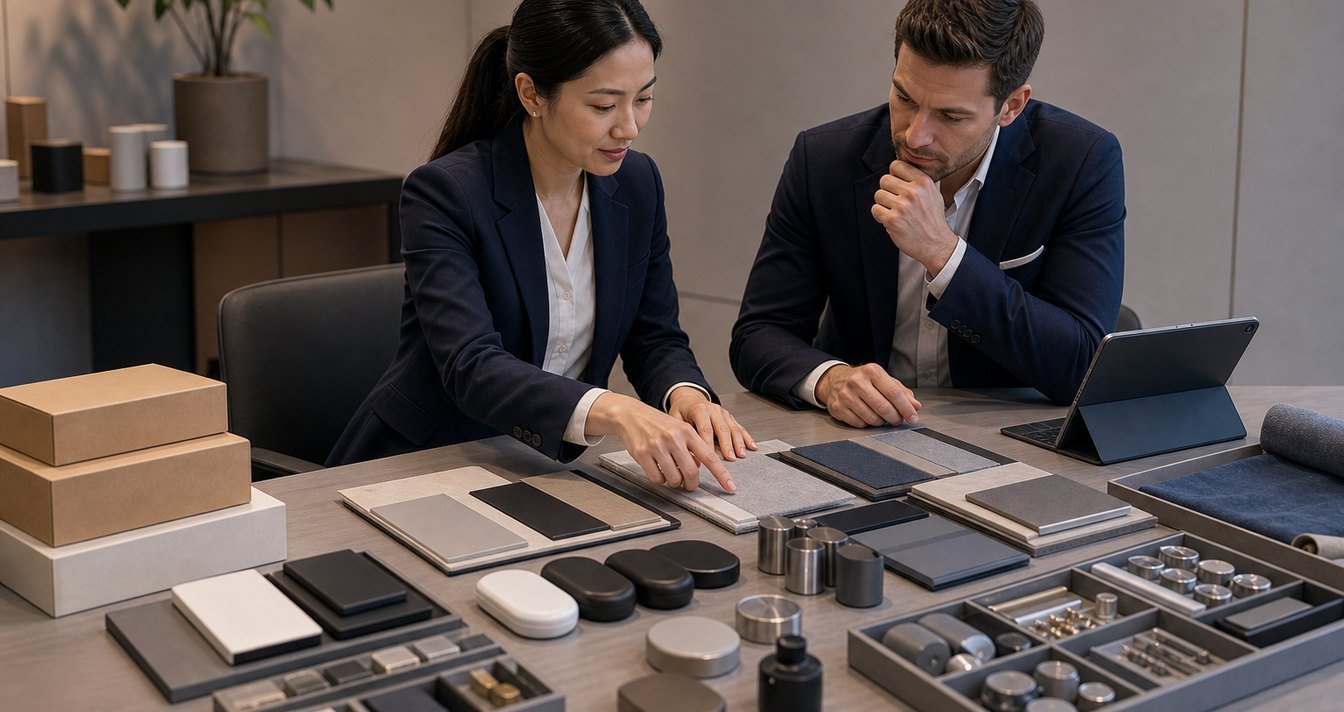
Related guides in this library.
Continue through China's market cities and the furniture-specific decisions.
Guangzhou Markets Guide
The neighboring fashion capital — pair it with a Foshan trip.
Read the guide 🚢LCL vs FCL Shipping
The container decision your CBM plan feeds into.
Read the guide 🔬Pre-Shipment Inspection
Where foam density and frame specs become pass or fail.
Read the guide 🧭Furniture Sourcing
How LIFA supports furniture and decor buyers end to end.
Explore the categoryOpen to Transparent Buyer Feedback
LIFA Global Trade welcomes honest customer reviews on Trustpilot. Real feedback helps buyers evaluate our China sourcing support, communication, and coordination services with transparency.
Your honest feedback helps us improve our sourcing support and helps other buyers make informed decisions.
Foshan furniture, answered simply.
The questions furniture importers ask most about Foshan.
Foshan, in Guangdong Province next to Guangzhou, is China's furniture capital. Its Shunde district hosts the trade's two halves: Lecong town, a roughly ten-kilometer corridor of furniture malls and showrooms often described as the world's largest furniture wholesale hub, and Longjiang town, the manufacturing belt where much of that furniture is actually made.
Lecong is the showroom face — malls and exhibition centers where products from many factories are displayed and sold. Longjiang is the production base — furniture factories and material suppliers. Buyers browse and compare in Lecong; serious volume and custom orders usually end up in Longjiang factories.
For a first orientation, the Louvre International Furniture Exhibition Center showcases mid-to-high-end lines in one building, while the Sunlink Group malls and the wider Lecong strip cover every style and price tier. Plan by product style and tier before you go — the corridor is measured in kilometers.
Because furniture freight is priced by volume, not weight. A sofa that ships assembled can cost several times more per unit to move than the same sofa flat-packed. Cubic meters per unit, container fill rate, and flat-pack design decide landed cost as much as the factory price does.
Furniture-specific checks include foam density for seating, frame material and joinery, moisture content of solid wood, finish and coating quality, hardware cycle testing for moving parts, and packaging drop-resistance. These are physical checks at the factory or consolidation point — a showroom sample cannot prove a production batch.
Yes. As with Yiwu, Guangzhou, and Shenzhen, remote buying through a China-side partner is standard: showroom and factory searches against your product list, quotes and photos collected, samples checked, production inspected before shipment, and container loading supervised.

Planning a furniture order from Foshan?
Send your range plan, target tier, and destination. LIFA runs the Lecong and Longjiang search, verifies the factories, enforces your spec sheet at inspection, and supervises the loading — so the container you paid to fill arrives the way it left.