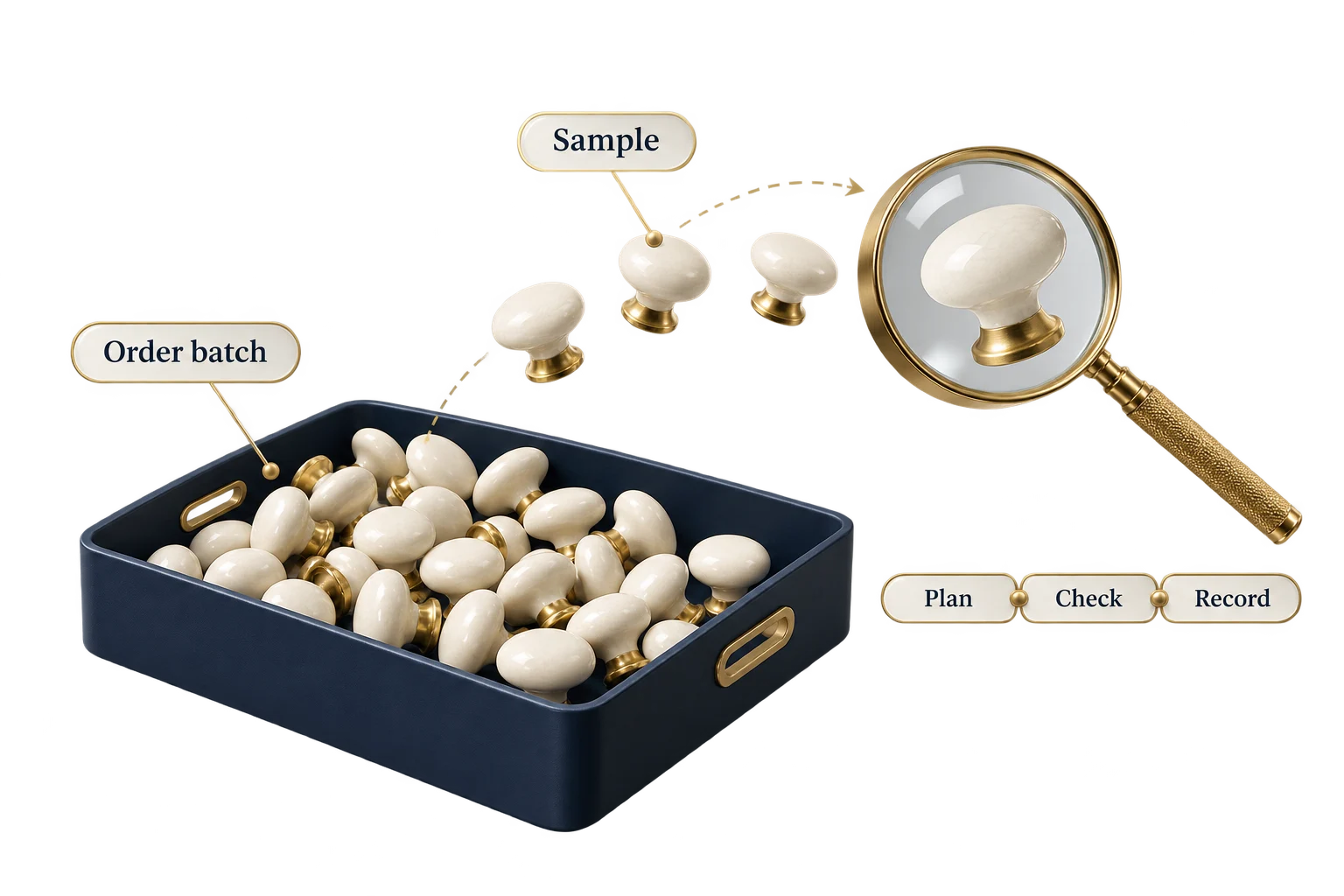
| 1. Identify the lot | Product, SKU, production batch, quantity offered, packing status, and location | The lot size is an input to the sample-size code and must match the goods being judged | Lot description, quantity, completion percentage, cartons, and traceability |
| 2. Choose the standard | ISO 2859-1:2026, ANSI/ASQ Z1.4, or another contractually agreed method | Definitions, tables, switching rules, and plans belong to a specific standard and edition | Standard, edition, normal/tightened/reduced status, and single/double/multiple plan |
| 3. Set inspection level | General or special level appropriate to risk, history, cost, and the check performed | The inspection level helps determine how much of the lot is sampled | Selected level and the reason for any reduced or special sample |
| 4. Obtain code and sample | Use the licensed or authorized table for the chosen standard | The code letter leads to a sample size; it is not guessed from a percentage | Code letter, planned sample, actual random sample, and any inaccessible units |
| 5. Define defect classes | Critical, major, and minor nonconformities tied to the approved specification and intended use | The same finding can produce a different decision when severity is defined differently | Defect catalogue, examples, counts by class, and affected sample units |
| 6. Apply Ac/Re numbers | AQL for each class and the corresponding acceptance/rejection numbers from the selected plan | The sampled count is compared with the plan, not with an improvised lot percentage | AQL, Ac, Re, observed count, result by class, and any critical finding |
| 7. Decide disposition | Who may accept, reject, hold, sort, rework, reinspect, or approve a concession | An inspection company reports evidence; the contract or buyer process controls the commercial decision | Decision owner, disposition, corrective action, reinspection rule, and release evidence |